Marco Polo's father and uncle spent three years in Bukhara in the 1260s, and the Travels describe Samarkand as a great and noble city with a miraculous church. But did Marco himself ever stand in either? What the book says, what the scholars say, what the Polos would have seen, and how to travel the Bukhara-Samarkand road in their spirit today.
Facts, prices and schedules checked on November 11, 2026
Marco Polo is the name every Italian visitor brings to Uzbekistan, and the Travels do reach the country: Bukhara is where the story of the Polo family's journey to China really begins, and Samarkand gets a chapter of its own, with a miracle. The complication, which a good guide will tell you on the first day, is that the Bukhara years belong to Marco's father and uncle, and the Samarkand chapter was almost certainly written from hearsay. Marco himself probably crossed from Persia into Afghanistan and over the Pamirs without touching either city.
That does not make the connection thin. The Polos were in Bukhara at the moment the Mongol world was settling into the khanates that would shape Central Asia for two centuries; the Samarkand they describe is the Samarkand of the Chagatai khans, between Genghis's destruction and Timur's rebuilding, a city almost nobody else wrote about. Read the Travels with that in mind and the Bukhara–Samarkand road becomes a journey through the Chagatai century, not just a train ride.
The first journey: three years in Bukhara, 1261–1264
In 1260 the brothers Niccolò and Maffeo Polo, Venetian merchants trading in Constantinople, sold up, converted their capital into jewels and sailed to the Crimea, then rode east to the court of Berke Khan of the Golden Horde on the Volga. A year later war broke out between Berke and his cousin Hulagu, the Ilkhan of Persia, and the road home was cut. The brothers went east instead, crossed the desert for seventeen days, and came, in the words of the Travels, to a very great and noble city called Bocara, the best in all Persia, ruled by a king named Barac.
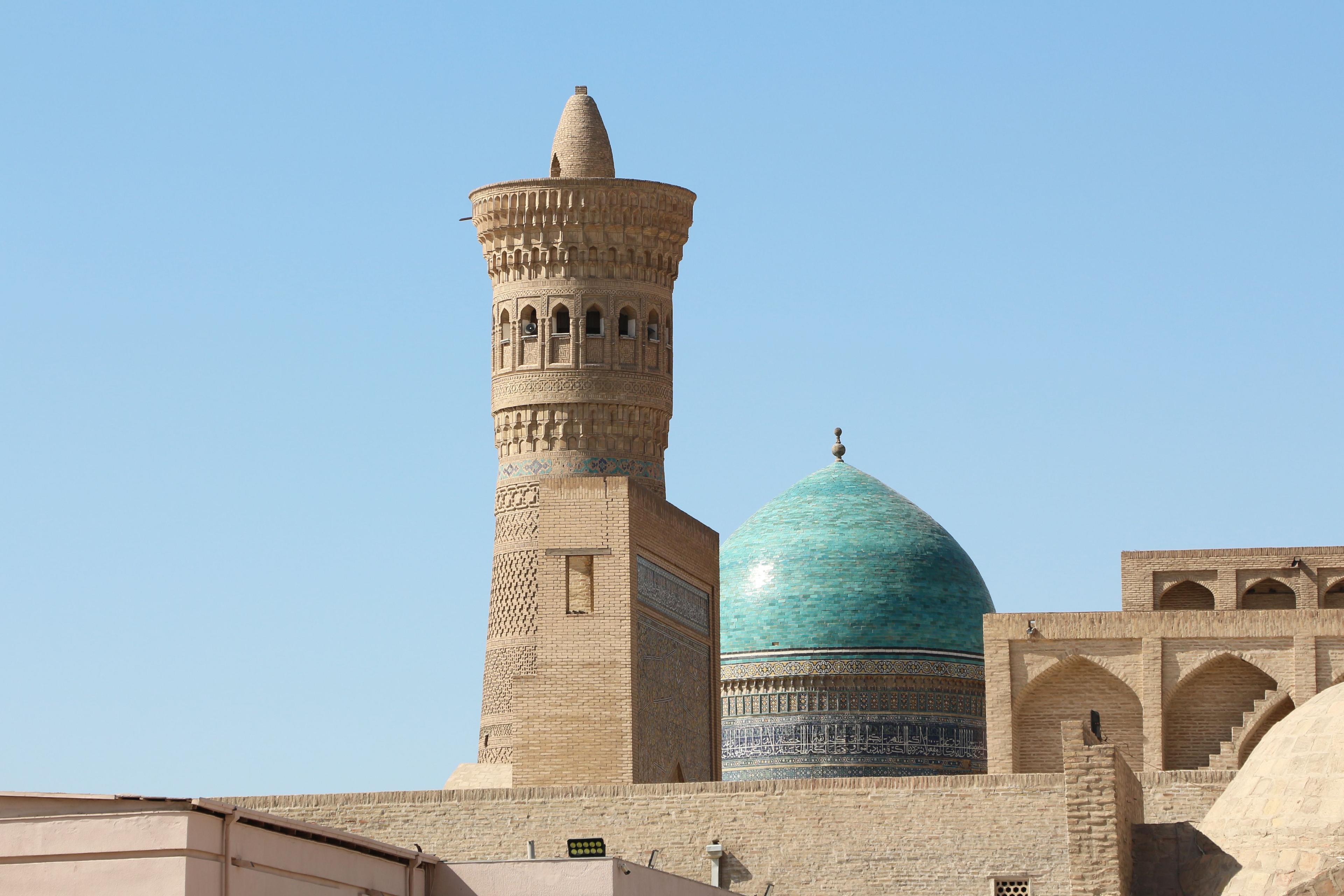
They stayed three years, which is the longest the Polos stayed anywhere before China and the only Central Asian residence the book records in detail. Bukhara in 1261 had been sacked by Genghis Khan forty years earlier, and the Kalyan minaret had survived because, the story goes, the khan looked up at it and was impressed; the city was rebuilding under the Chagatai khanate, and the Barac of the text is probably Baraq Khan, who ruled from 1266. While the brothers were there, an envoy from Hulagu to the Great Khan Kublai passed through, had never met Latins, and persuaded them to come with him to China, where Kublai, the book says, had never seen a European either. They went, reached the court in 1266, and came home in 1269 to find that Niccolò's wife had died and his son Marco, aged fifteen, had grown up without him.
The Travels say only that Bukhara was noble; for texture, go to the city itself: the Kalyan minaret of 1127, which they walked past every day; the Magoki-Attori mosque, whose 12th-century facade stood at street level then and now stands in a pit; the Samanid Mausoleum, already three centuries old; and the trading domes, built later but on the same crossroads where Venetians would have bought silk and sold coral.
The second journey: Marco's road, 1271–1275
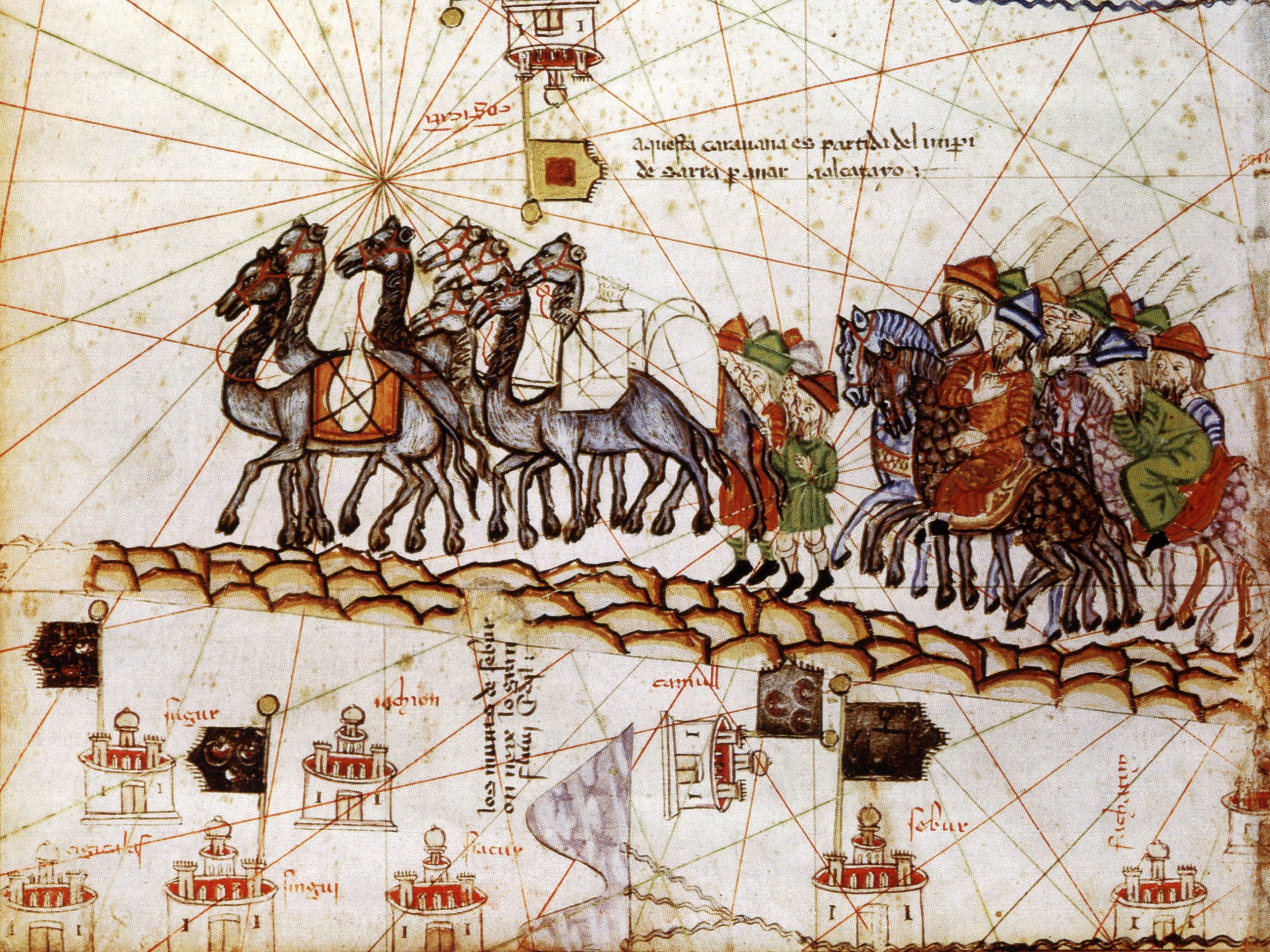
The three Polos left Venice in 1271 with Marco, now seventeen, sailed to Acre, and went inland. The Travels describe the road through Armenia and Persia to Hormuz, where they meant to take ship for China and found the ships unseaworthy, then back north through Kerman and the Persian desert to Balkh, Badakhshan, where Marco says he spent a year recovering from illness, the Wakhan valley, the Pamir plateau and Kashgar. From there the road ran along the southern edge of the Taklamakan to Dunhuang and the court of Kublai at Shangdu, reached around 1275.
That route passes south of Uzbekistan. The book's chapters follow a sequence from Balkh east to Badakhshan, and Samarkand is introduced out of order, as a city to the north-west, which is the strongest internal evidence that Marco was describing somewhere he had not been. Henry Yule, the great Victorian editor of the Travels, concluded flatly that Marco was never at Samarkand and that the chapter came from his father and uncle or from informants met in China. Most modern scholars agree, while allowing that the brothers may have passed through Samarkand on the first journey, between Bukhara and the Great Khan's court. Modern itineraries that send Marco from Urgench through Bukhara to Samarkand and Fergana are tourist routes, not reconstructions from the text.
What the Travels say about Samarkand
The chapter is short and the city is praised: Samarcan, a very large and splendid city with fine gardens and a plain full of fruit, where Christians and Saracens live together under the rule of the Great Khan's nephew. The ruler named is Chagatai, Genghis's son, who the book says became a Christian, which is false, though his court did include Nestorian Christians and his descendants were, for a while, tolerant of them.
Then comes the miracle, told with relish. The Christians of Samarkand, in Chagatai's favour, built a church to St John the Baptist and took a fine stone from the Saracens to be the base of the column that held up the roof. When Chagatai died and the Muslims regained power, they demanded their stone back, intending the church to fall. The Christians prayed; on the appointed morning the column was found standing in the air, a hand's breadth above its base, and so, the book says, it stands to this day. Yule traced the story to Nestorian legend, probably by way of Mar Sargis, a Christian from Samarkand who founded churches in China and whom Marco may have met there. There was indeed a Christian community in Samarkand in the 13th century, and in 1328 a Dominican, Thomas of Mancasola, was appointed Latin bishop of the city. The present St John the Baptist church in Samarkand, built in 1916 for Austro-Hungarian prisoners of war, took its name in a deliberate nod to the legend.
The Samarkand the Polos would have known
The city of the 1260s is the one hardest to see today, because Timur buried it. Genghis Khan took Samarkand in 1220 and the old city on the Afrasiab mound was abandoned; the population moved south to the area of today's old town, and the Mongol-period city was a place of gardens, caravanserais and mud-brick houses without a single monument that survives. Everything you now photograph, the Registan, Bibi-Khanym, Gur-e-Amir, is Timurid or later, built from 1370 onwards.
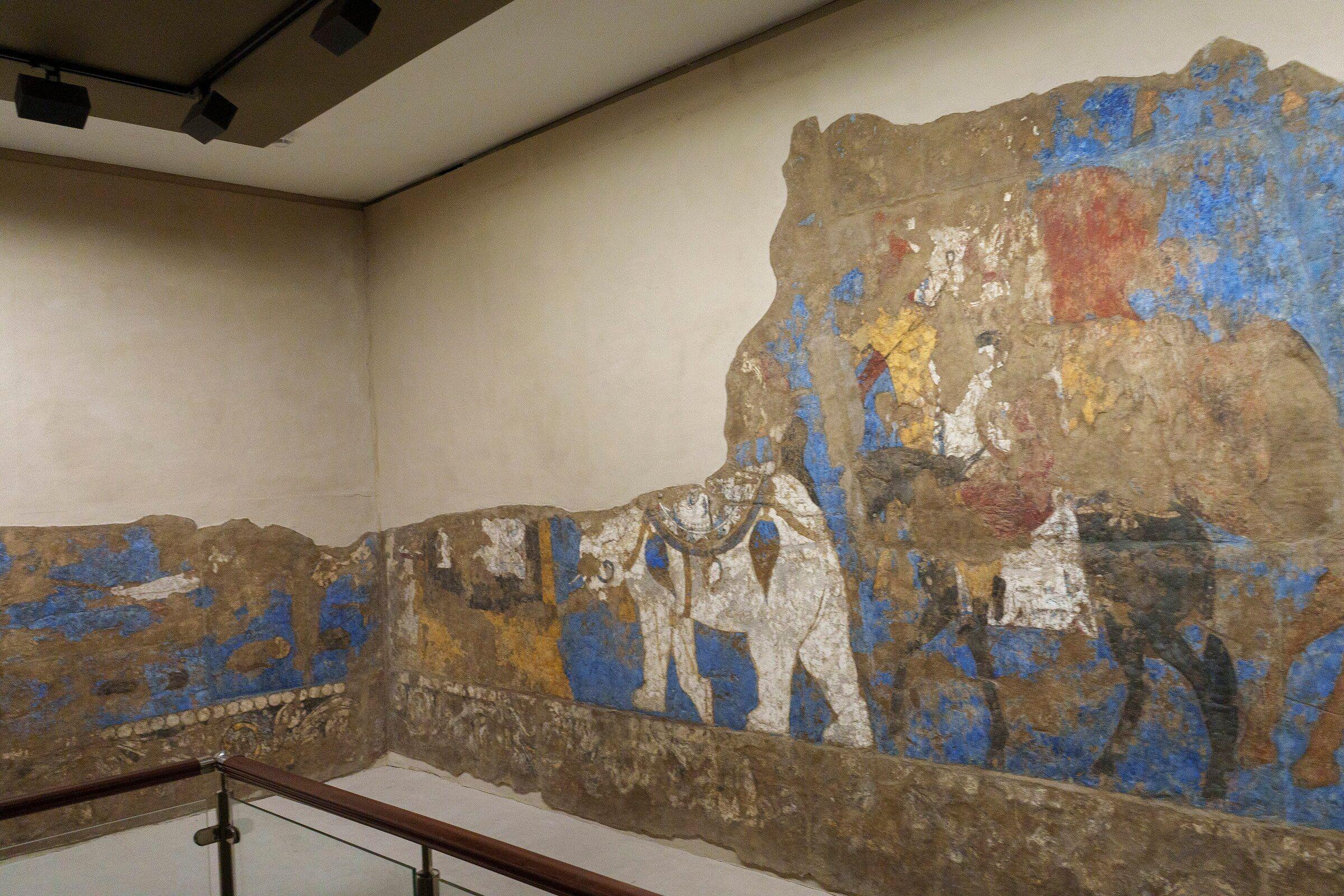
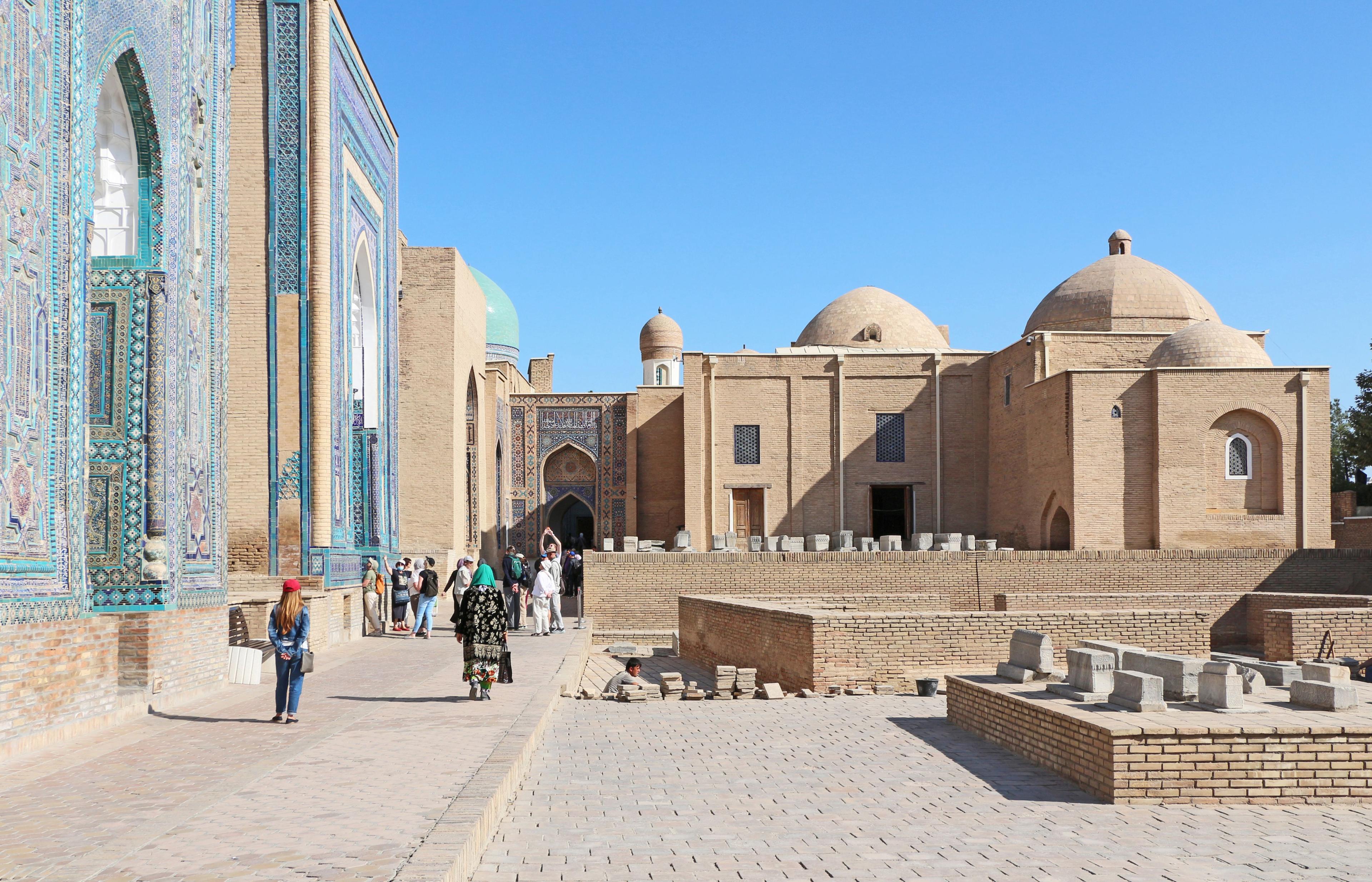
Two places give you the Polos' century. The Afrasiab mound north of the bazaar, where the pre-Mongol city lies under grass grazed by sheep, with the museum's Sogdian murals showing the earlier Silk Road court. And Shah-i-Zinda, whose lowest, oldest tombs, around the grave of Qusam ibn Abbas, were being rebuilt in the 1330s, a generation after Marco, in the style the Chagatai city used. Stand at the bottom of its staircase and you are as close to Samarcan as the stones allow.
Bukhara's blue domes: what the brothers actually saw
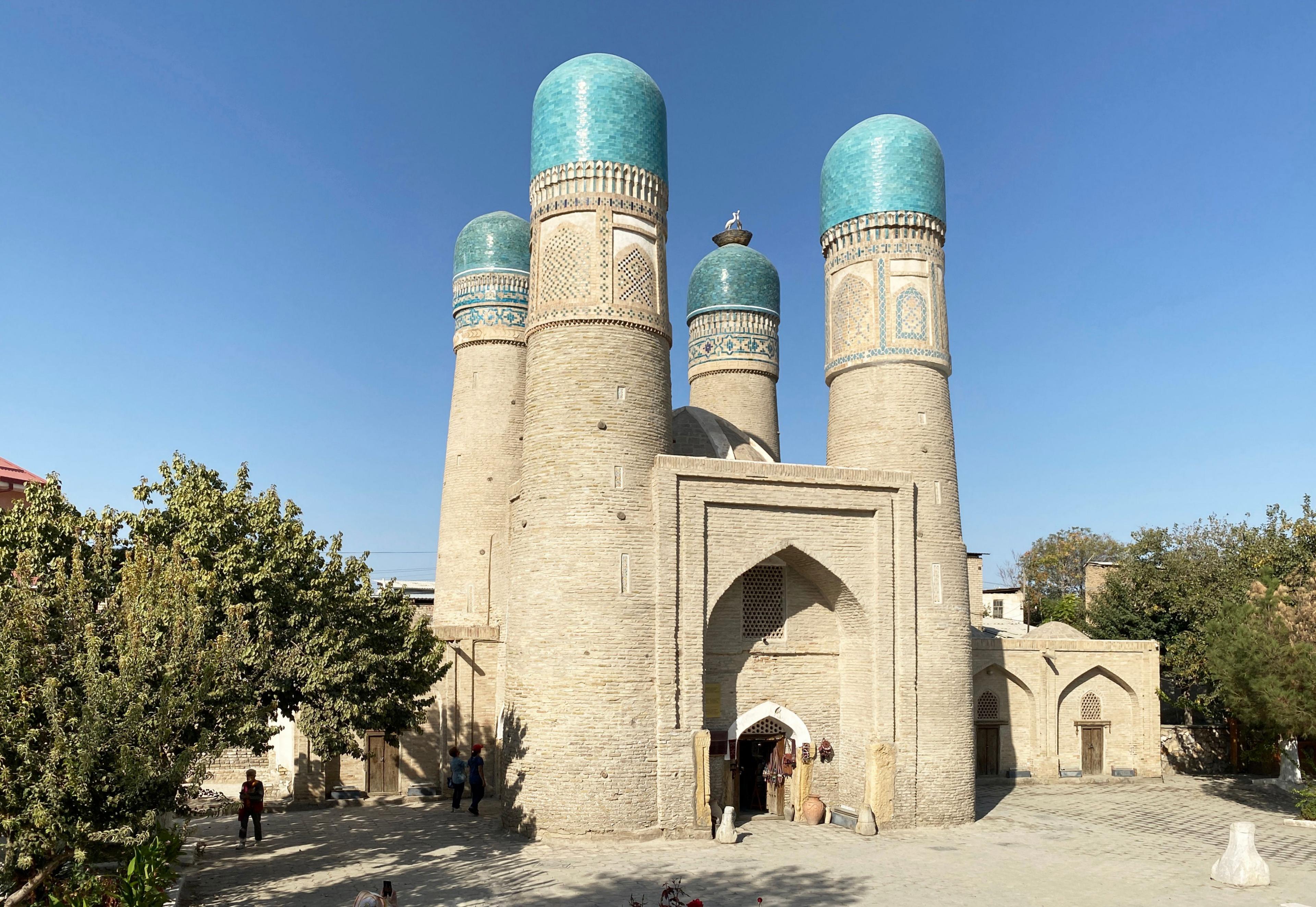
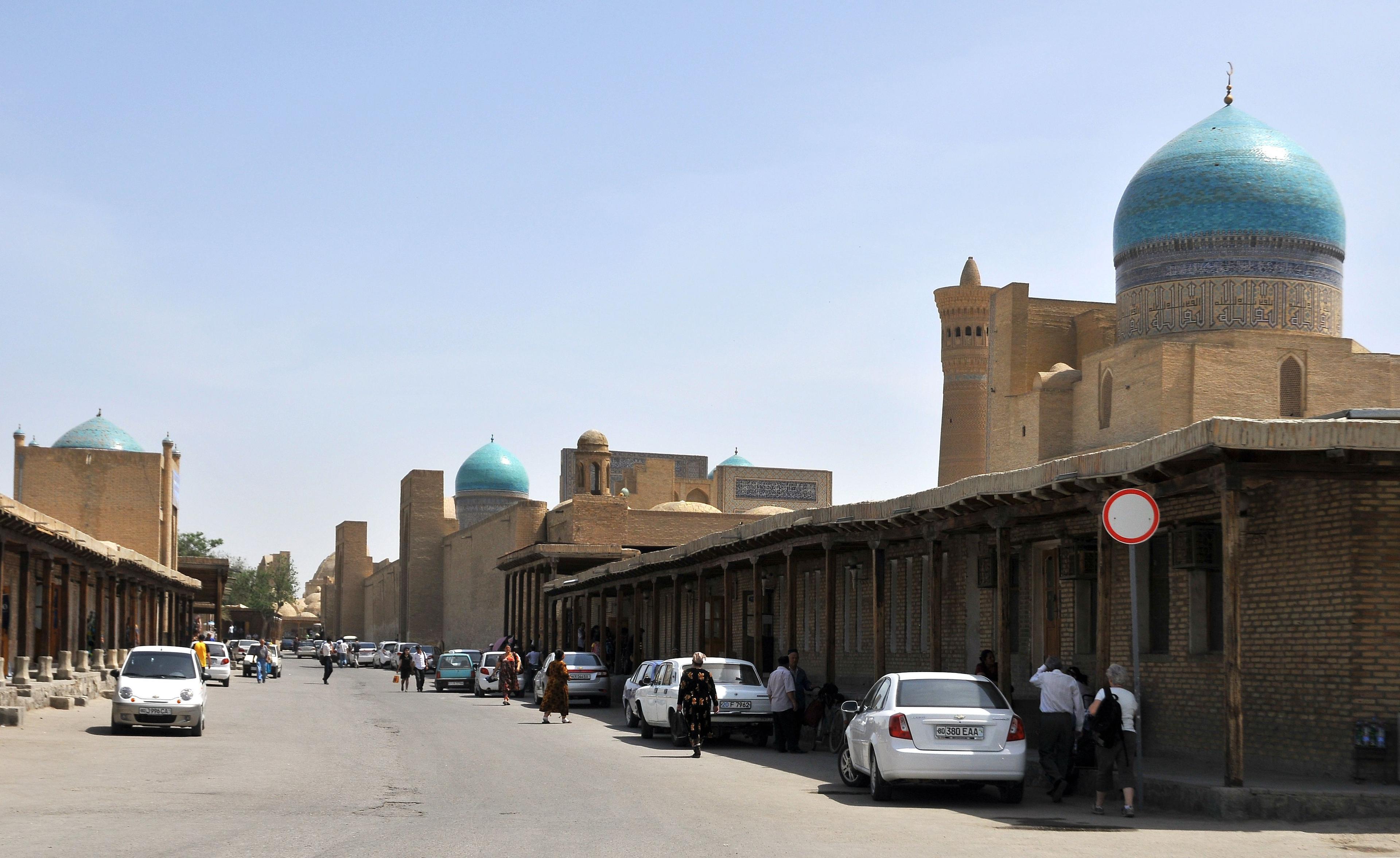
Bukhara is more generous. The Kalyan minaret, 46 metres of banded brick, is the one building in Uzbekistan that a 13th-century Venetian certainly looked at. The Magoki-Attori mosque, whose carved facade dates from the 1100s, was the mosque of the perfumers' bazaar then as its name says now. The Chashma-Ayub spring shrine, rebuilt by Timur, was already a pilgrimage site. Outside the walls, at Rabat-i Malik on the Samarkand road, the Karakhanid caravanserai of the 11th century was the kind of halt where the Polos would have slept between the two cities; its portal still stands by the modern highway at Navoi.
The blue domes and tiled mosques of the popular image belong to the 15th and 16th centuries; in the 1260s Bukhara was a city of unglazed brick and wood, scarred by the sack of 1220 and about to be sacked again, in 1273, by the Ilkhanid army of Abaqa. The brothers were lucky with their dates.
The book, the prison and the doubts
The Polos reached Venice again in 1295 after twenty-four years. Marco was captured in a sea fight with Genoa, probably in 1296, and in prison dictated his account to a fellow prisoner, Rustichello da Pisa, a writer of Arthurian romances, who turned it into a book in 1298–99. That origin explains both the marvels and the gaps: Rustichello liked a miracle, and Marco, remembering twenty years of Asia in a Genoese cell, had no notes. Frances Wood argued in 1995 that Marco never reached China at all; most scholars, following Stephen Haw, think the Chinese detail is too good to be second-hand. Nobody argues that he saw Samarkand.
For travellers the practical conclusion is this: read the Bukhara and Samarkand chapters as 13th-century rumour about real places, and the Afghan and Pamir chapters, just over the border, as the eyewitness travel writing they are. Ronald Latham's Penguin translation is the one to carry; Yule's annotated Victorian edition is free online and far more fun.
Following the Polos today: route, time and cost
The Bukhara–Samarkand road is the easiest Silk Road stage in the country and the one with the strongest Polo claim.
- Bukhara, 2 to 3 days: Po-i-Kalyan at dawn, Magoki-Attori, the Samanid Mausoleum, the trading domes and Lyabi-Hauz. - The road east, 1 day: stop at Rabat-i Malik and the Sardoba cistern beside it, then Nurata if you want a night in a yurt camp on the desert edge. The Afrosiyob train takes under two hours if you prefer speed to caravanserais.
- Samarkand, 2 days: Afrasiab and the museum first, then Shah-i-Zinda, then the Timurid city.
- Extension: Termez and the Amu Darya for the Balkh crossing, or Osh and the Pamir Highway for Marco's actual road to Badakhshan and Kashgar.
A private car with driver Bukhara to Samarkand with stops costs around US$70 to 100 in 2026; entry fees for the main sites run 50,000 to 100,000 som each. April–May and September–October are the months. EU citizens enter visa-free for 30 days, and most Italian travellers connect through Istanbul to Samarkand or Tashkent.
Travelling the road to Cathay with TourEast
Twelve Gates of the Silk Road, our twelve-day grand tour, runs the Polo-era corridor from the Fergana Valley through Samarkand and Bukhara to Khiva, and it is the route we recommend to Italian and French groups who arrive with the Travels in hand; guides in both languages are available on request, and the Khorezm fortresses can be added. Four Crowns, the eight-day classic, covers Bukhara and Samarkand in four days with the desert road between them, and Bukhara After the Buses Leave gives the brothers' city the four unhurried days it deserves. Ask us for the Marco Polo version and we will add Rabat-i Malik, the Sardoba and an evening reading at Lyabi-Hauz.
Frequently asked questions
Photo gallery
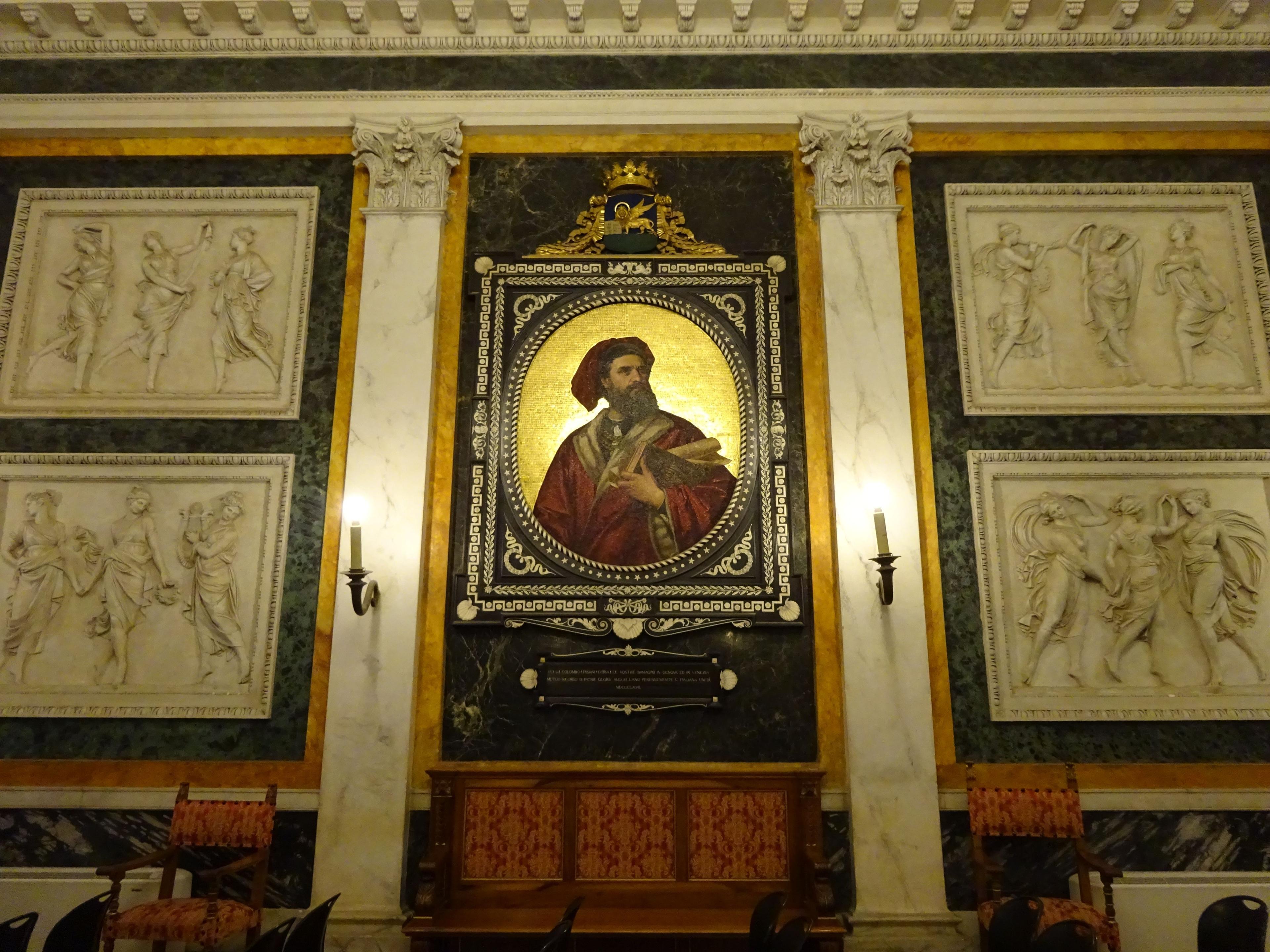
Photo: Abraham Cresques, Catalan Atlas, 1375 / Wikimedia Commons, Public domain; LBM1948 / Wikimedia Commons, CC BY-SA 4.0; Koshkinhome / Wikimedia Commons, CC BY-SA 4.0; Bgag / Wikimedia Commons, CC0; Postcrosser / Wikimedia Commons, CC BY-SA 3.0