Since 1 April 2026 foreign visitors can reclaim VAT at every international airport in Uzbekistan: 85% of the 12% VAT included in the price, which is about 9% of the receipt total. The 300,000 som minimum, the Soliq app, which receipts qualify, what customs checks and how much carpets, suzani and ceramics pay back.
Facts, prices and schedules checked on November 11, 2026
Every price tag in an Uzbek shop already contains 12 per cent VAT, and since 1 April 2026 a foreign visitor can take most of that tax home. A presidential resolution of 5 March 2026 rebuilt the old, little-used Tax Free scheme: it now works at every international airport, refunds 85 per cent of the VAT (85 per cent of the tax, not of the price), pays out in cash at the airport or to a card within three working days, and no longer limits which goods qualify, apart from food.
In practice that is roughly 9 per cent of the price on the receipt. On a hand-knotted carpet, a pair of silk ikat coats or a set of Rishtan plates, it is real money. Here is how the system works, what to ask for at the till, what happens at the airport and where the scheme still falls short.
What changed in 2026
Tax Free first appeared in Uzbekistan on 1 January 2023, at five airports, with a short list of eligible goods, a minimum spend of one million som and refunds paid only after the 25th of the following month. Few travellers bothered.
The March 2026 resolution, which took effect on 1 April 2026, changed the terms:
- Coverage: all international airports. Counters already operated at Tashkent, Samarkand, Bukhara, Fergana, Urgench, Karshi, Navoi, Nukus and Termez.
- Refund rate: 85 per cent of the VAT goes to you, which is about 9.1 per cent of the price on the receipt; the remaining 15 per cent of the VAT pays the Tax Free operator.
- Speed: card refunds within three working days after the goods leave the country.
- Minimum: 300,000 som per purchase, VAT included, about $25 as of late 2026.
- Goods: the restricted list was abolished; everything except food qualifies.
The resolution also promises Tax Free points at railway stations and land border posts, starting with a pilot at the Gishtkuprik crossing to Kazakhstan once its reconstruction is complete. So far there is no working counter outside the airports.
How much you actually get back
Uzbek VAT is 12 per cent and it is already included in the shelf price. That is why the VAT inside a price is not 12 per cent of it but 12/112, about 10.7 per cent. You get back 85 per cent of that VAT, which comes to about 9.1 per cent of the total on the receipt.
A worked example: you buy a carpet for 10,000,000 som.
- VAT included in the price: 10,000,000 × 12 ÷ 112 ≈ 1,071,000 som.
- Your refund, 85 per cent of that VAT: about 910,000 som.
- The operator's fee, the other 15 per cent: about 161,000 som.
So the carpet ends up costing you about 9,090,000 som. A quick rule of thumb: multiply the receipt total by 0.09. A ceramic dish for 400,000 som brings back about 36,000 som, a silk ikat robe for 2,500,000 som about 228,000 som.
The 300,000 som minimum applies to each receipt. Ten fridge magnets bought on ten separate receipts will not qualify; one receipt for the lot might. There was talk in March 2026 of removing the minimum altogether, but the official April 2026 announcement still states 300,000 som, so plan around that figure.
Where Tax Free works and where it does not
The refund depends on a single document: a fiscal receipt with a QR code, issued through the state online cash-register system. That defines where Tax Free is realistic.
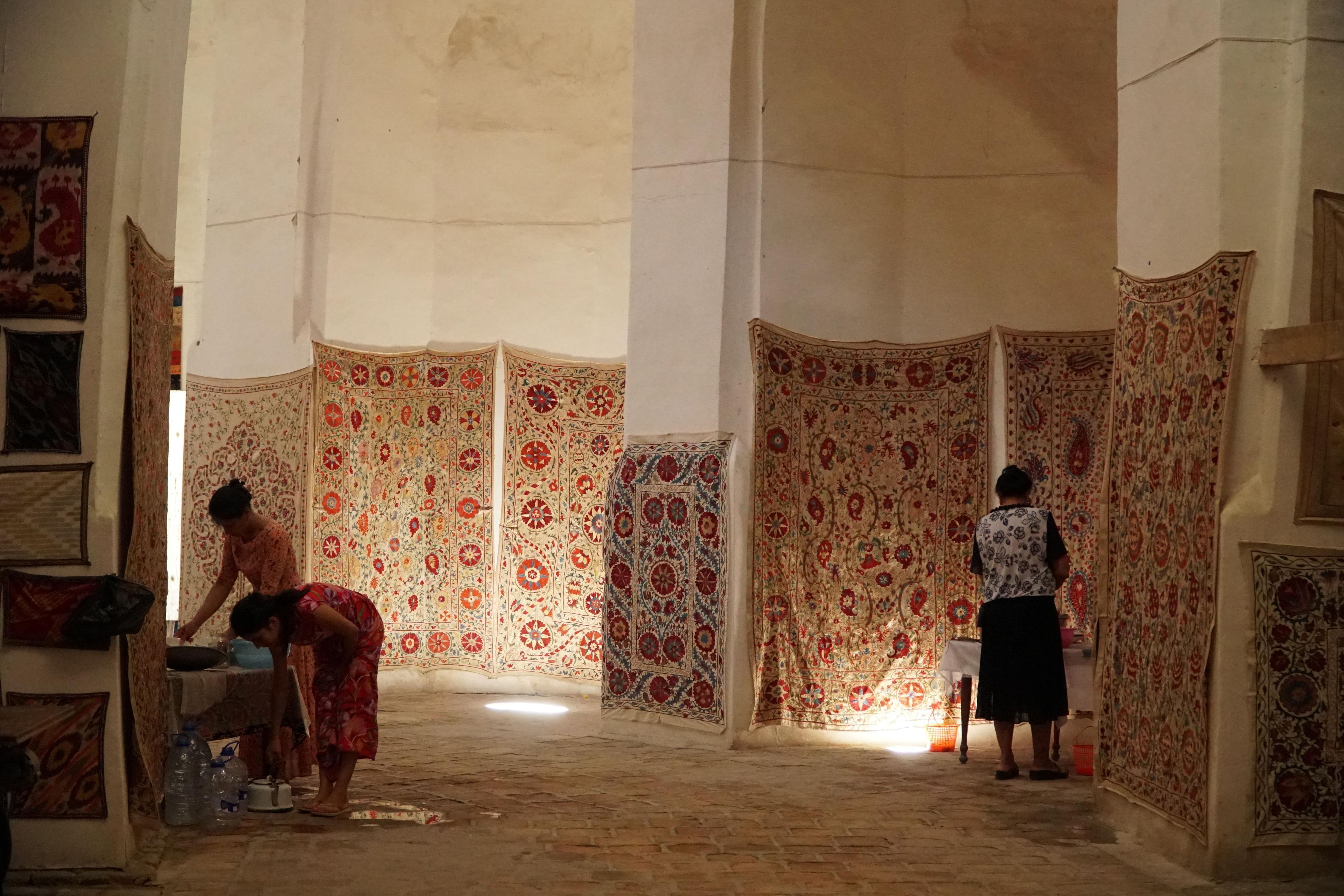
- Works: shopping malls such as Tashkent City Mall, brand and department stores, larger craft showrooms and workshops with card terminals, carpet and silk ateliers that sell to tour groups, some boutiques in the old towns.
- Often does not: bazaar stalls, small family workshops that take cash only, street sellers and antique dealers working informally.
At Chorsu Bazaar or in the trading domes of Bukhara, ask before you bargain: "Can you give a fiscal receipt with a QR code?" If the seller can, agree the final price first and make sure the receipt shows that price. If they cannot, the discount you negotiate in cash will often be worth more than the refund anyway.
Food is the exception. The resolution lifted the limits on goods but not on food products, so do not count on a refund for spices, tea, sweets or dried fruit. Dried apricots and saffron from the bazaar are souvenirs to enjoy, not to reclaim.
Step by step: from the shop to the refund
Before you shop. Install the Soliq app from the App Store or Google Play. Registration has required an Uzbek mobile number; the March 2026 resolution ordered an email sign-up option, but a local SIM or eSIM bought on arrival is still the safest route. Link a Visa or Mastercard if you want the money on a card.
At the till. Pay, then ask for the paper fiscal receipt with the QR code and keep it flat and dry.
In the app. Open Soliq, tap Tax Free and scan the QR code of each receipt. Do it the same day: published guidance from Uzbekistan Airways gives a deadline of 10 calendar days from the date of purchase.
At the airport. Arrive earlier than usual and go to the Tax Free point with your passport, boarding pass, receipts and the goods. A customs officer checks that the items match the receipts, are unused and are in their original packaging, then completes the VAT refund form.
The money. Take the refund in cash at the counter, or let it go to your linked card, which the rules say happens within three working days after the goods are exported. In both cases you receive 85 per cent of the VAT, about 9 per cent of the receipt total.
Rules that catch people out
- Do not check in the goods first. Customs may ask to see them, so carry them in your cabin bag, or visit the Tax Free point before you drop the suitcase that holds them. For a large carpet, ask at the counter before check-in.
- Unused and packed. A suzani already hung on the hotel wall or a robe you have worn for photos may be refused.
- The seller's details must be readable. A receipt with the wrong price, or one printed for a different item, cannot be corrected at the airport.
- Only on departure by air. If you leave Uzbekistan overland, to Kazakhstan, Tajikistan or Turkmenistan, there is no counter on the road yet.
- Foreign citizens only. Citizens of Uzbekistan cannot claim, even with foreign cards.
- Antiques are a separate matter. Items older than about 50 years and some carpets need an export certificate from the Ministry of Culture regardless of Tax Free. Ask the shop to arrange it before you pay.
What is worth buying with Tax Free in mind
The scheme rewards larger purchases from businesses that issue proper receipts, which is exactly where Uzbekistan's best crafts are sold.
- Carpets. Silk and wool carpets from the workshops of Samarkand and Bukhara are the biggest single purchase most visitors make. The Khujum carpet factory in Samarkand and the larger Bukhara showrooms are used to paperwork.
- Silk and ikat. The Yodgorlik silk factory in Margilan sells by the metre and by the garment.
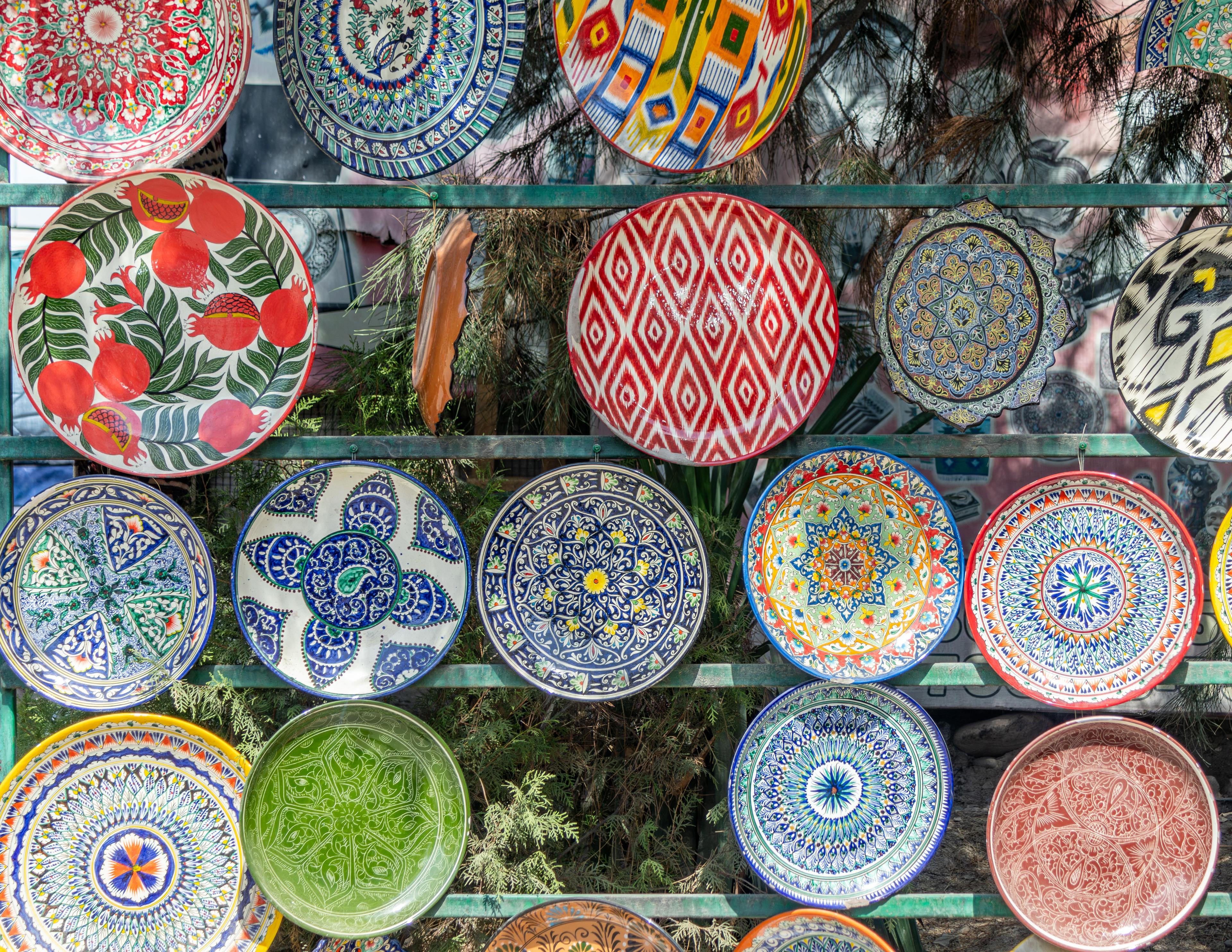
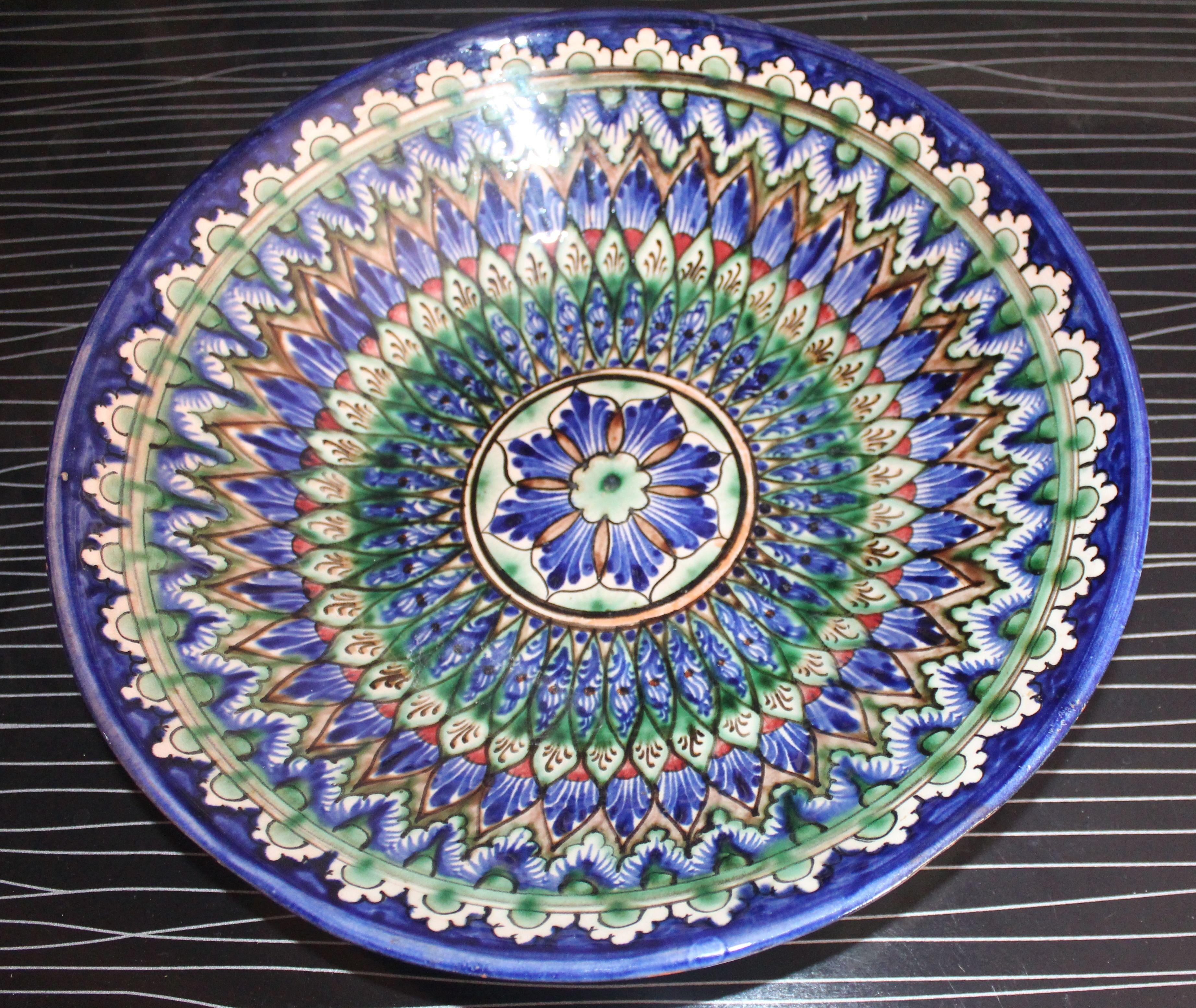
- Ceramics. The blue-and-turquoise wares of Rishtan and the ochre-and-green plates of Gijduvan are heavy but pack well; workshops will wrap them for the hold, so ask them to leave one piece accessible for customs.
- Knives. Chust knife makers sell boxed knives that must travel in checked luggage, so show them at the Tax Free point before check-in.
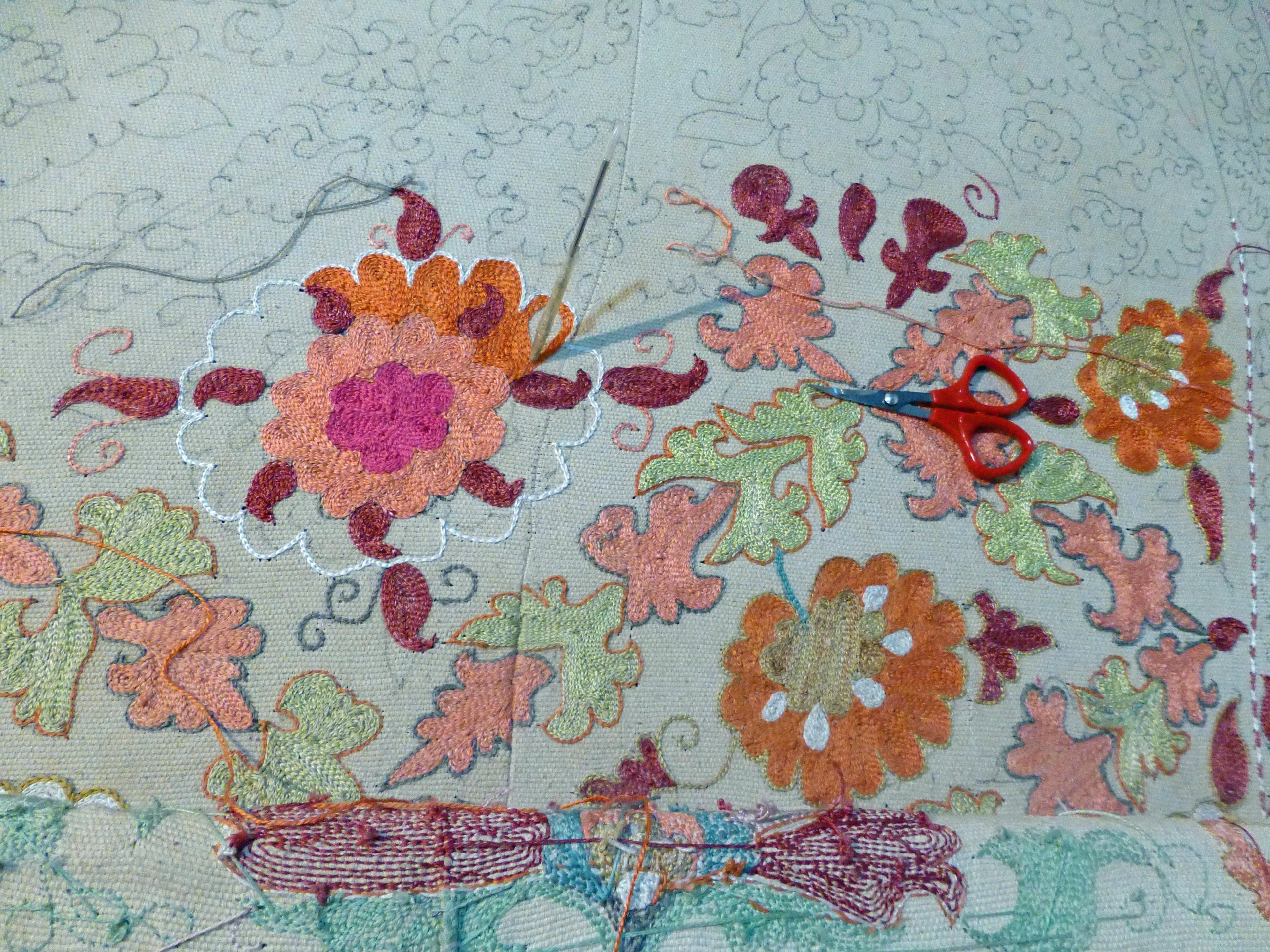
- Suzani and gold embroidery. Bukhara's ateliers sell new suzani and zardozi pieces; old ones fall under the antiques rule.
When and where to claim: practical notes
- Where: Tax Free points operate at Uzbekistan's international airports, with long-standing counters at Tashkent, Samarkand, Bukhara, Fergana, Urgench, Karshi, Navoi, Nukus and Termez.
- Timing at the airport: allow an extra 30 to 45 minutes. At Tashkent's international terminal, evening departures to Europe and the Gulf create queues at every desk.
- Domestic connection: if you fly Bukhara to Tashkent and then home, claim at the airport where you leave the country, so keep the goods with you on the domestic flight.
- Cost: the service costs you nothing beyond the 15 per cent of the VAT kept by the operator, which is about 1.6 per cent of the price.
- Records: photograph each receipt and its QR code in case the paper fades.
Shopping with TourEast
On our tours we plan the shopping as carefully as the sightseeing. Our guides know which workshops issue fiscal receipts, will translate while you bargain and remind you to scan each receipt that evening. On Bukhara After the Buses Leave there is time for the ateliers of the old town and the potters of Gijduvan; Silk, Clay and Steel is built around the makers of Fergana, from Margilan silk to Rishtan ceramics and Chust knives; and Four Crowns passes through all the classic craft cities on the way. Tell us what you hope to buy and we will make sure the last day leaves time for the airport counter.
Frequently asked questions
Photo gallery
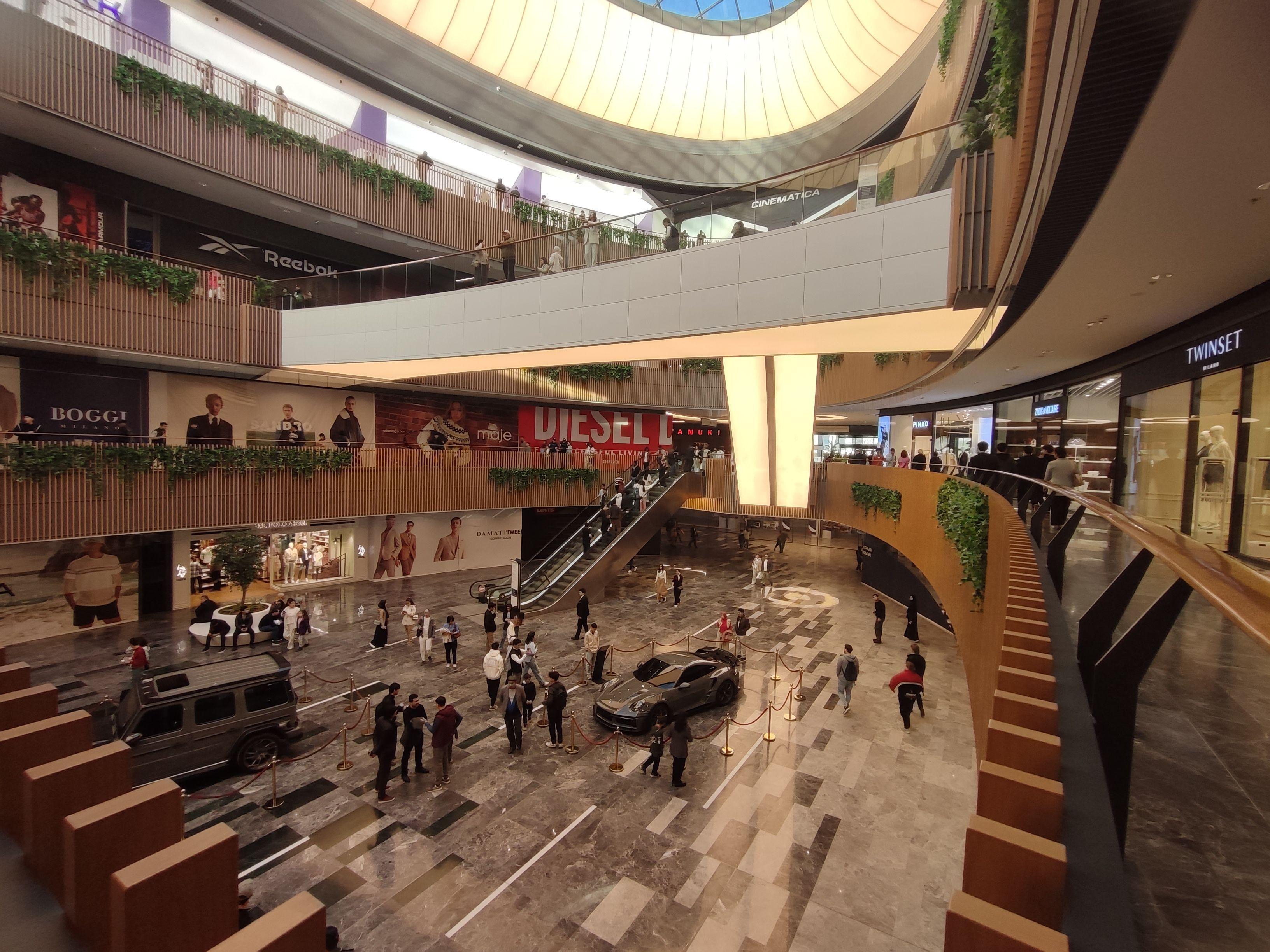
Photo: Adam Harangozó / Wikimedia Commons, CC BY-SA 4.0; Ji-Elle / Wikimedia Commons, CC BY-SA 4.0; ElenaLitera / Wikimedia Commons, CC BY-SA 4.0; Xasanboy off / Wikimedia Commons, CC BY-SA 4.0; Muzaffar Murodovich / Wikimedia Commons, CC BY-SA 4.0