The Bukharan Jews lived on the Silk Road for centuries. A guide to the active synagogues of Bukhara and Samarkand, the old Jewish quarters and cemeteries, Bukharan Jewish culture, and how to visit respectfully.
Facts, prices and schedules checked on November 4, 2026
The Jewish heritage of Bukhara and Samarkand is one of the most moving and least known sides of a trip to Uzbekistan. For centuries the Bukharan Jews were part of the life of these Silk Road cities: dyers, silk and textile merchants, musicians and bankers, with their own quarters, synagogues and language. Today only a small community remains, but the synagogues still open their doors, the cemeteries are cared for, and descendants from New York, Israel and Europe come back to find the houses and graves of their families.
This guide covers who the Bukharan Jews are, the synagogues in Bukhara and Samarkand that are still active, the Jewish quarters and cemeteries, and how to visit respectfully. Details are as of November 2026; community life is small and arrangements change, so we confirm opening times locally before each visit.
Who are the Bukharan Jews?
Bukharan Jews (also written Bukharian Jews) are the Jewish community of Central Asia, named after the Emirate of Bukhara where most of them lived. Their tradition traces their origins to Jews who settled in Persia after the Babylonian exile in the 6th century BC and moved east along the trade routes. Some families link their ancestry to the Lost Tribes of Israel.
They are distinct from the Ashkenazi Jews of Europe. Their traditional language is Bukhori, a Judeo-Persian dialect close to Tajik with many Hebrew words, written for centuries in Hebrew script. Their food, music and dress grew from the same culture as their Muslim neighbours, with Jewish law and ritual at the centre of family life.
Key facts:
- Main historic centres: Bukhara, Samarkand, Tashkent, Kokand, Margilan and Shakhrisabz.
- Uzbekistan's Bukharan Jewish population was about 35,000 in 1989 and is now estimated at a few hundred people, mostly elderly.
- The diaspora is large: about 50,000 in Queens, New York, a larger community in Israel, and smaller groups in Europe, Canada and Australia.
A short history of the Bukharan Jews
Under the khans and emirs, Jews lived in their own quarters and were a protected but restricted minority. They paid a special tax, could not ride horses inside the city, and had to wear distinguishing dress, including a rope belt instead of a sash. In the 18th century some families were forced to convert to Islam; their descendants, known as chala, kept a separate identity for generations. Many Jews worked as dyers, which is why indigo-blue hands were once a sign of the trade in Bukhara, and many traded in silk and cloth.
The Russian conquest in the 1860s and 1870s changed their position. In Russian-ruled Samarkand and Tashkent, Jews gained equal rights, and merchant families such as the Kalantarovs and Davidovs grew wealthy in the cotton and textile trade. Many families remember the late 19th and early 20th century as a golden age. Bukharan Jews built new synagogues, schools and grand houses, and some moved to Jerusalem, where they founded the Bukharan Quarter in the 1890s.
In Soviet times religion was suppressed and many synagogues closed, though Bukharan Jewish theatre, newspapers and music thrived for a time. During the Second World War, Ashkenazi Jews evacuated from the western USSR found refuge in Uzbekistan. Emigration began in the 1970s and became a mass movement after 1991. Bukhara alone once had thirteen synagogues; today two remain.
The Jewish quarter of Bukhara
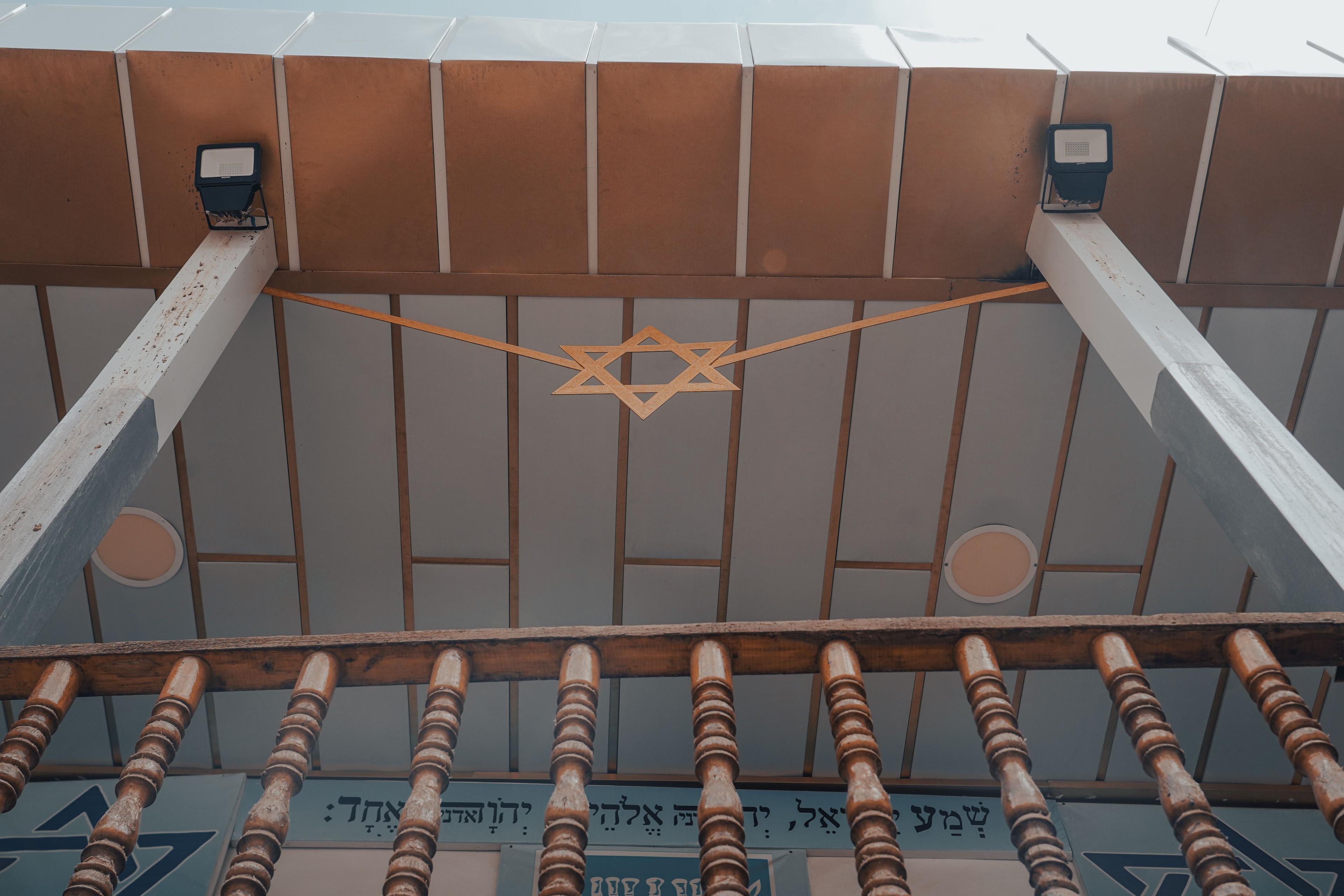
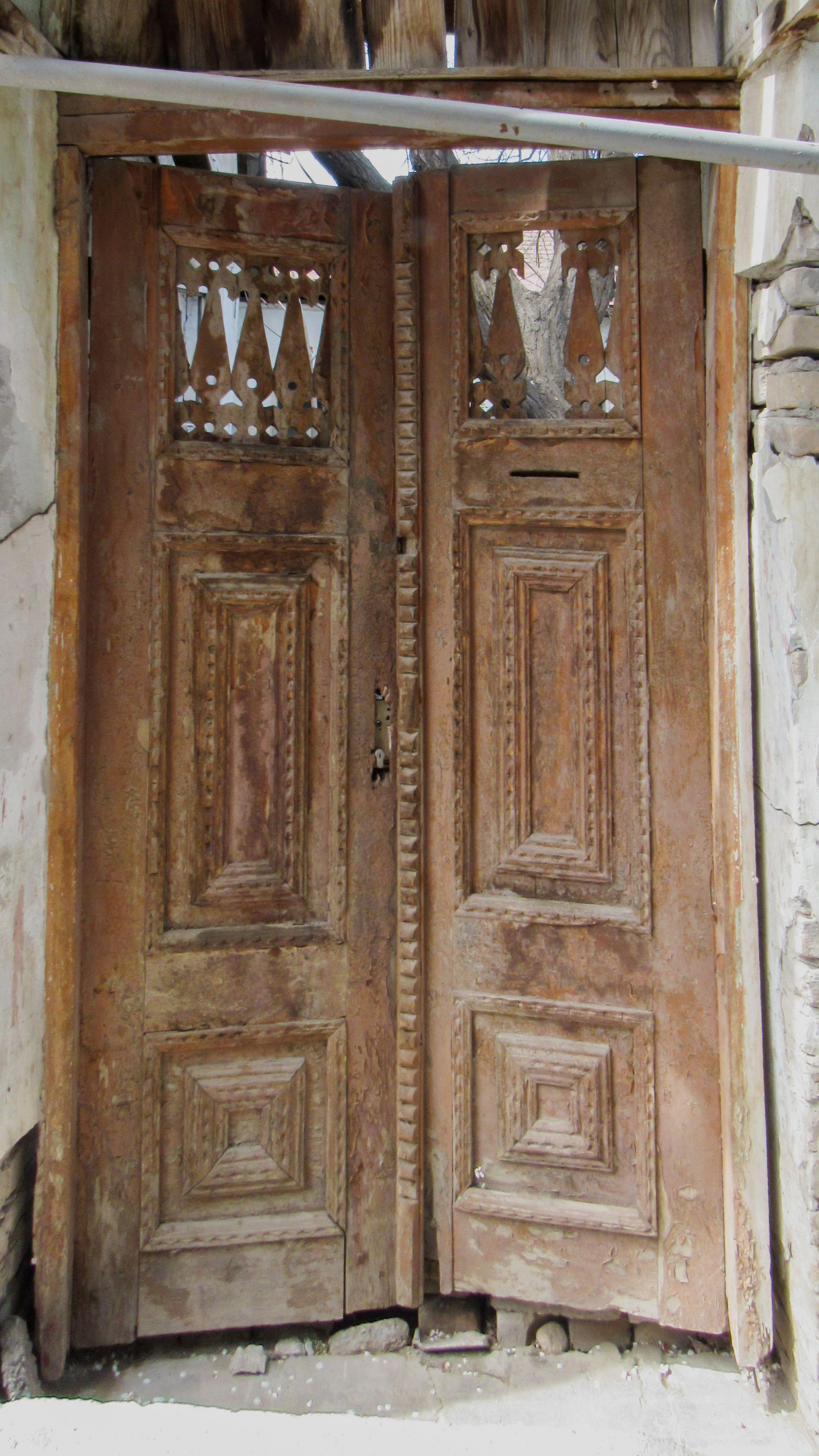
The old Jewish quarter of Bukhara lies in the lanes south of Lyabi-Hauz, a few minutes' walk from the pool and the teahouses. Local histories describe two areas, the old mahalla close to Lyabi-Hauz and a newer one that grew later further out. Walking through them today, you see the same mud-brick walls and carved wooden doors as elsewhere in the old town, but look closely and you notice small details: a Star of David worked into a gate, Hebrew letters on a plaque, or the mark where a mezuzah once hung on a door frame.
There is a well-known legend connected with Lyabi-Hauz. When the vizier Nadir Divan-Begi built the pool in the 1620s, a Jewish widow owned part of the land and refused to sell. In the end she agreed to exchange it for a plot nearby, where, the story says, the old synagogue now stands. Historians cannot confirm it, but every guide in Bukhara tells it.
Several old Jewish merchant houses in the quarter have been restored. One of them, a former Jewish residence near Lyabi-Hauz with 17th- and 19th-century halls, is now a boutique hotel with a small museum and receives organised visits; our guides can include it if it is open. In 2020 the Bukharan Jewish houses of the city were placed on the World Monuments Watch, which drew attention to the many that are empty or at risk.

Bukhara synagogues: which are active?
Two synagogues survive in Bukhara.
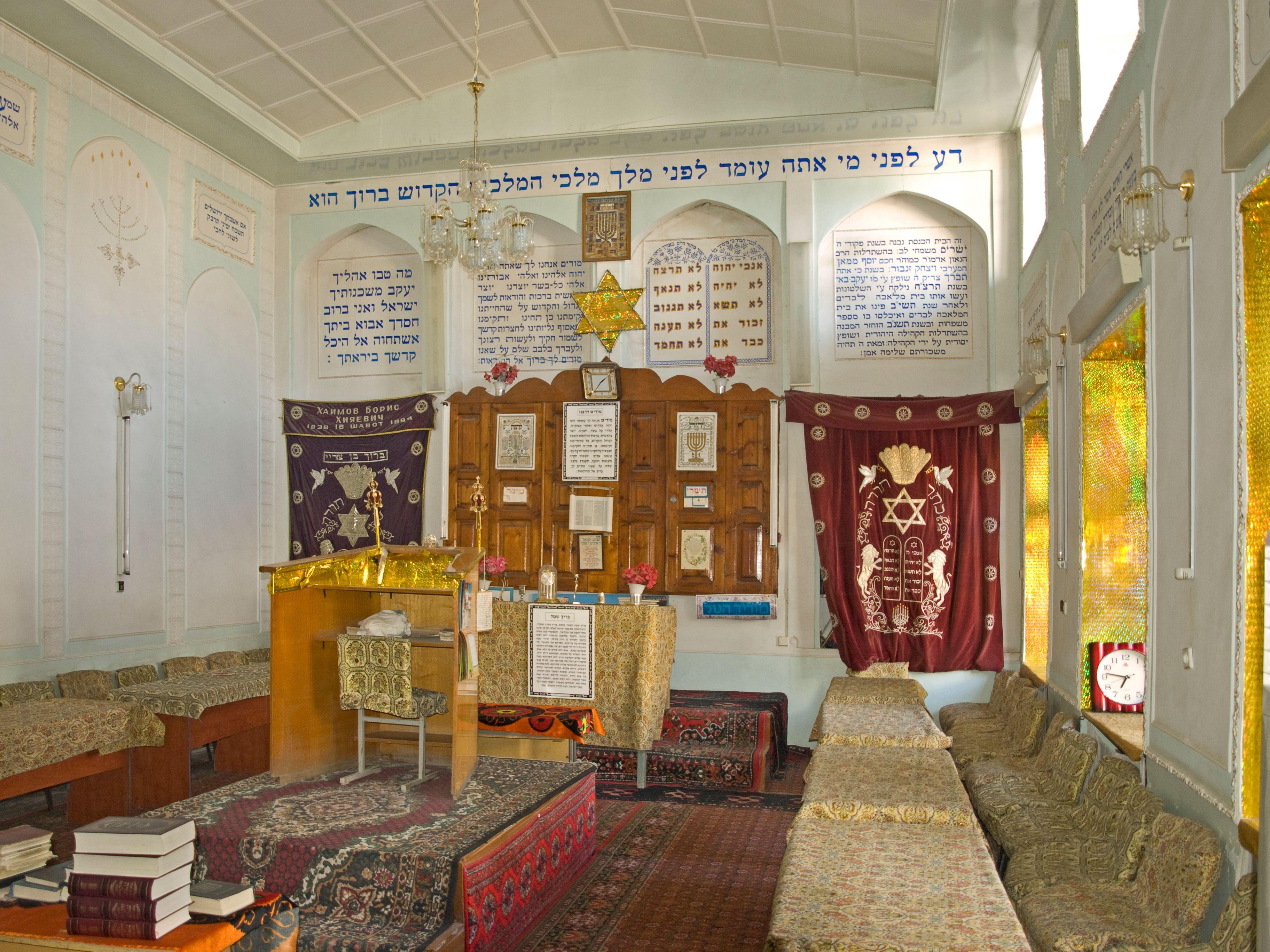
The main synagogue, often called the old synagogue, is in the Jewish quarter near Lyabi-Hauz. It is the active one. A small door from the lane leads into a courtyard with memorial plaques, a larger prayer hall on the ground floor and a smaller one upstairs, each with a Torah ark and a bimah. Old photographs on the walls trace the community's 20th-century history. The building is not run by a rabbi; a member of the community looks after it, and visitors are welcome outside service times. Services are held several times a week, including on Shabbat, when a small group of men gathers, though reaching a minyan of ten is not always easy.
The second synagogue stands in the quarter close to the Jewish cemetery. It is used much less, and opening depends on the caretakers, so it is best visited with a guide who has called ahead.
Bukhara also has a school with Hebrew classes, which today teaches mostly non-Jewish children alongside a few Jewish pupils, a sign of how small the community has become.
The Jewish cemetery of Bukhara
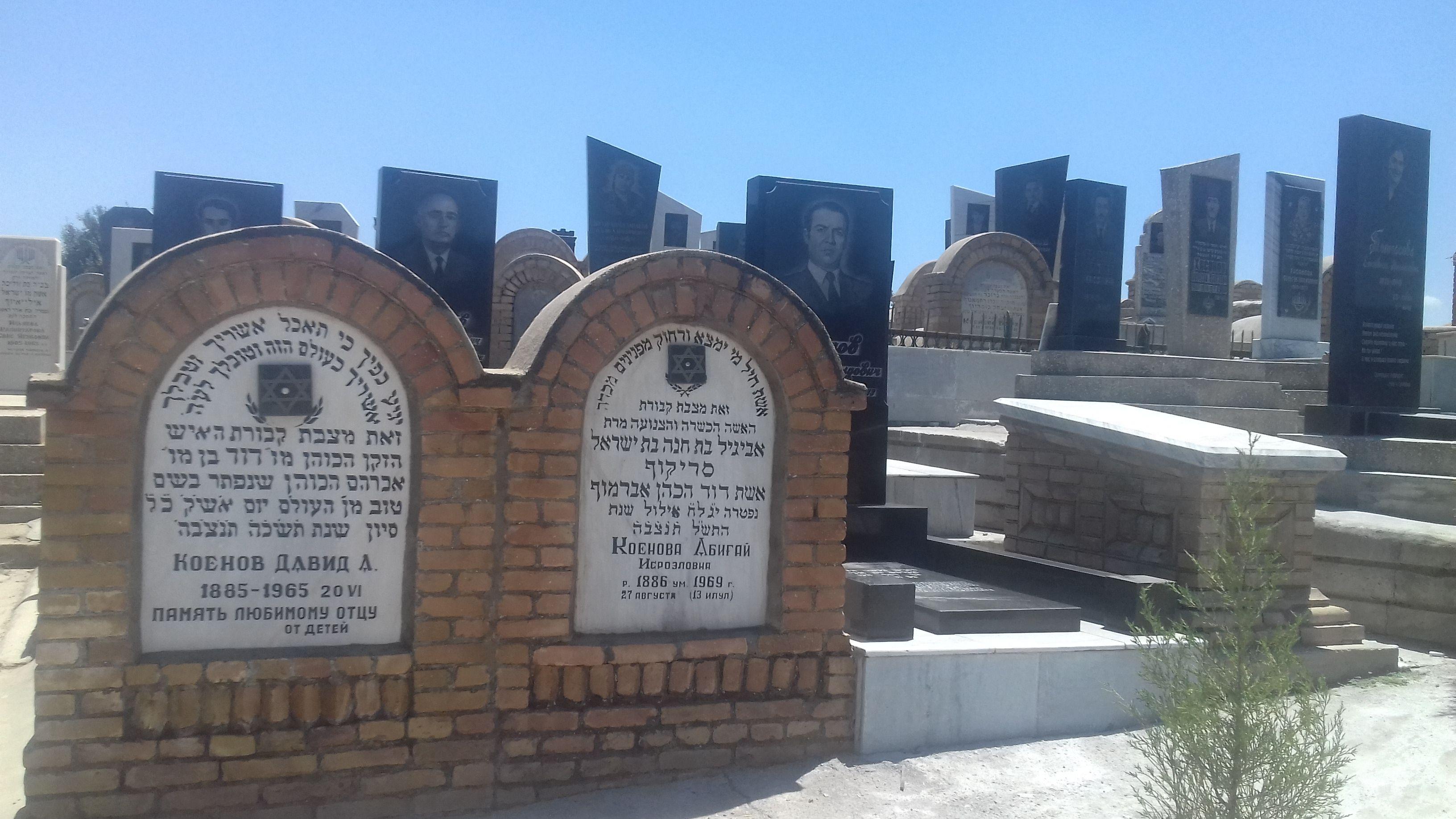
The Jewish cemetery of Bukhara is one of the largest in Central Asia, with more than 10,000 graves. It lies on the edge of the old town, a short drive or a longer walk from Lyabi-Hauz. Older stones carry Hebrew inscriptions, while many Soviet-era headstones have engraved portraits of the deceased, a tradition common across the former Soviet Union.
Upkeep is paid for largely by the diaspora. Families abroad fund caretakers to tend individual graves, and community members in Bukhara help visitors locate them. If you are looking for a relative's grave, bring as much information as you can: full name, father's name, approximate date of death and any photographs. Our guides can contact the community in advance to help.

Samarkand's Jewish quarter and the Gumbaz Synagogue
Samarkand's old Jewish quarter is in the old town, close to Tashkent Street, the pedestrian avenue between the Registan and Bibi-Khanym. In 1917 the city had about thirty synagogues. Only one, the Gumbaz Synagogue, remains active.
The Gumbaz (the name means "dome") was built in 1891, in the period of relative prosperity under Russian rule. It is hidden down a narrow lane in a residential area, so look for Judaica on the gate or walls. Inside, the main prayer hall has a domed ceiling, carved wooden doors, portraits of former rabbis and a Torah ark. One of its halls sheltered Ashkenazi Jews evacuated to Samarkand during the Second World War. A caretaker, not a rabbi, looks after it, and a congregation of around a dozen elderly men still attends services.
Other places of Jewish interest in Samarkand:
- The Samarkand Museum of Regional Studies, housed in the former mansion of the Kalantarov merchant family, with a section on Bukharan Jewish history and a richly decorated interior.
- The old Jewish cemetery, south of the old town. A New York-based charity has funded its restoration, and it remains in use.
- The mausoleum of Khoja Doniyor on Afrasiyab hill, associated with the prophet Daniel and revered by Muslims, Jews and Christians alike.
Our guide to Samarkand beyond the Registan covers the other sights in this part of the city.
Bukharan Jewish food, music and culture
Much of what visitors see of Bukharan Jewish culture today is on the plate and in music.
- Bakhsh, a green rice dish cooked with herbs, meat and sometimes liver, traditionally steamed in a cloth bag. The restored merchant house in Bukhara mentioned above offers bakhsh cooking classes.
- Oshi savo, a Shabbat dish of rice and meat cooked slowly overnight.
- Kosher food is not easy to find. The caretakers of the synagogues in Bukhara and Samarkand can sometimes arrange kosher meals for visitors with advance notice, and the community in Tashkent supplies kosher products.
Bukharan Jewish musicians were among the great performers of Shashmaqom, the classical music of Bukhara, and several famous singers of the Soviet era came from the community. Our article on Uzbek music and dance tells the wider story.
Visiting etiquette for synagogues and cemeteries
The community is small and many members are elderly, so a visit means a lot to them. A few simple rules make it go smoothly:
- Dress modestly. Men should cover their heads in the synagogue; a kippah is usually offered at the door. Women should cover shoulders and knees, and a scarf is appreciated.
- Come outside service times unless you are joining the service. On Shabbat, from Friday sunset to Saturday nightfall, do not take photographs, use your phone or handle money inside.
- Ask before photographing people. Interiors are usually fine to photograph outside Shabbat, but ask the caretaker first.
- Leave a donation. There is no ticket. A donation to the synagogue or the cemetery fund keeps these places running; use the tzedakah box or hand it to the caretaker.
- In cemeteries, walk on the paths, do not sit on or step over graves, and keep voices low. Placing a small stone on a grave is a traditional Jewish sign of respect.
- Avoid the major Jewish holidays unless you plan to attend, as caretakers may be busy or closed to visitors.
Security is light and the atmosphere relaxed. Uzbekistan is a majority-Muslim country with a long history of different faiths living side by side, and Jewish visitors generally report a warm welcome.
How to plan a Jewish heritage tour of Uzbekistan
Bukhara and Samarkand are the essentials, and both fit easily into a standard route with the Afrosiyob train.
- Bukhara: half a day for the Jewish quarter, the active synagogue and the cemetery, plus the restored merchant house if it is open. Combine with Lyabi-Hauz and the trading domes.
- Samarkand: half a day for the Gumbaz Synagogue, the Kalantarov house museum, the cemetery and Khoja Doniyor, after the Registan.
- Tashkent: the capital has the country's main active synagogues and its only rabbi serving the Bukharan Jewish community, and is the place to start if you want to meet community representatives.
- Further afield: Kokand, Margilan and Shakhrisabz all had Jewish communities, and a small synagogue still stands in the Fergana Valley.
A sample morning in Bukhara's Jewish quarter:
- 9:00: start at Lyabi-Hauz and hear the story of the widow and the pool.
- 9:20: walk into the lanes of the Jewish quarter, looking at carved doors, courtyards and the restored merchant houses.
- 10:00: visit the old synagogue with the caretaker, see the prayer halls and the photographs of the community.
- 11:00: drive to the Jewish cemetery and walk among the portrait headstones.
- 12:30: lunch in the old town, ideally bakhsh if it can be arranged in advance.
In Samarkand the same pattern works in the afternoon: the Gumbaz Synagogue after lunch, the Kalantarov house museum, and Khoja Doniyor for the late-afternoon light over the Afrasiyab hills.
What to expect emotionally: these are not museums but living places for a community that is getting smaller every year. A conversation with a caretaker, who may remember a quarter full of families, can be the most memorable part of the day. Allow time to listen.
Descendants looking for family graves or houses should plan ahead. Diaspora organisations such as the Kattakurgan Memorial Fund keep online grave directories, and old addresses can often be matched to today's streets with the help of local guides and community members.
Visiting with TourEast
Our guides in Bukhara and Samarkand know the quarters and can contact the synagogue caretakers in advance. We can plan a private Jewish heritage itinerary, including visits to family graves, as part of a wider trip through Uzbekistan.