Uzbekistan's fruit calendar month by month, from June apricots to winter melons: Mirzachul torpedo melons and the famous melons of Khorezm, grapes, pomegranates, the best dried-fruit markets, how to choose a melon and what customs at home allow.
Facts, prices and schedules checked on November 4, 2026
Ask any traveller who has been to Uzbekistan in late summer what they remember, and many will mention the domes of Samarkand in the same breath as the melons. Uzbek melons, grown in long hot summers on irrigated desert soil, are famous across Central Asia and Russia, and travellers have praised them for centuries. In 1333 Ibn Battuta wrote from Khorezm that there were no melons like the melons of Khorezm, and he ranked those of Bukhara next.
This guide is the fruit lover's companion to our general Uzbek food guide. It covers the fruit calendar month by month, the main melon types including the Mirzachul torpedo melon and the melons of Khorezm, grapes, apricots and pomegranates, the best markets for dried fruit, how to choose and eat a melon, and the rules for taking fruit home.
Uzbekistan fruit calendar: what is in season each month
Seasons shift by a week or two between the warm south and the cooler north, and from year to year. As a guide:
- January and February: stored apples, pears, quinces and pomegranates, the last winter melons kept since autumn, citrus, and the full range of dried fruit and nuts
- March: dried fruit, nuts and greens; Navruz on 21 March brings sumalak and spring herbs rather than fresh fruit
- April: greenhouse strawberries and cucumbers, fresh herbs and wild rhubarb from the mountains
- May: strawberries, the first cherries late in the month and, at the end of May, the first white and black mulberries
- June: cherries, sour cherries, apricots at their peak, mulberries, early peaches and the first small early melons
- July: peaches, nectarines, plums, figs, early grapes, and melons and watermelons arriving in quantity
- August: the height of the melon season, grapes of dozens of varieties, figs and peaches
- September: grapes and melons at their best, apples, pears, quinces and the first pomegranates
- October: pomegranates, quinces, late grapes, late melons, walnuts and the first persimmons
- November: persimmons, pomegranates, quinces, apples and winter melons
- December: persimmons, pomegranates, stored winter melons and dried fruit
For fruit, the best months are June, for apricots and cherries, and August to October, for melons, grapes and pomegranates. Our guides to Uzbekistan in summer and in autumn explain how this fits with the weather and the sightseeing.

Uzbek melons: why they are so sweet
The Uzbek word for melon is qovun, and watermelon is tarvuz. The Uzbek Research Institute of Vegetable, Melon Crops and Potato counts dozens of melon varieties grown in the country, and other sources list well over a hundred local forms. They fall into three broad groups:
- Early melons, ripening from June: small, soft and fragrant, best eaten within a day or two
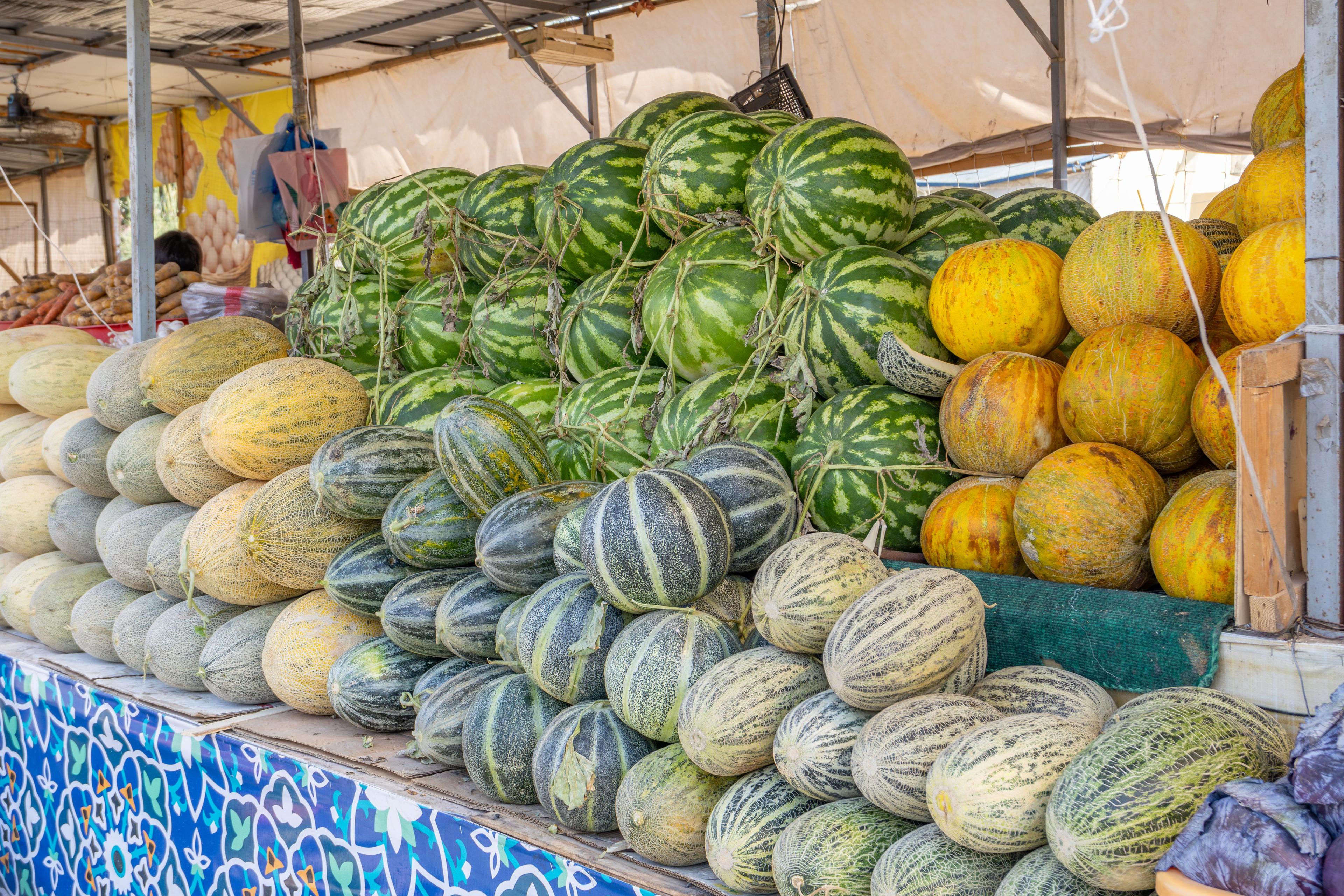
- Summer melons, from July to September: the big, juicy melons piled up in every bazaar and along the roads
- Autumn and winter melons, harvested from September: firm and thick-skinned, they can be stored for months and become sweeter as they age
The secret is the climate and the soil: long, cloudless summers with temperatures well above 35°C, cool nights, and irrigated soils of the old river oases. Melons are grown on a huge scale in the Syrdarya and Jizzakh regions, in Khorezm and Karakalpakstan, and around Bukhara and Samarkand.
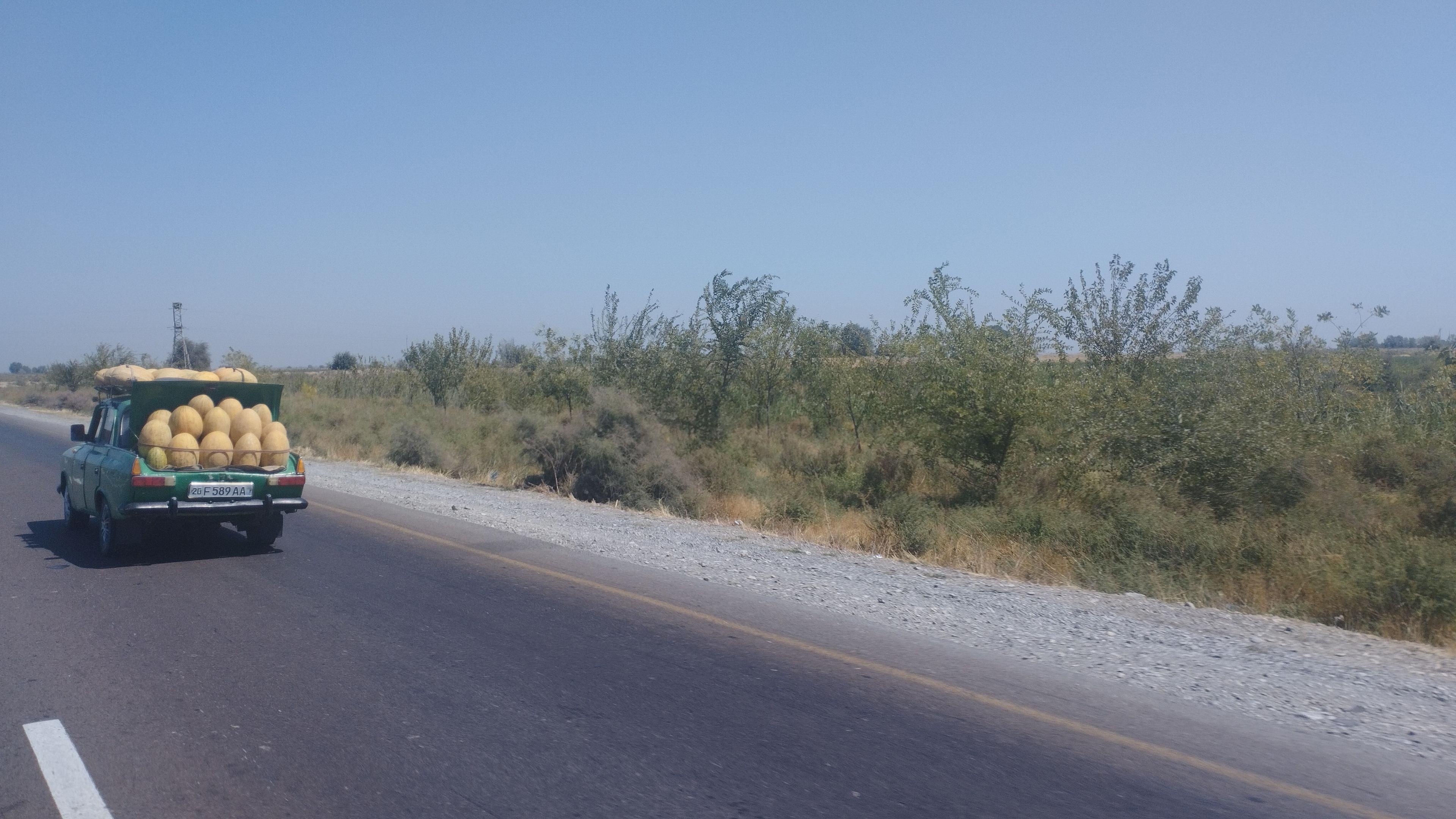
In late summer roadside sellers stack melons in pyramids on the main highways, and many families buy several at a time. The sight of an old car with melons tied on the roof is a classic of August.
Watermelons share the same season and the same bazaar pyramids. Uzbek watermelons are large, with deep red flesh, and on a hot afternoon a chilled slice is the most refreshing thing you can eat. Prices for both melons and watermelons are at their lowest in late August and September, when the harvest is at its peak, and rise again as the stored winter melons become the only ones left.
Mirzachul melon: the torpedo melon
The Mirzachul melon, also called Mirza, Torpeda or the torpedo melon, is the Uzbek melon most likely to be known abroad. It is named after Mirzachul, the Hungry Steppe, the plain south of the Syrdarya river, now irrigated and shared by the Syrdarya and Jizzakh regions.
What it looks like:
- Long and narrow, like a torpedo, often 50 cm or more and up to around 10 kg
- A creamy yellow skin with a fine beige net
- Pale, almost white flesh, very juicy and sweet, with a soft, melting texture
The torpedo melon is also the variety most exported, which is why you may already have seen it in shops in Russia or Europe. In season, from about August into autumn, it is everywhere in Tashkent and Samarkand. The roadside stalls on the highway between Tashkent and Samarkand, through the Syrdarya and Jizzakh regions, are a good place to buy one fresh from the fields.
Khorezm melons: the melons of Khiva
The melons of Khorezm, the oasis around Khiva and Urgench on the lower Amu Darya, have the longest reputation of all. Arab geographers wrote about them in the 10th century, noting that they were dried and sent far away, and later travellers described melons packed in snow or ice and carried by caravan to distant courts.
Khorezm growers still keep many local varieties. Among those named by researchers and growers:
- Gurvak: an early-summer melon with soft, fragrant flesh
- Ko'k Gulobi: a green-skinned melon, one of the region's best known
- Xonqizi, To'yona, Bijir and Oq Novvot: summer melons
- Zard and Tirshek: late, autumn and winter melons, often hung up to age
Khorezm is also known for winter storage. Late melons are hung in nets or on straw in cool, airy rooms called qovunxona, melon houses, where they can keep for two months or more and grow sweeter.
In August Khiva holds the Qovun Sayli melon festival. In 2026 it ran from 7 to 9 August in Ichan-Kala, with growers from every district of the region, tastings, music and pavilions. If you are in Khiva in late summer, ask your guide about it; our festivals calendar lists the dates when they are announced.
How to choose and eat an Uzbek melon
At the bazaar, let the seller help. It is normal to ask them to choose a ripe melon for you and to cut a small piece to taste before you buy. Signs of a good melon:
- A strong, sweet smell at the stem end
- A slightly springy end, opposite the stem
- For watermelons, a hollow sound when tapped and a yellowish patch where it lay on the ground
To eat it like a local, cut the melon into long slices, remove the seeds, and cut the flesh into pieces on the rind. Melons are often served at the end of a meal with tea.
A word of local wisdom: many Uzbeks avoid eating a lot of melon straight after a heavy meal of plov or fatty meat, or with cold drinks, and prefer to eat it on its own between meals. This is folk advice rather than medical science, but it matches many travellers' experience. Wash your hands and knife, and wash the outside of the melon before cutting it. Our health and tap water guide has more food safety tips.

Grapes, apricots and pomegranates
Grapes: grapes grow everywhere in Uzbekistan, from courtyard trellises that shade family tables to large vineyards around Samarkand, Tashkent and the Fergana Valley. From July to October you will find dozens of table varieties. Look for the long, finger-shaped Husayni, the small seedless Kishmish used for raisins, and the pink Taifi. In August a grape festival, Uzum Sayli, is held near Tashkent; in 2026 it was on 21 and 22 August. Some grapes also go into wine; our guide to Uzbek wine and drinks covers the wineries.
Apricots: the apricot (o'rik) is the fruit of early summer, at its peak in June and early July. Surkhandarya in the warm south harvests first, then Samarkand and the Fergana Valley. Ripe Uzbek apricots are small, intensely sweet and fragile, so buy what you can eat in a day. Much of the harvest is dried on rooftops and in fields, especially in the Fergana Valley, which produces the dried apricots sold all over the country.
Pomegranates: pomegranates (anor) ripen from late September and fill the bazaars in October and November. Many come from Surkhandarya and the Fergana Valley. Fresh pomegranate juice, pressed in front of you at bazaar stalls and cafés, is one of the great pleasures of an autumn trip. The pomegranate is also a symbol of abundance and fertility, and you will see it painted on ceramics and embroidered on suzani.
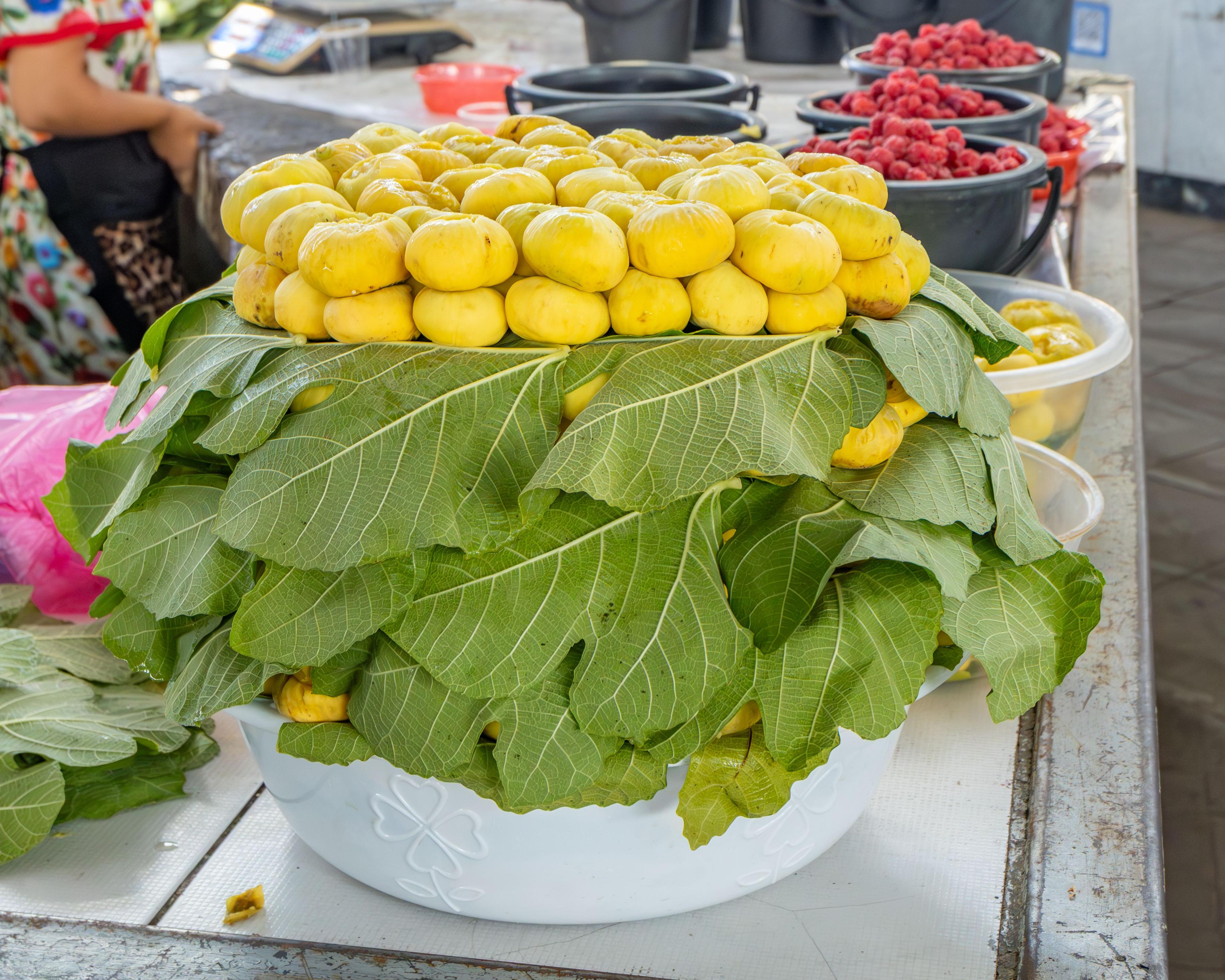
Also look for figs in late summer, persimmons in late autumn and white mulberries in June, which grow on trees all over the old towns.
Where to buy fruit and dried fruit
Every Uzbek city has a central bazaar where fruit is fresh and fairly priced. Our Chorsu Bazaar and Uzbek bazaars guide covers them in detail; for fruit, these are the best:
- Tashkent: Chorsu Bazaar, with long fruit rows outside the main dome and dried fruit and nuts in the upper gallery. Alay Bazaar in the city centre is smaller and pricier, but known for top-quality fruit.
- Samarkand: Siab Bazaar, next to the Bibi-Khanym Mosque, famous for dried apricots, raisins and nuts.
- Bukhara: the central market near the old town, with good fruit and local prices.
- Khiva and Urgench: the bazaars outside Ichan-Kala and in Urgench, best for Khorezm melons in season.
- The Fergana Valley: the bazaars of Kokand, Margilan and Fergana, where much of the dried fruit is produced.
Dried fruit is the most practical fruit souvenir: dried apricots, whole and halved, raisins of many colours, dried figs, cherries and mulberries, and dried melon in plaited strips, a Khorezm speciality. Taste before you buy, check that the fruit looks natural rather than glossy and bright, and ask the seller to vacuum-pack it, which most can do on the spot. Our guide to Uzbek desserts and sweets covers nuts, halva and navat.
Fruit is sold by the kilo at fixed prices, and bargaining over food is not customary, although buying more often brings a small discount or an extra handful.

Can you take fruit home from Uzbekistan? Customs rules
This is two questions: what Uzbekistan allows you to take out, and what your own country allows you to bring in. The second is usually the stricter one.
Leaving Uzbekistan: dried fruit and nuts in personal quantities are routinely carried in luggage. Commercial quantities need a phytosanitary certificate from the Uzbek plant quarantine service. If you want to take a fresh melon, check your airline's baggage rules and pack it well in checked luggage.
Arriving home, as of November 2026:
- European Union: since 14 December 2019, fresh fruit and vegetables from outside the EU need a phytosanitary certificate, even in personal luggage. The only exceptions are bananas, coconuts, dates, durians and pineapples. A fresh Uzbek melon or bag of apricots can therefore be confiscated. Dried fruit and nuts are generally allowed.
- United Kingdom: most fresh fruit and vegetables from outside the EU also need a phytosanitary certificate. Check gov.uk before you travel.
- United States: declare all food. Fresh fruit from Central Asia is generally not admitted; dried fruit and nuts are usually allowed when declared. Check the US Customs and Border Protection and USDA guidance.
- Australia and New Zealand: very strict biosecurity rules; declare all food, or eat your fruit before you fly.
- Russia, Kazakhstan and other neighbouring countries: personal quantities of fresh fruit from Uzbekistan are commonly carried, and Russia has allowed fruit and vegetables from Uzbekistan in personal luggage since 2019, but check current rules.
Never bring seeds or plants for planting without permits. If in doubt, choose dried fruit, vacuum-packed or bought in a supermarket with a printed label, and declare it.
Fruit, melons and travel with TourEast
If fruit is part of why you travel, timing is everything. We can plan a June trip around apricots and cherries, or an August and September route through the melon fields of Mirzachul and Khorezm, with bazaar mornings and a farm visit, on our Flavours of Uzbekistan tour or a custom itinerary.

Frequently asked questions
Watch
Photo gallery