Choosing between Uzbekistan and Turkey for a first Muslim-world city trip: architecture, cost, crowds, food, flights and how to combine both through Istanbul. An honest comparison, including where Turkey is the better choice.
Facts, prices and schedules checked on November 4, 2026
Many travellers deciding where to go for a city-and-culture trip in the Muslim world end up with the same two names: Turkey and Uzbekistan. One has the domes of Istanbul, the cave churches of Cappadocia and a coastline; the other has the turquoise tilework of Samarkand, the mud-brick old town of Bukhara and the walled desert city of Khiva. Both are safe, both are rich in history, and both have excellent food.
This comparison is meant to help you choose, or to combine them. We are an Uzbekistan operator, so we are biased, but we will say plainly where Turkey is the stronger choice. Prices and rules are as of November 2026 and should be confirmed before you book.
Quick comparison: Uzbekistan vs Turkey at a glance
- Best for: Uzbekistan suits travellers who want Silk Road monuments, fewer crowds and a compact route; Turkey suits those who want variety, beaches, landscapes and an easy first trip.
- Architecture: Uzbekistan is Timurid and Central Asian, with blue-tiled domes and minarets; Turkey is Byzantine and Ottoman, with large stone domes and slender minarets.
- Cost: Uzbekistan is generally cheaper for hotels, food and local transport, though prices have risen.
- Crowds: Istanbul's headline sights are very busy; Uzbekistan is quieter, with peaks at the Registan in spring and autumn.
- Size: Turkey is huge and needs internal flights; Uzbekistan's main cities are linked by fast trains.
- Visa: most Western visitors need no visa for either country for a stay of 30 days in Uzbekistan and 90 days in Turkey; check the official sites.
- Beaches and hiking: Turkey wins clearly.
Architecture and sights: Silk Road or Ottoman?
This is the real question. Istanbul offers Hagia Sophia, the Blue Mosque, Topkapi Palace and Suleymaniye Mosque, a skyline built by imperial engineers and by the great architect Sinan, and layered Byzantine and Ottoman history. Beyond Istanbul, Turkey adds Cappadocia's valleys and cave churches, the ruins of Ephesus and the Aegean and Mediterranean coasts.
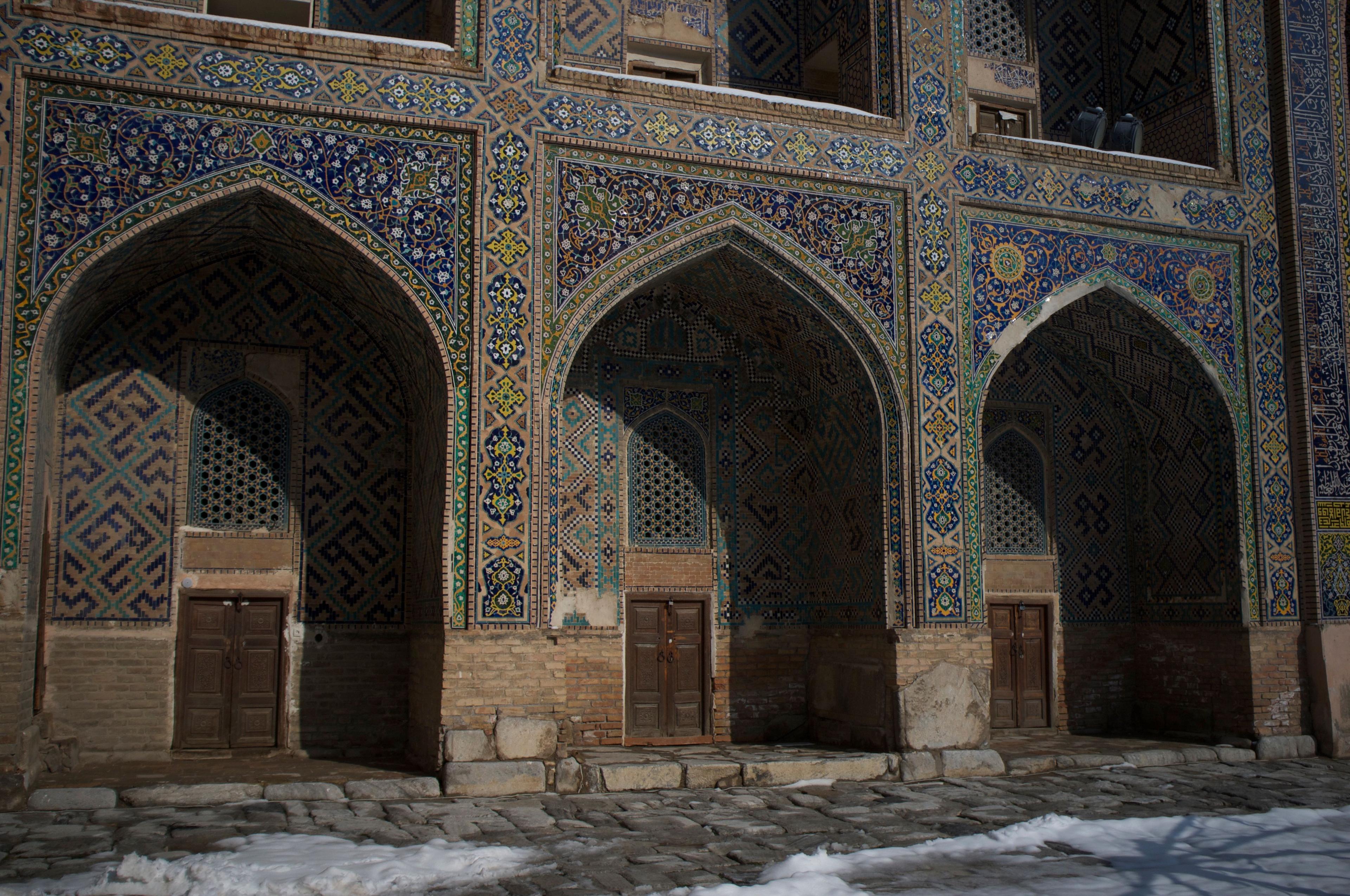
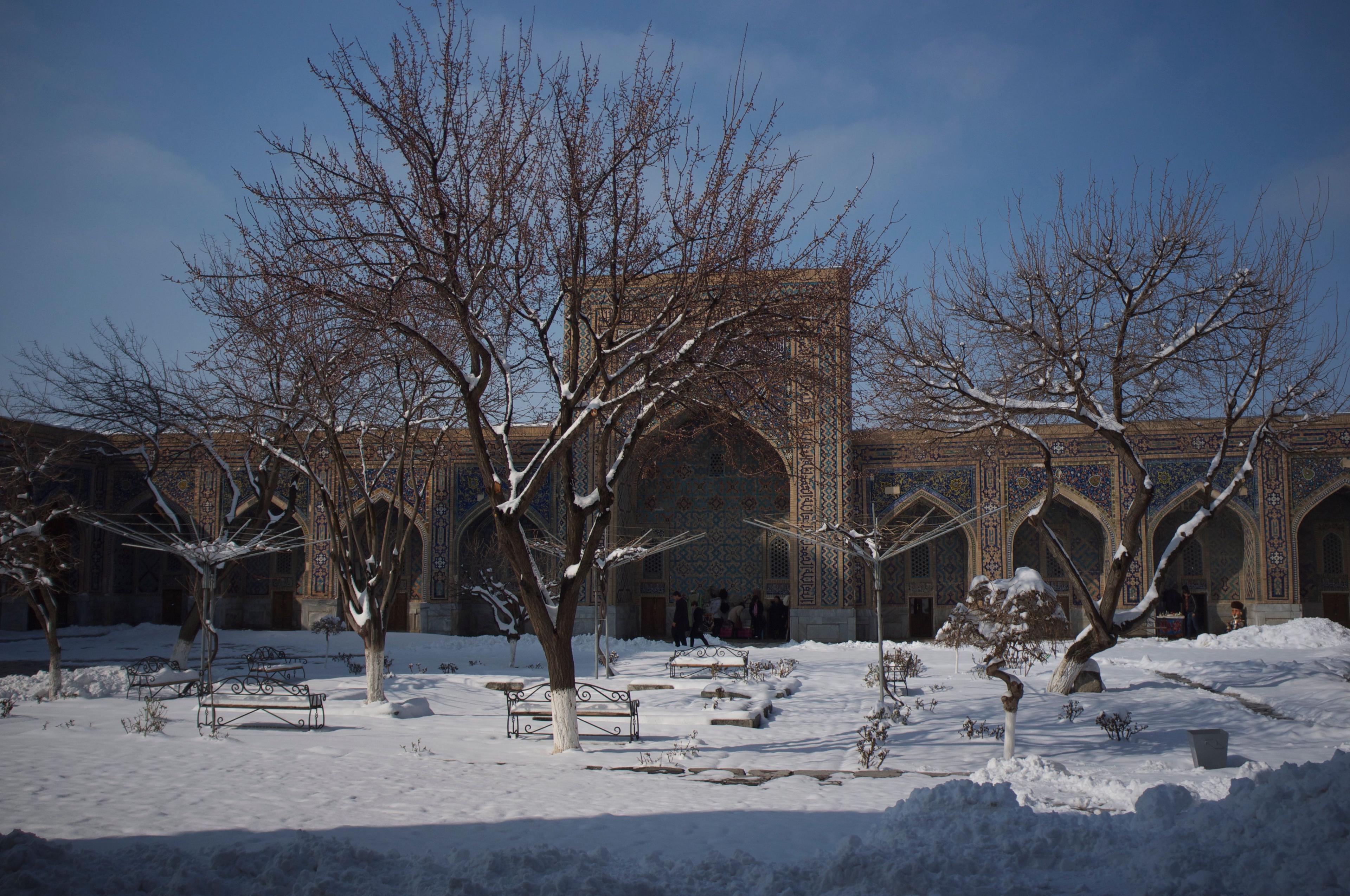
Uzbekistan's treasures are different in colour and scale. The Registan in Samarkand, with its three tile-covered madrasahs, the avenue of mausoleums at Shah-i-Zinda, Gur-e-Amir where Amir Timur is buried, Bukhara's Kalyan minaret and trading domes, and Khiva's Ichan-Kala form one of the world's most coherent groups of Islamic architecture. Our guide to Islamic architecture in Uzbekistan explains the styles.
Where Turkey wins: sheer variety of landscapes and sights, and the number of world-famous interiors. Where Uzbekistan wins: tilework, walkable old towns that feel alive, and the chance to see the monuments without queues for most of the year.
Is Uzbekistan cheaper than Turkey?
Generally yes, though the gap is not fixed and is hard to measure. Cost-of-living comparisons put Uzbekistan well below Turkey, but those compare residents' budgets rather than tourist prices. In our experience a mid-range traveller spends roughly US$90 to 150 a day in Uzbekistan as of November 2026, including hotels, meals, transport and entrance fees, excluding flights; see our travel cost guide. In Turkey costs vary hugely by region: Istanbul and the Aegean resorts can be expensive in summer, while interior towns are cheaper, and many travellers report that Turkish prices have risen noticeably in recent years.
Entrance fees show the difference. Foreign visitors pay 25 euros for the Hagia Sophia upper gallery (a fee in force since January 2024, according to reports; confirm before travel), while the Registan costs about 100,000 som (about US$8.50) in 2026. Both countries have free or cheap ways to enjoy their cities: walking, bazaars, tea.
If your priority is a low budget, Uzbekistan is usually the better value. If you want a beach week with all-inclusive packages, Turkey's resort market is hard to beat.
Crowds, comfort and ease of travel
Turkey has decades of mass-tourism infrastructure. English is widely spoken in tourist areas, public transport is extensive, and you can book almost anything online. Uzbekistan has grown quickly but is smaller: English is spoken in hotels and by guides, signage is improving, and independent travel takes a little more planning. Trains must be booked early in high season, and cash remains important. Our guide to things to know before visiting and our list of first-timer mistakes help.
Crowds work the other way. Hagia Sophia, the Blue Mosque and Cappadocia's balloon flights are busy through much of the year. The Registan, Shah-i-Zinda and Bukhara's old town have peak seasons, April, May, September and October, but outside them are much calmer. If you dislike queues, Uzbekistan is easier; if you dislike uncertainty, Turkey is easier.
Food and drink
Both cuisines are excellent and quite different. Turkey offers a vast variety: mezze, kebabs, seafood on the coast, regional specialities, baklava and Turkish coffee. Uzbek food is simpler and more central: plov cooked in a cauldron, samsa from the tandoor, lagman noodles, manti dumplings, fresh bread and some of the world's best melons and dried fruit. Our guides to Uzbek food, plov and street food explain what to order.
Alcohol is available in both countries in tourist areas; Uzbekistan also makes wine, covered in our wine guide. Both countries have halal food as the norm; see our halal travel guide for Uzbekistan.
Istanbul versus Samarkand and Bukhara: the cities side by side
Istanbul is a megacity of many millions on two continents, with ferries across the Bosphorus, markets, galleries and nightlife; you could spend a week there without repeating yourself. Samarkand and Bukhara are far smaller. Their historic centres can be walked in two days each, and their pleasures are slower: a morning among the tiles, a long lunch in a courtyard, an evening beside the Lyabi-Hauz pond.
Neither is better; they answer different questions. If you want a city to live in for a week, choose Istanbul. If you want monuments to stand in front of, in a setting small enough to take in, choose Samarkand and Bukhara. Our guides to the Registan, to Bukhara and to choosing between Samarkand, Bukhara and Khiva will help you imagine the days.
Safety, etiquette and the human side
Both countries are generally safe for visitors, and both reward good manners: modest dress at mosques, a polite greeting, an acceptance of tea. Uzbekistan's hospitality is famously direct, and visitors are often invited to sit and drink tea, while Turkey's tourist trade is more professional and sometimes more insistent, particularly in the bazaars of Istanbul. Check your government's travel advice for both countries before booking, and see our guide on whether Uzbekistan is safe.
Getting there: flights between Istanbul and Uzbekistan
Istanbul is the main bridge between the two. Turkish Airlines flies from Istanbul to Tashkent several times a day, and, as of 2026, also to Samarkand and Bukhara according to our flights guide, while Uzbekistan Airways and Qanot Sharq are among the other carriers on the route. The flight takes roughly four and a half hours from Istanbul. Schedules and fares change by season; check the airlines for live information.
From Europe, a single-ticket connection via Istanbul is often one of the cheapest ways to reach Uzbekistan, with fares of roughly 450 to 800 euros return in our guide to flights from Europe. This makes a stopover practical.
Combining Turkey and Uzbekistan
If you cannot choose, combine them. A two-week outline: three or four nights in Istanbul, a flight to Tashkent, then Samarkand, Bukhara and, if time allows, Khiva by train and plane, and a flight home from Tashkent via Istanbul. This gives you the contrast of Byzantine and Ottoman domes with Timurid tilework and a link between two cultures that shared language, religion and trade for a thousand years.
Alternatively, add a stopover on the way home: Uzbekistan first, then three nights in Istanbul. Because the flights are scheduled through the same hub, there is rarely any extra cost for a longer layover, but check your fare rules. Our guide to stopovers in Istanbul, Dubai and Doha explains the options.
How to choose: a short decision guide
- Choose Uzbekistan if: you want a Silk Road trip, calm monuments, authentic bazaars and old towns on foot, and a good value for a week or two.
- Choose Turkey if: you want beaches, hiking, a long season, landscapes like Cappadocia, or a first independent trip with minimal friction.
- Choose both if: you have 12 days or more and like contrast, or if Istanbul is your connection hub anyway.
- Timing: spring and autumn suit both. In July and August Uzbekistan is very hot, with afternoons above 40°C in Bukhara and Khiva, whereas Turkey's coasts are busy but cooler by the sea.
Whichever you pick, spend longer than you think you need in the old towns.
Planning with TourEast
We know only one of these two countries from the inside, and we are glad to say so. If Uzbekistan sounds right, we can build a private or small-group itinerary around the Registan, Bukhara and Khiva, and arrange your Istanbul connection around the best flight times. Our classic Uzbekistan tours show the standard route, and our trip builder at /trip-builder lets you sketch your own. Message us on WhatsApp with your dates.