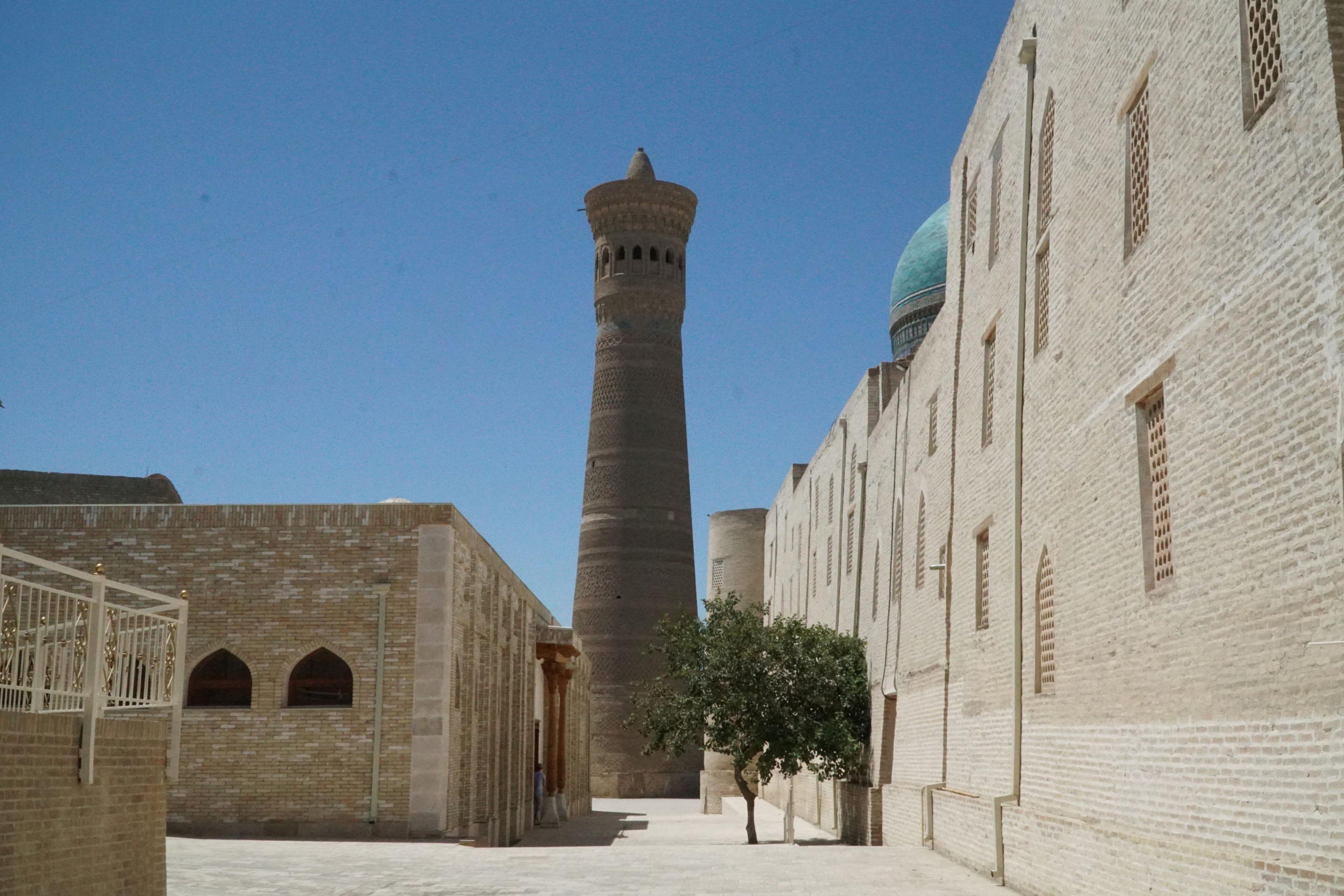
From the Church of the East in Samarkand and the cave inscriptions of Urgut to the Polish Catholic cathedral, the Armenian church and the Lutheran Kirche: a guide to Christian heritage in Uzbekistan and how to visit it.
Facts, prices and schedules checked on November 4, 2026
Christian heritage in Uzbekistan is far older than most travellers expect. Long before Islam reached Central Asia, merchants and monks of the Church of the East carried the Gospel along the Silk Road. Samarkand became the seat of a metropolitan, and a monastery in the mountains near Urgut drew pilgrims who carved crosses and Syriac inscriptions into the rock. Many centuries later, the Russian Empire brought Orthodox cathedrals, a Polish Catholic church, a German Lutheran church and an Armenian church to the new quarters of Tashkent and Samarkand. Most of these are still working churches today.
This guide follows Christianity in Uzbekistan from the Nestorians to the present day: what survives, what you can visit, and how to combine these places with the mosques and madrasahs that most visitors come to see. It is written for Christian groups of every tradition, and for anyone interested in the religious history of the Silk Road.
Is Uzbekistan a Christian country?
No. Uzbekistan is a Muslim-majority country, and most Uzbeks are Sunni Muslims. Christians are a small minority, but a visible one in the big cities. The largest community is Russian Orthodox, organised as the Tashkent and Uzbekistan Diocese of the Moscow Patriarchate. There are also Roman Catholic, Lutheran, Armenian Apostolic, Baptist and other Protestant congregations, made up largely of Russians, Koreans, Germans, Poles and Armenians whose families settled here in the 19th and 20th centuries.
Religious communities must be officially registered, and the registered churches hold regular public services. Visitors are welcome to attend them. Two rules matter for travellers: proselytism and missionary activity are prohibited by law, and religious literature is allowed for personal use, while large quantities can draw questions at customs. A Christian group that simply comes to pray, attend services and visit historic sites will meet nothing but courtesy, and often real curiosity.
The Church of the East in Samarkand
The first Christians of Central Asia belonged to the Church of the East, often called "Nestorian" in older books. Its centre was in Persia and its liturgical language was Syriac. Its monks and merchants travelled with the Sogdian caravans that linked Persia with China. By the time East Syrian missionaries reached the Chinese capital Chang'an in 635, Samarkand appears to have been the main Christian centre of Sogdiana. The city became the seat of a metropolitan bishop. Historians date this to anywhere between the 6th and the 8th century, and by the time of Patriarch Timothy I (780–823) at the latest, Samarkand ranked among the great sees of the Church.
Christian communities survived the Arab conquest and lived in Samarkand for centuries alongside Muslims, Zoroastrians, Jews and Buddhists. When Marco Polo described the city in the late 13th century, he told of a Christian church dedicated to St John the Baptist and a legend of a column that hung miraculously in the air. No early church has yet been found in Samarkand itself, so the story is best read as a traveller's tale that preserves a real memory of Christian Samarkand. Fittingly, the city's Catholic church today is also dedicated to St John the Baptist.
The community faded during the 14th century, after the Mongol period and the wars that followed. For several hundred years there was no organised Christian life in the region until the Russian conquest of the 1860s.
Urgut: a Christian monastery in the mountains
The most important Christian archaeological site in Uzbekistan lies in the foothills above Urgut, about 35 km south-east of Samarkand. Writing in the 10th century, the Arab geographers Ibn Hawqal and al-Istakhri both described a Christian monastery in the mountains near Samarkand. Scholars identify it with Urgut.
The evidence came to light slowly:
- In 1916 a bronze censer was found at Urgut
- In 1920 Syriac inscriptions with incised crosses were recorded on a cliff known as Qizil-Qiya
- Between 2004 and 2007 an expedition led by Alexei Savchenko, working with the Samarkand Institute of Archaeology, excavated the monastery itself and found more inscriptions in caves above it
- In 2022 a monastic cemetery was found and partly excavated
The monastery was in use from about the 8th or 9th century until the 13th. The inscriptions are in Syriac, Sogdian, Persian and Old Uyghur, which suggests that pilgrims came from far afield. It is the only Christian building excavated so far in the whole of historic Sogdiana. In September 2023 scholars of the Church of the East met in Samarkand for their seventh international conference and visited the site together.
Urgut is not a prepared tourist site. There is no visitor centre, and the remains lie on a mountain slope. A visit needs a specialist guide and good shoes, and should be arranged in advance with the archaeologists. Many travellers combine a look at the landscape with the famous Urgut bazaar, which has its own article.
Beyond the borders: Ak-Beshim, Merv and St Matthew
Several other early Christian sites of Central Asia lie in neighbouring countries and are easy to combine with Uzbekistan:
- Ak-Beshim (ancient Suyab), near Tokmok in Kyrgyzstan, where archaeologists excavated a church and a Christian cemetery; gravestones with Syriac and Turkic inscriptions have been found across the Chu valley
- Merv in Turkmenistan, one of the earliest metropolitan sees of the Church of the East, reached from Bukhara via the Alat–Farap crossing
- Penjikent in Tajikistan, where a Sogdian potsherd with verses from the Psalms in Syriac was found
There is also the medieval legend that the Apostle and Evangelist Matthew was buried in a monastery on the shore of Lake Issyk-Kul in Kyrgyzstan. It appears on the Catalan Atlas of 1375, and the Orthodox Holy Trinity monastery at Svetly Mys keeps the tradition alive today. Treat it as a legend: the monastery's location has never been found. Our guides to Kyrgyzstan and the border crossings explain how to reach these places from Uzbekistan.
The Russian era: Orthodox cathedrals and garrison churches
Christianity returned to Uzbekistan with the Russian Empire. After the capture of Tashkent in 1865 and of Samarkand in 1868, the army built hospital and regimental churches, and the Orthodox diocese of Turkestan was founded in 1871. By 1917 the region had dozens of Orthodox churches and a convent in Tashkent. Most were closed in the 1920s and 1930s, and some were demolished, among them Tashkent's great military Transfiguration Cathedral, blown up in 1935.
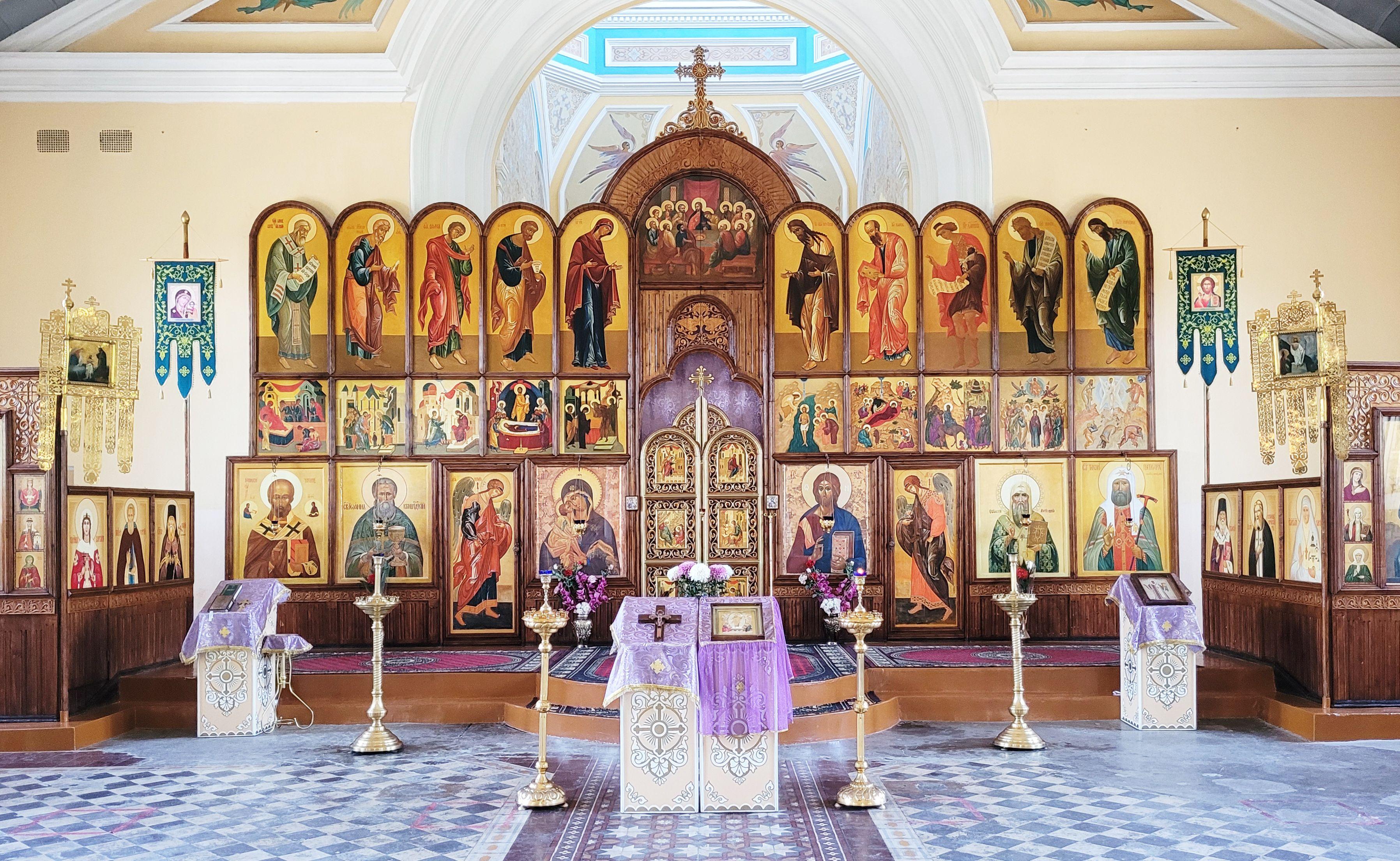
The survivors include the Holy Dormition Cathedral in Tashkent, the St Alexander Nevsky church in the old cemetery, and the red-brick Cathedral of St Alexis of Moscow in Samarkand, re-consecrated in 1996 by Patriarch Alexy II. Today they are the heart of a living diocese. Our separate guide to the Orthodox churches of Uzbekistan covers each of them with addresses, feast days and advice on attending the Liturgy.
Catholic churches: the Sacred Heart Cathedral in Tashkent
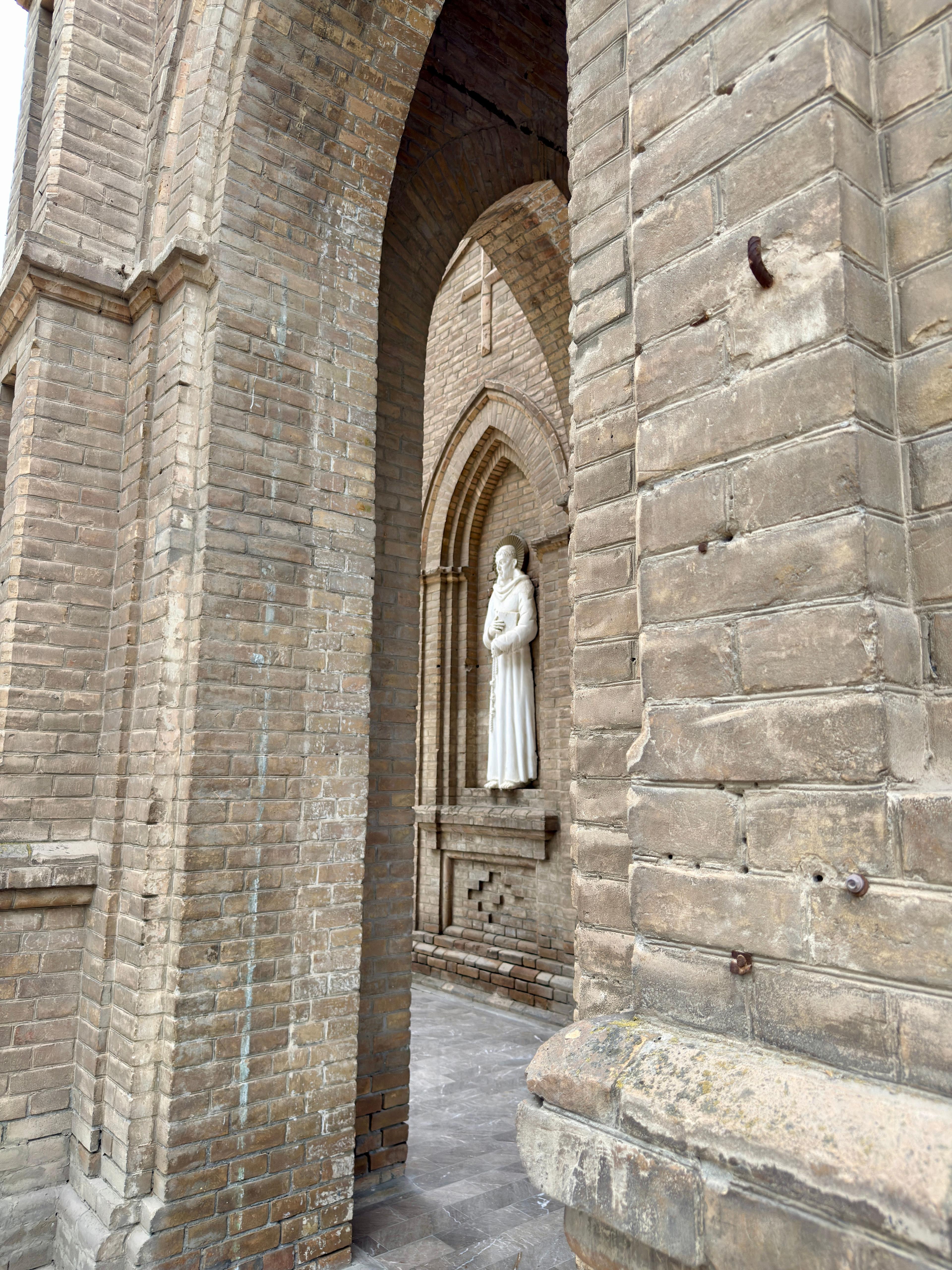
Tashkent's Catholic cathedral is known locally as the "Polish kostel". Building began in 1912 on the initiative of Father Justin Pranaitis, to a neo-Gothic design by the Polish architect Ludwik Panczakiewicz. The builders were first Catholic soldiers of the Tashkent garrison and later prisoners of war from the First World War, among them engineers and stone carvers. The revolution stopped the work. From 1925 to 1976 the unfinished building served as offices, a dormitory and a warehouse, and its statues were lost.
It was restored, listed as a monument in 1981 and returned to the Catholic parish in 1992. Rebuilt under Franciscan friars from Poland, it was consecrated in 2000. Since 2005 it has been the cathedral of the Apostolic Administration of Uzbekistan. The red-brick church with its slender spire stands at 80/1 Makhtumkuli Street, opposite the Eco Park. Sunday Masses are celebrated in several languages, including Russian and English. Mass times differ between sources, so check with the parish. The cathedral is also known for its organ concerts.
Samarkand has a smaller Catholic church of St John the Baptist, a neo-Gothic building of 1916 with a tall brick bell tower and stained-glass windows. It was built for Austro-Hungarian prisoners of war and returned to the parish in 1997.
The Armenian church in Samarkand
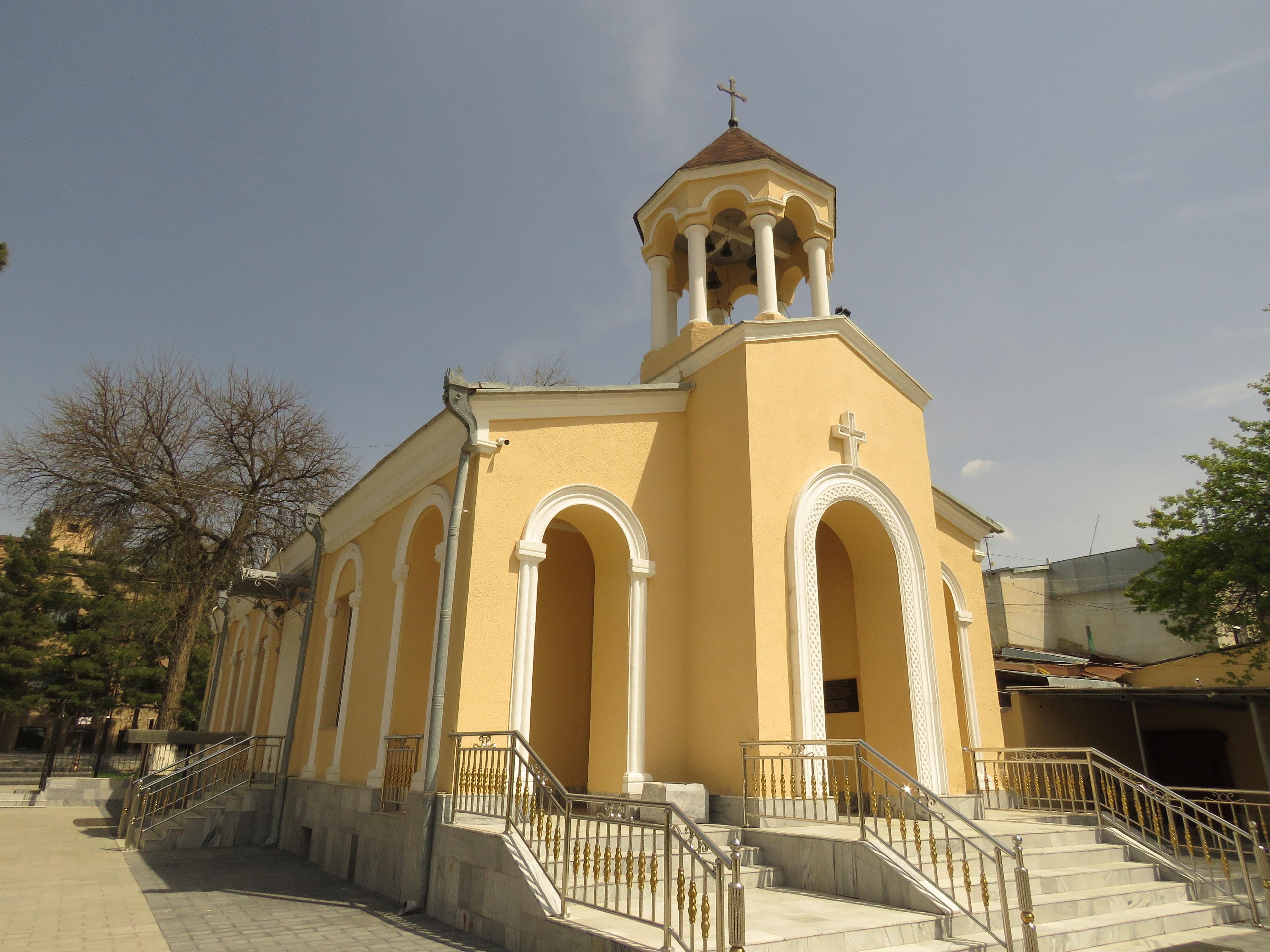
Armenians have lived in Samarkand at least since the time of Amir Timur, who is said to have brought Armenian craftsmen to his capital. The modern community grew after the Russian conquest. In 1898 it received permission for a prayer house, and in 1903 it bought land on the former Chernyaev Avenue and built the Church of the Holy Mother of God (Surb Astvatsatsin). The church was closed in 1939, returned in the 1990s and re-consecrated in 1995.
It is a compact, light-coloured church with an arched porch and a small belfry. Today it belongs to the Armenian Apostolic Church and serves as the centre of the Armenian community in Samarkand, which runs language classes on its grounds. The interior is usually open when the caretaker is there. The church is close to the other Christian churches of the Russian quarter, so it is easy to include in a walk.

The Lutheran Kirche in Tashkent
The German Lutheran church, the "Kirche", stands at 37 Sadyk Azimov Street, formerly Zhukovsky Street. It was designed by the architect Alexei Benois. At the engineer Wilhelm Heintzelmann's suggestion it was built entirely of fired brick, and regular services began in 1899. Its altarpiece, a Crucifixion by the German painter Sally von Kügelgen, has not survived. The church was closed in 1937, when its pastor Heinrich Behrends was arrested. It then served in turn as a warehouse, a geological office and a dormitory. From 1977 the Tashkent Conservatory used it as an opera studio with an organ, and it was returned to the Lutheran community in 1993.
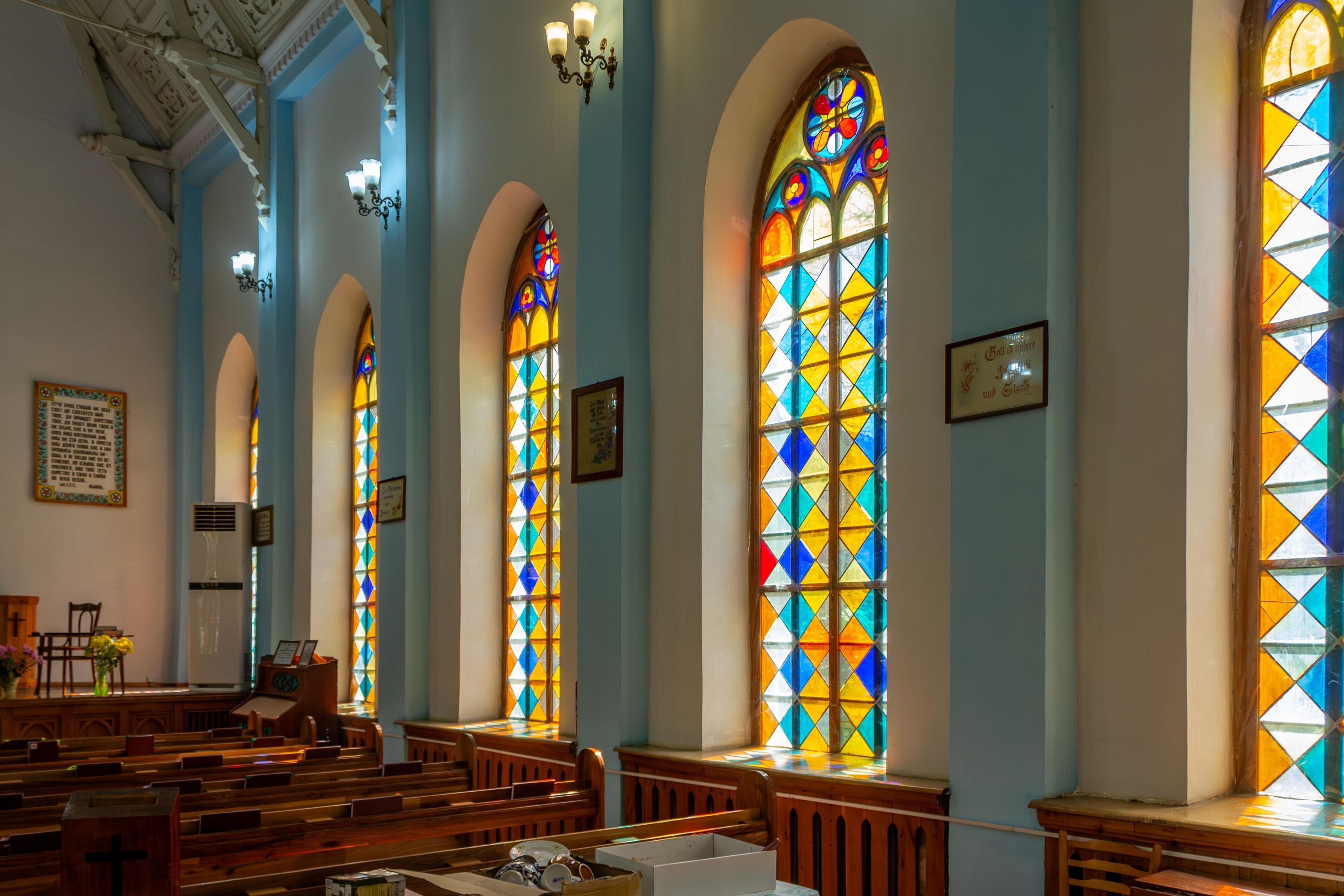
The Kirche is a small, neat neo-Gothic building with stained-glass windows. Sunday services are held in Russian and German. The gate is often closed outside service times, so the best way to see the interior is to attend a service.
The Prophet Daniel: a shrine of three faiths
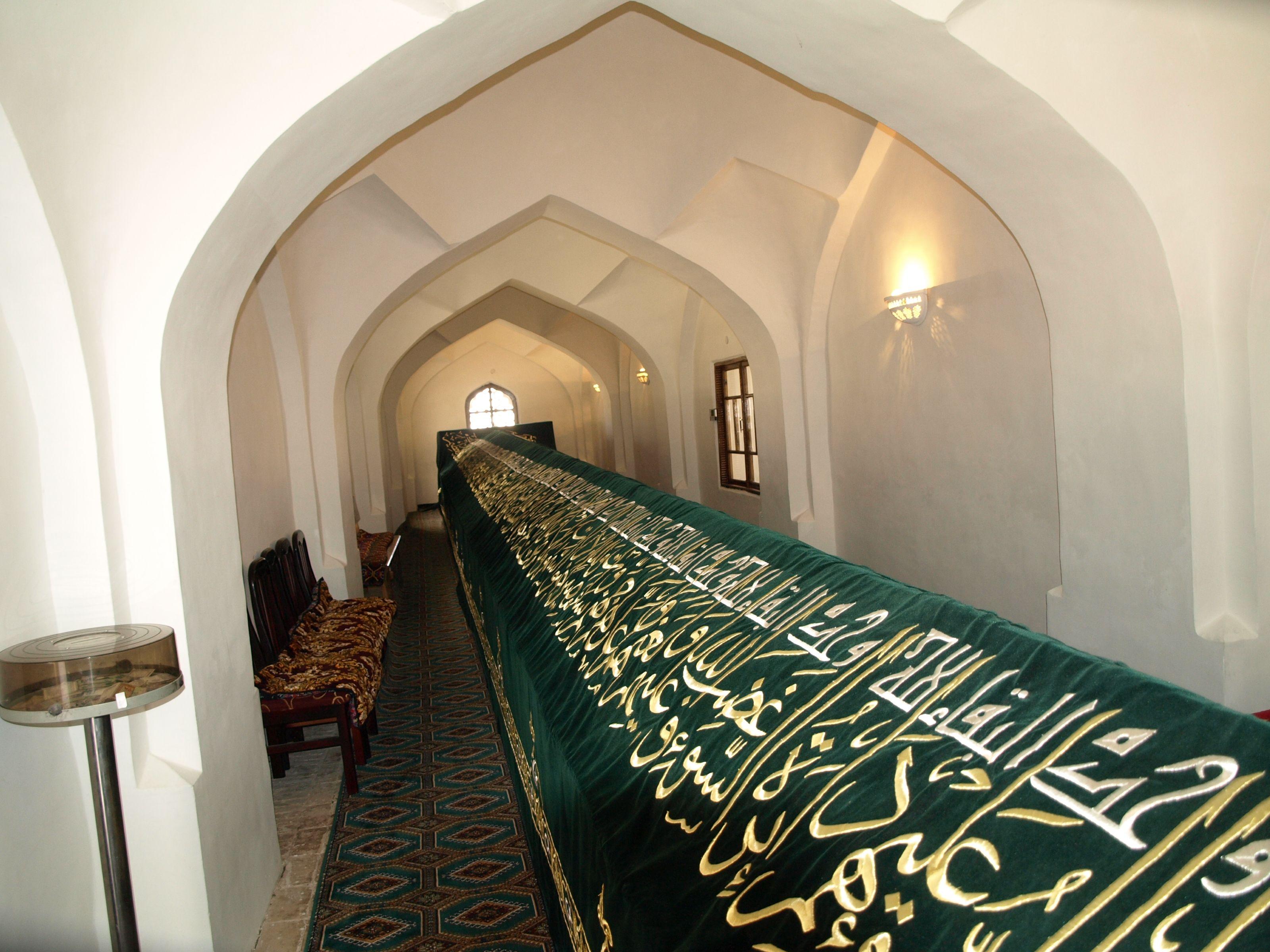
One place in Uzbekistan is holy to Christians, Jews and Muslims alike. On the Afrosiyob hill in Samarkand, a long mausoleum with five domes covers an 18-metre sarcophagus revered as the tomb of the Prophet Daniel. Local tradition says Amir Timur brought the prophet's relics from Susa in Persia. Muslims call the shrine Khoja Doniyor. Historians treat the identification as a tradition, but the place has drawn pilgrims of every faith for centuries.
For Christians, Daniel is one of the four major prophets of the Old Testament, the man who was thrown into the lions' den and interpreted the dreams of Nebuchadnezzar. The Orthodox Church commemorates him, together with the Three Holy Youths, on 17 December in the Church calendar (30 December in the civil calendar). Catholics remember him on 21 July.
Visitors pray quietly beside the tomb, drink from the spring below it and sit in the shade above the Siab river. Remember that it is a working Muslim shrine: dress modestly, women should cover their heads, and keep prayer personal and discreet.
Visiting churches in Uzbekistan: practical tips
- All the active churches in this guide welcome visitors. Entry is free, and donations are appreciated.
- Service times are rarely published online and do change. Ask your guide or hotel to call the day before.
- For Orthodox and Armenian churches, women wear a headscarf and a skirt below the knee and men remove their hats. In Catholic and Lutheran churches, modest clothing is enough.
- Do not photograph during services, and ask before photographing inside.
- Weekday afternoons are the quietest time to see interiors. Some churches lock their doors between services.
- Combine churches with nearby sights: the Dormition Cathedral with the Tashkent Metro, the Samarkand churches with the Registan, and the Kirche with the Amir Timur Square area.
How many days do you need? One full day in Tashkent covers the Dormition Cathedral, the Holy Trinity–St Nicholas Convent, the St Alexander Nevsky church, the Sacred Heart Cathedral and the Kirche, with the monastery in Chirchik if you start early. A second day in Samarkand, which is easy as a day trip on the Afrosiyob train, covers the St Alexis Cathedral, the Church of the Protection, the Armenian and Catholic churches, the Tomb of Daniel and the Registan. With a third day you can add Urgut, if a visit to the monastery site can be arranged, or continue to Bukhara and its Orthodox parish of the Archangel Michael. Plan the order around Sunday: in each tradition the main service is on Sunday morning, and it is the one moment when every church is certain to be open.
Christian heritage tours with TourEast
We have drafted a seven-day Orthodox pilgrimage through Tashkent, Samarkand and Bukhara, as well as one-day church excursions in Tashkent and Samarkand. For mixed Christian groups we can add the Catholic, Lutheran and Armenian churches, the Tomb of Daniel and, with specialist help, the landscape of Urgut, alongside the great monuments of the Silk Road.