How to keep 12 to 17 year olds engaged in Uzbekistan: hands-on workshops, a night in the desert with camels, mountain days near Tashkent, the Registan after dark, plus honest advice on phones, SIM cards, pace and what to skip.
Facts, prices and schedules checked on November 4, 2026
Teenagers and Silk Road monuments can be a difficult combination. A 14-year-old will happily spend two hours on a phone but may not appreciate the third madrasah of the morning. The good news is that Uzbekistan is more teen-friendly than its reputation as a museum-heavy country suggests, provided the trip is planned around doing things rather than looking at them.
This guide is for parents of 12 to 17 year olds. It covers the activities that tend to work, the ones that tend not to, how to handle phones and screen time, the pace and the season, and an eight-day outline. It complements our wider guide to Uzbekistan with kids, which is aimed at younger children, and our guide for young travellers in their twenties. Everything is as of November 2026, and prices and availability are indicative, so confirm them before you book.
Is Uzbekistan good for teenagers?
Yes, with caveats. Safety is a strength: the country is generally regarded as safe, people are warm towards children, and teenagers often attract friendly attention. The monuments are photogenic, which suits a generation that lives through cameras. Transport is easy, with fast trains and taxi apps. Food is simple and mostly liked by teenagers, from bread and kebabs to samsa and plov.
The caveats are heat, distances and pace. Summer temperatures often pass 40°C in Bukhara and Khiva, long days in the sun are tiring, and a teenager who is made to follow a schedule may switch off. The solution is to make them part of the planning, to leave unstructured time, and to mix the great monuments with activities that use their hands and legs.
Hands-on activities that work
The most reliable way to engage a teenager is to give them something to make.
- Plov cooking class. Standing next to an oshpaz while the carrots go into the kazan is more memorable than a restaurant lunch. Classes are offered in Tashkent, Samarkand and Bukhara, last two to three hours and end with a meal. Typical prices in 2026 range from about US$20 to US$80 per person in a group, depending on the host. Our plov guide has details.
- Pottery. Workshops in Gijduvan near Bukhara and Rishtan in the Fergana Valley let visitors sit at the wheel for a few minutes, and many offer longer master classes on request. Our Gijduvan and Rishtan guides explain the difference.
- Paper-making. At the Konigil mill near Samarkand, mulberry-bark paper is made by hand beside a stream. It is quick, visual and easy to enjoy.
- Bread. Bakeries in the old cities let visitors watch loaves stuck to the inside of a clay oven, and some allow a try.
- Embroidery and woodcarving. Short sessions in Bukhara and Khiva suit patient teenagers.
Ask for these when you enquire. They are easiest to arrange in advance, and they turn a visit into a story.
Adventure and outdoors
Uzbekistan has more outdoor options than most visitors expect.
- A night in a yurt camp. The Nuratau mountains and Lake Aydarkul, in the desert region between Samarkand and Bukhara, are the best-known area for yurt stays. Camel rides, a campfire, music and stargazing are standard. Many teenagers rate this the highlight of the trip. See our Nuratau and Aydarkul guide.
- Quad biking and sandboarding. Some operators near the desert camps offer them, but availability depends on the season and the camp. Ask in advance, and do not assume they are included.
- Mountain days from Tashkent. Chimgan and Charvak, about 80 km from the capital, offer hiking, horse riding and a cable car. Day-tour listings also mention a zip line near Chimgan, though it appears to be tied to particular operators, so confirm before promising it. In winter, Amirsoy and Beldersay offer skiing from December to March; see our skiing guide.
- Cycling and hiking. Our guides to cycling and hiking show what works for families with older teenagers, such as the Chimgan trails.
Safety matters. Use reputable operators, helmets and guides for any motorised or high-altitude activity, and check that insurance covers adventure sports.
City activities
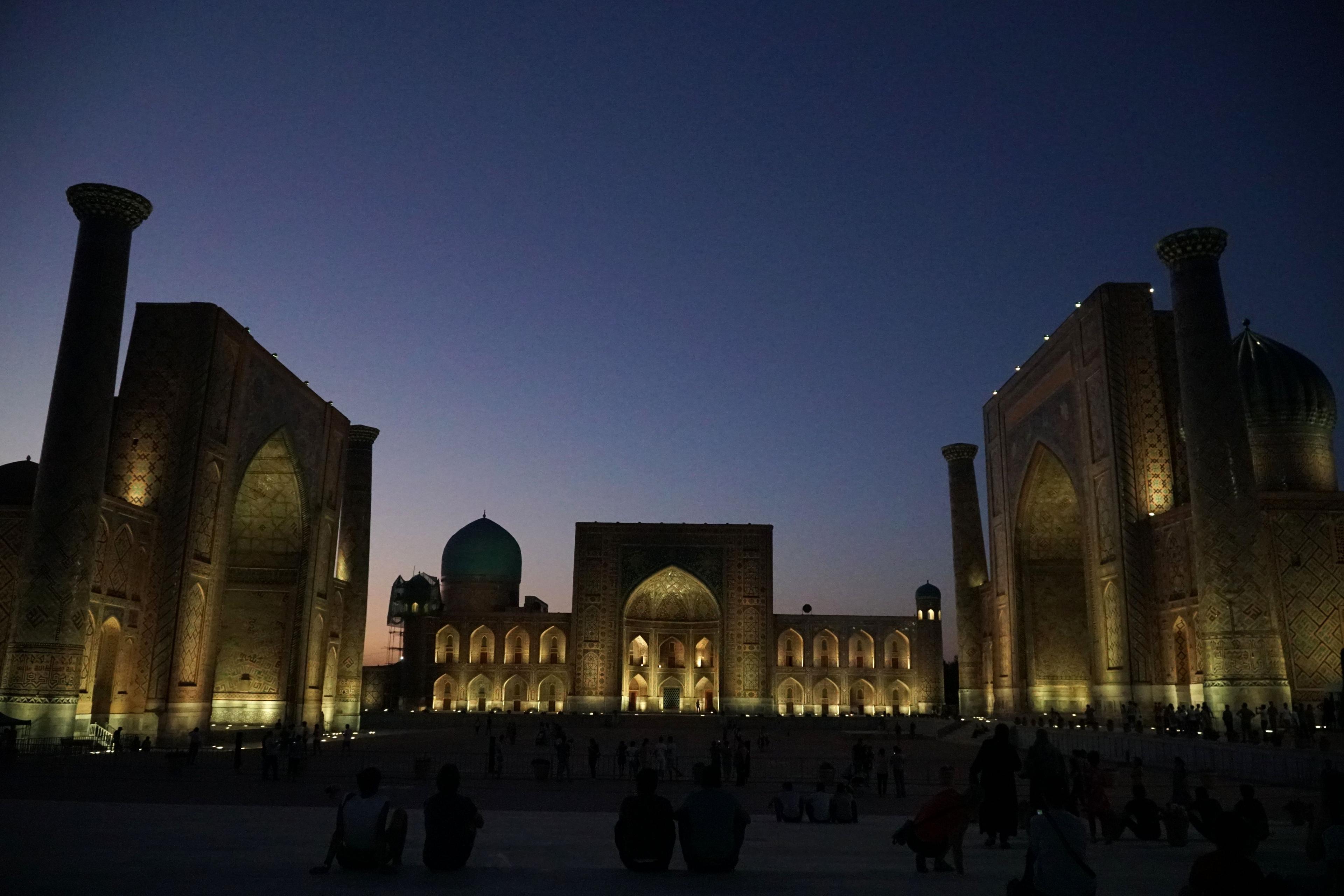
- Registan after dark. The square is lit in the evening, and in summer a sound and light programme is reported at about 20:30. Our guide to evenings in Uzbekistan has details.
- Tashkent Metro. The Soviet-era stations are underground museums, and a ride costs very little. See our metro guide.
- Chorsu Bazaar. Teenagers often enjoy the dried fruit, spices and bread, and the noise and colour. Bargaining is good practice.
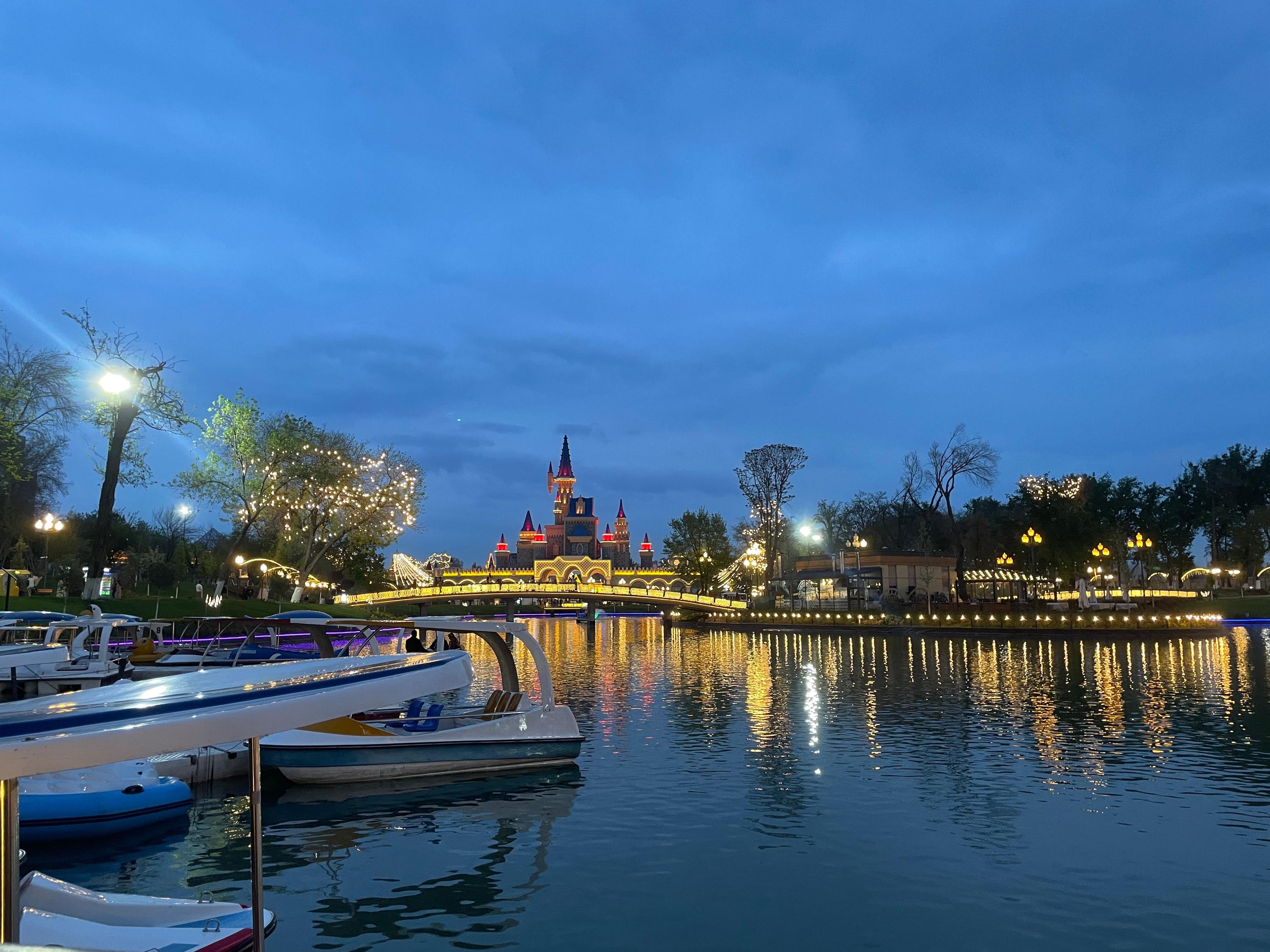
- Magic City. This free-to-enter amusement park in Tashkent has rides, fountains and cinema attractions. Reviewers note that it is aimed more at younger children, so it suits younger teenagers more than older ones.
- Climbing the walls of Khiva. The ramparts of Ichan-Kala are one of the best viewpoints in the country, and the narrow lanes are fun to explore.
- Train rides. The Afrosiyob is a good way to give teenagers a break, with comfortable seats and sockets for charging.
Making the monuments work, and what to skip
A few tricks make the great sights easier to enjoy.
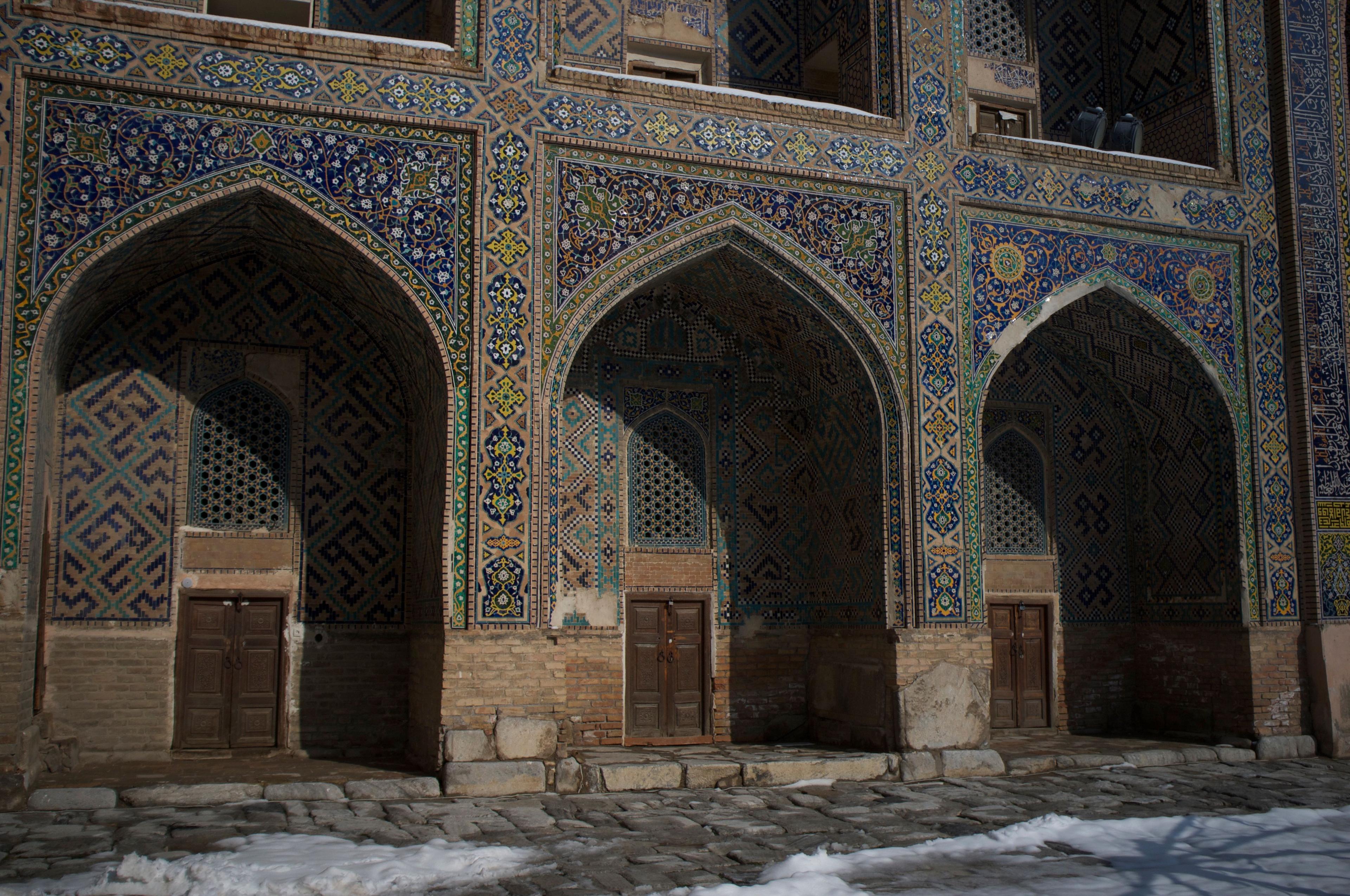
- Tell the story first. The Registan is more interesting when a teenager knows about the astronomer-king who built one of its madrasahs, or the lion and sun on the Sher-Dor portal. A guide who tells stories rather than dates helps. Our guides to Amir Timur and the great scholars of Uzbekistan give material to read on the train.
- Set a mission. Ask them to find the oldest tile, the best photograph or the strangest dish. Small games pass the time in the queue.
- Climb something. The city walls of Khiva and the minarets and viewpoints in Bukhara give teenagers the physical reward of height.
- Keep the shrines short. Pilgrimage sites are quiet places with dress rules; visit them briefly and with respect.
What to skip: long museum days, back-to-back mausoleums, midday sightseeing in July and August, and any day that includes more than three hours in a vehicle without a stop. If the family is divided, split up for an afternoon. A parent can visit the museum while a teenager takes a workshop with a guide.
Phones, SIM cards and screen time
Be realistic. Teenagers will want to use their phones, and in Uzbekistan this is mostly an advantage.
- Buy a local SIM or eSIM on arrival. It makes maps, translation and ride-hailing work, and it lets teenagers message friends at home. Our SIM and eSIM guide explains registration rules.
- Agree on rules in advance. A common compromise is phones away at meals, in monuments and at religious sites, and free use in the car, on trains and in the evening.
- Photography is part of the fun. Give your teenager a role as official photographer or video editor for the trip. It makes the screen time constructive.
- Check apps. Some social media and messaging services behave differently abroad, and Telegram is the most common messenger. Download offline maps, and carry a power bank.
- Power plugs are the European two-pin type, 220 volts. Bring an adapter if you need one.
Pace, season and sleep
- Choose spring or autumn if you can. April to early June and mid-September to October are comfortable. July and August can be punishing. Winter is cold but quiet and suits skiing.
- Start early, rest at midday and finish the day with something fun. A pool, a long lunch, a shower and a nap help.
- Do not schedule more than two big sights a day. A third is where complaints start.
- Let teenagers choose one thing per city. It might be a bakery, a skate spot or a particular dish.
- Sleep. Jet lag hits teenagers hard, and the first day should be easy.
An 8-day outline for teenagers
- Day 1: Arrive in Tashkent. Rest, then Chorsu Bazaar and a simple dinner.
- Day 2: Tashkent: the Metro, a plov class and the old city. Evening train or next morning train to Samarkand.
- Day 3: Samarkand: Registan, Bibi-Khanym, a paper mill visit and the lights in the evening.
- Day 4: Samarkand: Shah-i-Zinda and Gur-e-Amir early, then free time.
- Day 5: Drive to the Nuratau mountains and Aydarkul. Camels and a yurt night.
- Day 6: Morning in the desert, then on to Bukhara. Lyabi-Hauz in the evening.
- Day 7: Bukhara: Ark, domes, a pottery stop in Gijduvan or a craft class.
- Day 8: Train to Tashkent and departure, or an optional extra day in the Chimgan mountains.
Our Uzbekistan Family Adventure tour follows a similar logic, with active days between the monuments.
Planning with TourEast
We can shape a route around your teenagers' interests, choosing the yurt night, the workshops and the pace, with a guide who knows how to keep younger travellers interested. Tell us the ages, the season and what your family enjoys, and we will propose an itinerary, or sketch one yourself in our trip builder at /trip-builder. You can also message us on WhatsApp.