In Uzbekistan a half-filled tea bowl is a compliment and a full one is a message. The three pours before anyone drinks, the hand on the heart, who serves whom, green in Bukhara and black in Tashkent, salted milk tea in Khiva: what the rituals mean, how to behave as a guest and how to pour if you are the host.
Facts, prices and schedules checked on November 11, 2026
The first thing a visitor notices in an Uzbek house is that the tea bowl is never full. The host pours a few centimetres, hands it over with the right hand, and a moment later pours again. Travellers from countries where a generous cup means generosity sometimes wonder whether they are being short-changed. They are being honoured. In Uzbekistan the less tea in your piala, the more your host wants you to stay, because every refill is another chance to serve you. A bowl filled to the brim has its own name, tea without respect, and it means that the conversation is over.
Tea is the frame around every meal and every meeting in this country, from the bazaar stall to the ministerial office, and its rules are consistent from the Fergana Valley to Khiva. Here is what to know: the half-full cup, the three pours of kaytarish before the first bowl is served, the gestures of hand and bowl, the difference between the green tea of most of the country and the black tea of Tashkent, what is served with it, how a chaikhana works and how to behave when you are the one pouring. None of it is difficult, and getting it right earns more goodwill than any phrase in Uzbek.
The half-full piala and what it says
The piala is a handleless bowl, porcelain or glazed earthenware, held at the rim and the foot so the fingers stay away from the hot sides. A host pours it between a quarter and half full. The practical explanation is heat: a shallow pour cools quickly and can be drunk without burning your hands while you talk. The social explanation is the one that matters. A small pour must be repeated, and each repetition is an act of attention. The more often your host leans over to refill you, the more welcome you are. Uzbeks say it directly: the less tea, the more respect.
The full bowl is the mirror image. Filling a guest's piala to the top says that the host does not expect to pour again, in other words that it is time to leave. It is almost never done rudely; it is a signal used between people who know each other, and in a restaurant it means nothing. But if a bowl arrives full in a private house, you have been told something, and the correct response is to drink it, thank your host and go.
Two other things to know as a guest. Receive the bowl with your right hand, or with both hands if you want to be formal, and a slight touch of the right hand to the chest as you take it is understood everywhere. And do not refuse tea. An offer of tea is the opening of hospitality, and declining it closes the door; if you cannot drink it, accept the bowl and let it sit.

Kaytarish: the three pours before anyone drinks
Watch a host with a fresh pot and you will see a small ritual that looks like indecision. Tea is poured from the choynak, the teapot, into a piala, and then poured back into the pot. This is done three times, and only the fourth pour goes into a clean bowl for the first guest. The practice is called kaytarish, or kaytar-maytar in the chatty form, from the verb kaytmoq, to return.
The reasons given vary. The common one is that returning the tea mixes the brew so that the first bowl is as strong as the last; a second is that it aerates and opens the leaf; a third is simply that tea which has been returned three times has been attended to, and attention is the point. Restaurants know the custom well enough that a pot often arrives with one piala more than the number of guests, so that the pouring can be done without using anyone's bowl. A fourth-pour bowl is sometimes offered to the eldest or most honoured guest first, and the pourer serves themselves last.
The pot itself is brewed in stages: a little boiling water over the leaves, a pause, more water, another pause, with the lid on and often a cloth over it. Green tea is never left to stew; a pot is drunk within fifteen minutes and a new one brewed. Asking for a fresh pot rather than hot water in the old one is normal.
Green in Bukhara, black in Tashkent, salted in Khiva
Uzbekistan is a green tea country with two exceptions. Kuk choy, green tea, is the daily drink of Samarkand, Bukhara, the Fergana Valley and the south, brewed pale and drunk plain, without sugar, and often with the number of the blend named: the famous 95 is a Chinese green that has been the standard for generations. Uzbeks will tell you it cools in summer, warms in winter, settles the stomach after plov and lowers the blood pressure, and the first three are true.
Tashkent drinks black, kora choy, and has done since the Russian period. Order tea in a Tashkent chaikhana and you will be asked which colour; order it in Bukhara and green will arrive. The sweet, lemon-scented Tashkent tea served in Uzbek restaurants abroad, a blend of black and green with sugar and sometimes mint, is a diaspora invention; in Tashkent itself nothing is added.
The western exception is shirchoy, the milk tea of Khorezm and Karakalpakstan: black tea with hot milk, salt and a knob of butter, drunk from the bowl with bread crumbled into it. It is a breakfast and a winter drink, closer to the tea of the Kyrgyz and the Tibetans than to anything else in Uzbekistan, and a Khiva guesthouse will make it if you ask the night before. Our guide to the Uzbek breakfast has more on it.

What comes with the tea, and the chaikhana
Tea is never served alone. The minimum is a dish of navat, the amber crystallised sugar that is crunched between sips or dropped into the bowl, and a plate of dried fruit and nuts: raisins, dried apricots, almonds, walnuts, the salted apricot kernels. In a house there will also be bread and whatever sweets stand on the dastarkhan, parvarda, halva, hashtak. An invitation to drink tea is usually an invitation to eat, and a guest who arrives for tea should expect to leave two hours later having been fed.
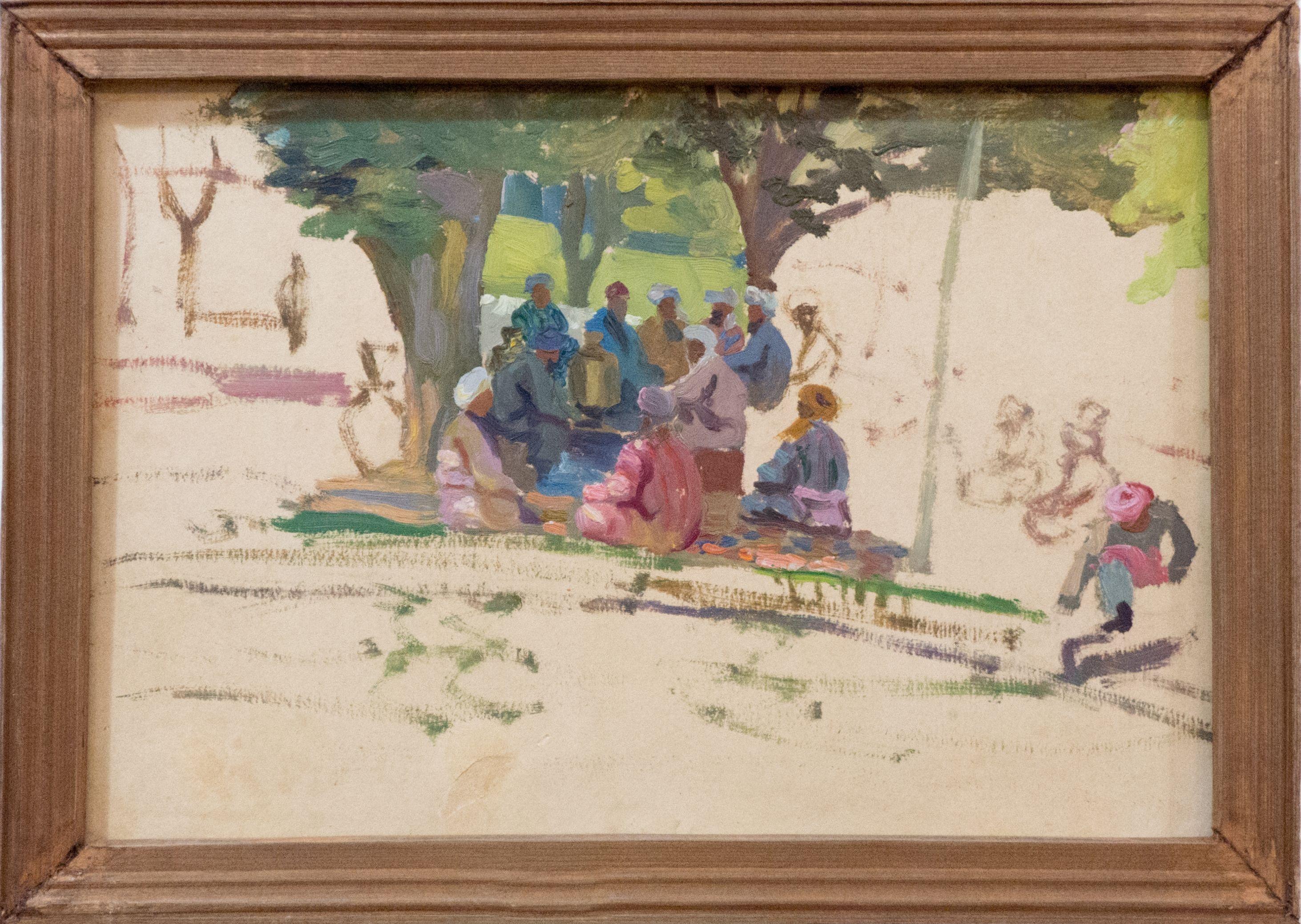
The chaikhana, the tea house, is where the ritual becomes public. The classic form is a courtyard or a platform under trees beside water, with tapchans, the raised wooden beds covered with rugs on which you sit cross-legged or recline around a low table. Tea is ordered by the pot; food is optional and usually plov, shurpa or samsa at lunchtime. The Lyabi-Hauz pool in Bukhara, with its chaikhanas under the mulberry trees, is the most famous setting in the country, and the tea houses around Chorsu and the old town of Tashkent, and near Siab Bazaar in Samarkand, are the everyday versions. Historically the chaikhana was a male institution; today families and women travellers are welcome everywhere in the cities, and in villages the tapchan at a guesthouse plays the same role.
Tea bowls and pots are worth buying. The cotton-blossom pattern in blue and white, pakhta gul, is the national design and is sold in every bazaar; the hand-painted pialas of the Rishtan ceramics workshops in the Fergana Valley are the ones to carry home.
If you are the host: how to pour
Sooner or later a traveller is handed the pot, in a guesthouse kitchen or on a tapchan with new friends, and the rules are easy to follow:
- Rinse the pialas with a splash of hot tea and discard it, especially the first time a bowl is used.
- Do kaytarish: pour into a bowl and back into the pot three times, then pour the fourth into a clean bowl.
- Serve the eldest or the guest of honour first, then the others, yourself last.
- Pour a quarter to a half of the bowl, and keep watching; a guest's empty bowl should not stay empty for long.
- Hand the bowl with your right hand, the left supporting your right forearm if you want to be formal, and receive bowls the same way.
- Never fill a bowl to the brim unless you mean it.
Women in a household traditionally pour for guests, and a daughter-in-law serving with her right hand held to her heart is paying particular respect. Guests do not pour for themselves in a house, though in a chaikhana among friends everyone pours for the person next to them. If you are unsure, hold the pot out to the eldest person at the table and they will take over, which is itself a courteous gesture.

Where tea came from and where to experience it
Tea reached Central Asia along the trade routes from China centuries ago, but the everyday tea culture of Uzbekistan took shape in the nineteenth century, when Chinese green tea arrived in quantity through the caravan trade and Russian black tea through the north, and the chaikhana became the centre of mahalla life. The samovar came with the Russians; the kumgan, the tall copper or brass ewer used to heat water, and the choynak were already there. Rishtan and Gijduvan potters have painted pialas for as long as there has been tea to drink from them.
For a traveller, the places to experience the ritual rather than just drink tea are a family house, a village guesthouse and a traditional chaikhana. A home visit in Bukhara or Samarkand, which guides arrange for US$10 to 20 a person as of 2026 including the food that inevitably follows, is the best. A tapchan at Lyabi-Hauz at dusk, a pot of green tea and a plate of navat costs a few dollars and is the second best. A tea tasting in a Tashkent tea shop, where the 95 green is compared with the Samarkand and Fergana blends, exists and is pleasant but tells you less than ten minutes in a kitchen.
Tea with TourEast
Tea is built into every TourEast day, because it is built into every Uzbek day, but on some tours it is the point. On Six Days, Seven Plovs the Bukhara evening is a home-hosted dinner where the pouring is done by the family and explained as it happens. Bukhara After the Buses Leave gives you four days of tapchans at Lyabi-Hauz and in the mahallas, and our eight-day small group, Eight Days, One Table: Small-Group Silk Road, includes sunset tea on a Bukhara rooftop facing the Kalyan Minaret. If you want a shirchoy breakfast in Khiva, a Rishtan workshop visit to buy the bowls or a tea lesson in a Bukhara kitchen, ask and we will add it.
Frequently asked questions
Photo: Thomas Taylor Hammond (1920-1993) / Wikimedia Commons, CC BY-SA 4.0; Arian Zwegers / Wikimedia Commons, CC BY 2.0; Ekaterina Kvelidze / Wikimedia Commons, CC BY-SA 4.0; Fabienkhan / Wikimedia Commons, Public domain