A practical guide to cycling in Uzbekistan: the flat Bukhara–Samarkand corridor, the Nurata–Aydarkul loop, Fergana Valley lanes, Chimgan climbs and the Kyzylkum stretch to Khiva, with road conditions, heat windows, water and camping, bikes on trains, hire in Tashkent and supported rides, as of 2026.
Facts, prices and schedules checked on November 4, 2026
Cycling in Uzbekistan is the Silk Road at its proper speed. The roads between Samarkand and Bukhara are flat, the villages are close together, bread comes out of a tandir every few kilometres, and the people who stop you want to know where you are from and whether you need water. It is also a country of real distances, real heat and one desert crossing that demands respect.
This guide is for touring cyclists and active travellers who want to ride part or all of Uzbekistan: the main routes and what the roads are like, the months that work, water and camping, how to put a bike on a train, where to hire one in Tashkent, and how a supported ride with a vehicle changes the equation. We have drawn on recent riders' reports from 2025 and 2026 and on our own knowledge of the roads. Our hiking guide covers the mountains on foot; this one stays on two wheels.
Is Uzbekistan good for cycling?
Honest answer: it is good for a particular kind of cycling. Neighbouring Kyrgyzstan and Tajikistan are the famous bikepacking countries, with the Pamir Highway and the high passes; Uzbekistan is lowland, hot in summer and crossed by long straight roads. What it offers instead is:
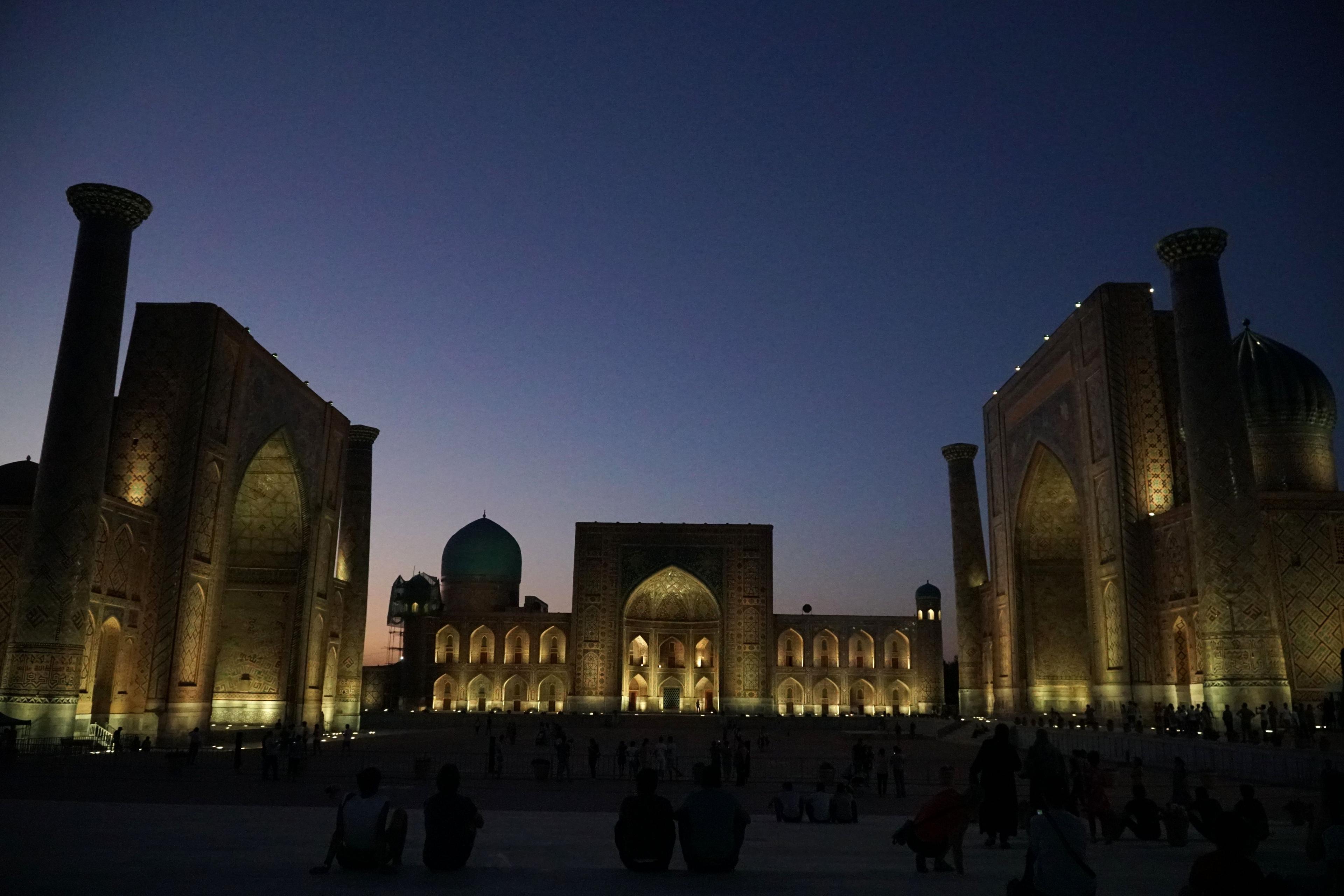
- Destinations worth the ride. Nowhere else can you cycle from one UNESCO city to another in three days and arrive at a 12th-century minaret.
- Flat terrain through the irrigated heartland, with gradients only in the Nuratau hills, the Fergana rim and the Tashkent mountains.
- Dense settlement along the main corridors, which means food, water and a bed every 30 to 50 km except in the desert.
- Safe roads by regional standards, drivers who are used to slow traffic, and police checkpoints whose main interest is your route and nationality.
The drawbacks are the summer heat, the Kyzylkum crossing between Bukhara and Khiva, the scarcity of unfarmed land for camping on the main corridors, and roads that range from new motorway to cracked and potholed within the same hour.
The Farap–Bukhara–Samarkand corridor: the classic ride
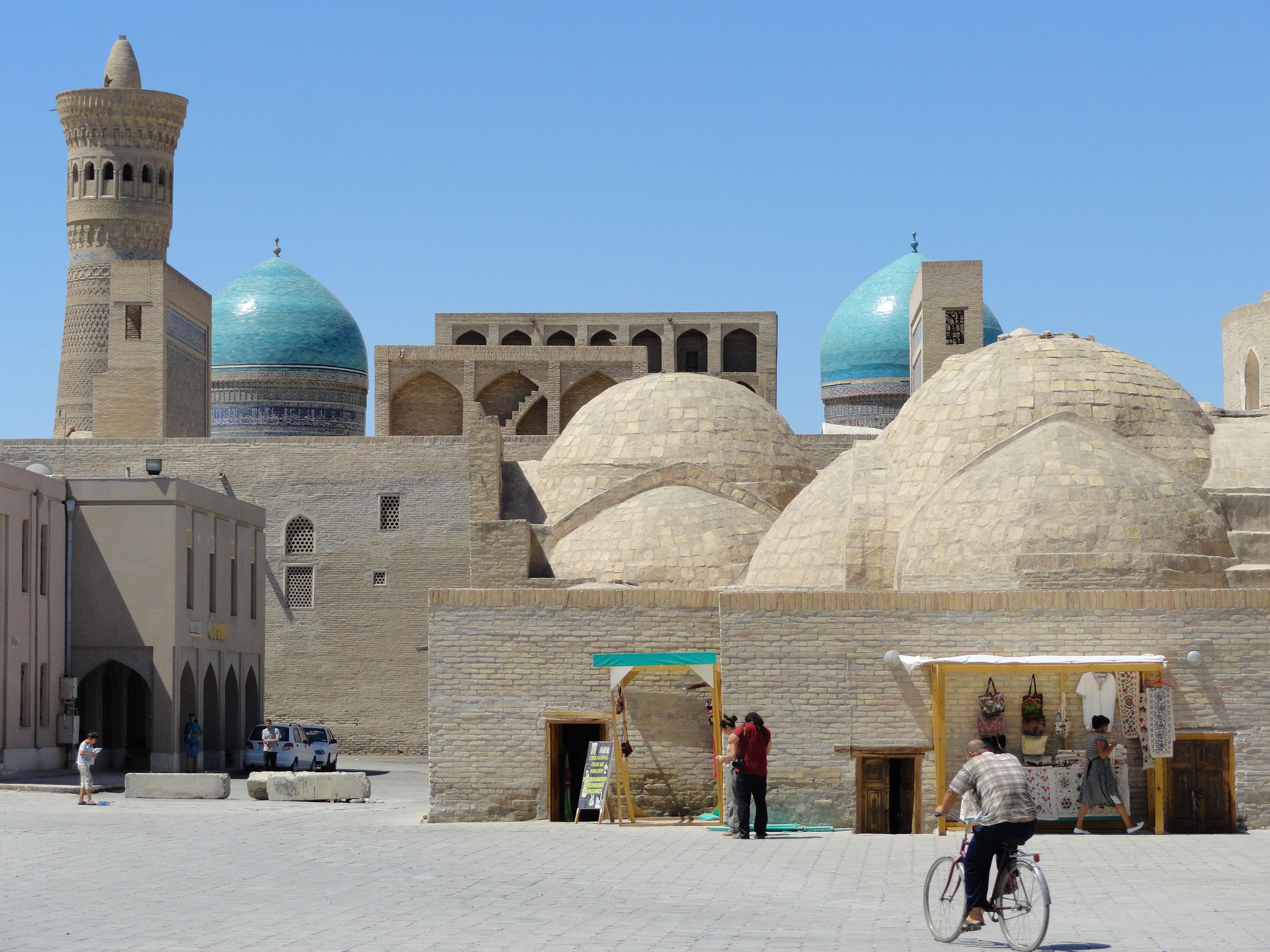
This is the route most touring cyclists take, whether they enter from Turkmenistan at the Farap border or start in Bukhara. From the border to Bukhara is about 100 km; from Bukhara to Samarkand about 290 km via Navoi and Kattakurgan, four to five riding days at a touring pace.
What recent riders report:
- Terrain: flat irrigated farmland almost the whole way, with the Zarafshan valley greening as you approach Samarkand. Scenery is honest rather than dramatic.
- Surface: the main road is paved and in reasonable condition, with cracks and potholes; the secondary road from Kattakurgan to Samarkand is rougher and busier with shared taxis than you expect.
- Supplies: Karakul, Karmana and Navoi have well-stocked shops and cafés; samsa, bread and tea are everywhere; wells in front of houses are offered freely.
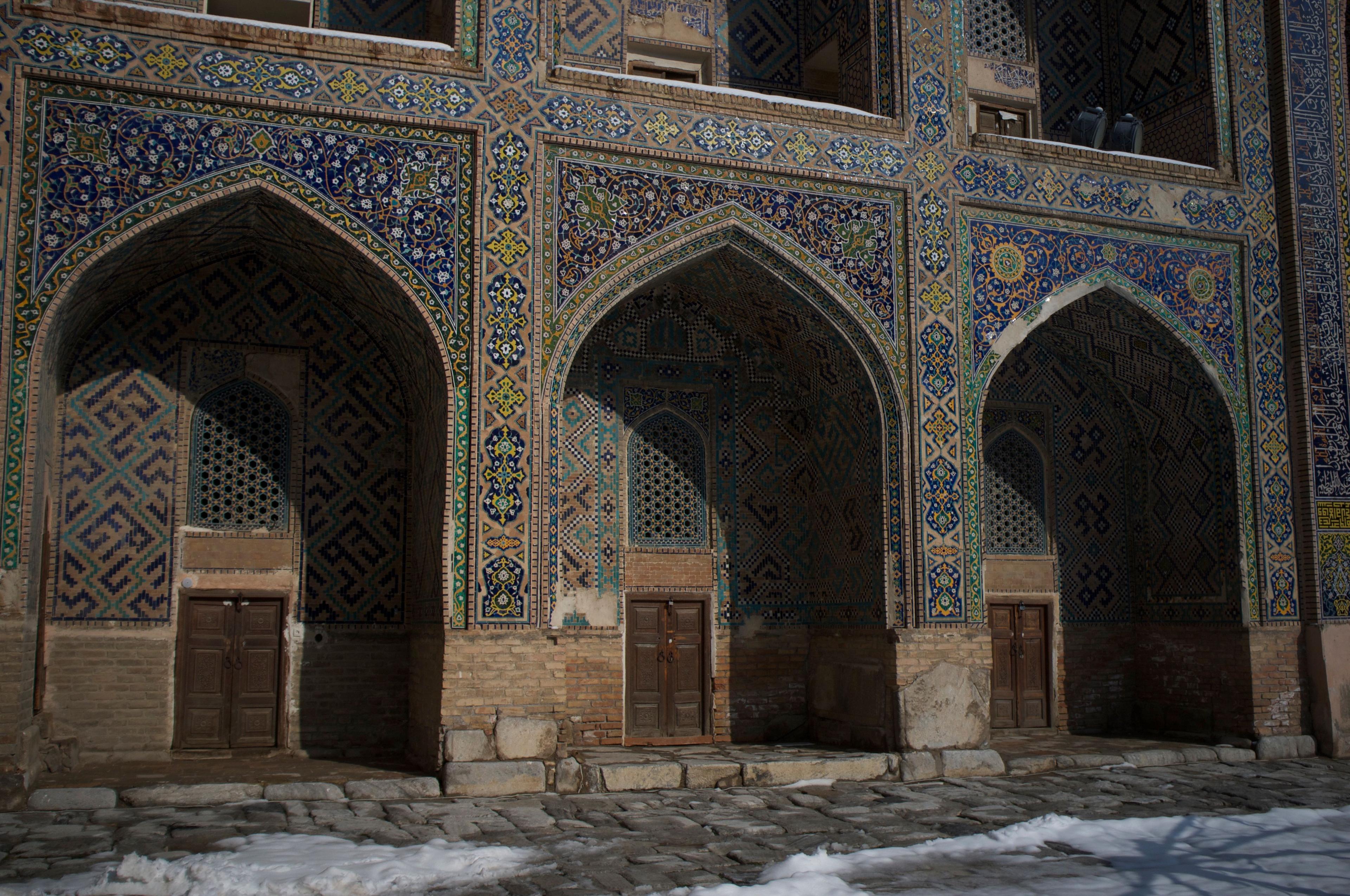
- Stops: the Rabat-i-Malik caravanserai and its sardoba cistern near Navoi, the potters of Gijduvan, and the Timurid madrasah at Gijduvan itself.
- Camping: cultivated land leaves few hidden corners; riders use farm tracks away from the road and pitch after dark, or simply take guesthouses, which are cheap.
Cycle it west to east so that Samarkand's Registan is the reward, and so that the Afrosiyob train takes you back to Tashkent afterwards. Our Samarkand to Bukhara guide describes the same road from a car.
The Nurata–Aydarkul loop: hills, villages and a yurt night
North of the Samarkand–Bukhara road, the Nuratau range rises to 2,000 m above the Aydarkul lake, and the villages on its northern slopes, Sentob, Hayat and Uhum, have a network of family homestays. A loop from Navoi or Nurata town over the hills to the villages, down to a yurt camp at Aydarkul and back is three to five days of quiet gravel and paved roads with real climbs, walnut orchards and a swim in the lake.
This is the best short tour in the country for riders who want gradient and silence rather than monuments. Roads are a mix of asphalt and graded gravel; a touring bike with 35 mm tyres or wider is enough. Carry two days of food for the hill sections. Our Nuratau and Aydarkul yurt camp guide has the homestays and the camel-riding detail.
Fergana Valley lanes and the Chimgan climbs
The Fergana Valley is flat, green and busy, with a grid of lanes between orchards, cotton and mulberry trees that suits day rides between Margilan, Rishtan and Kokand. Traffic on the main roads is heavy; the lanes are calmer. Take the train from Tashkent with your bike and base yourself in Fergana city. The Kamchik Pass between the valley and Tashkent, at 2,200 m with tunnels and trucks, is not a road we recommend cycling; use the train or a vehicle.
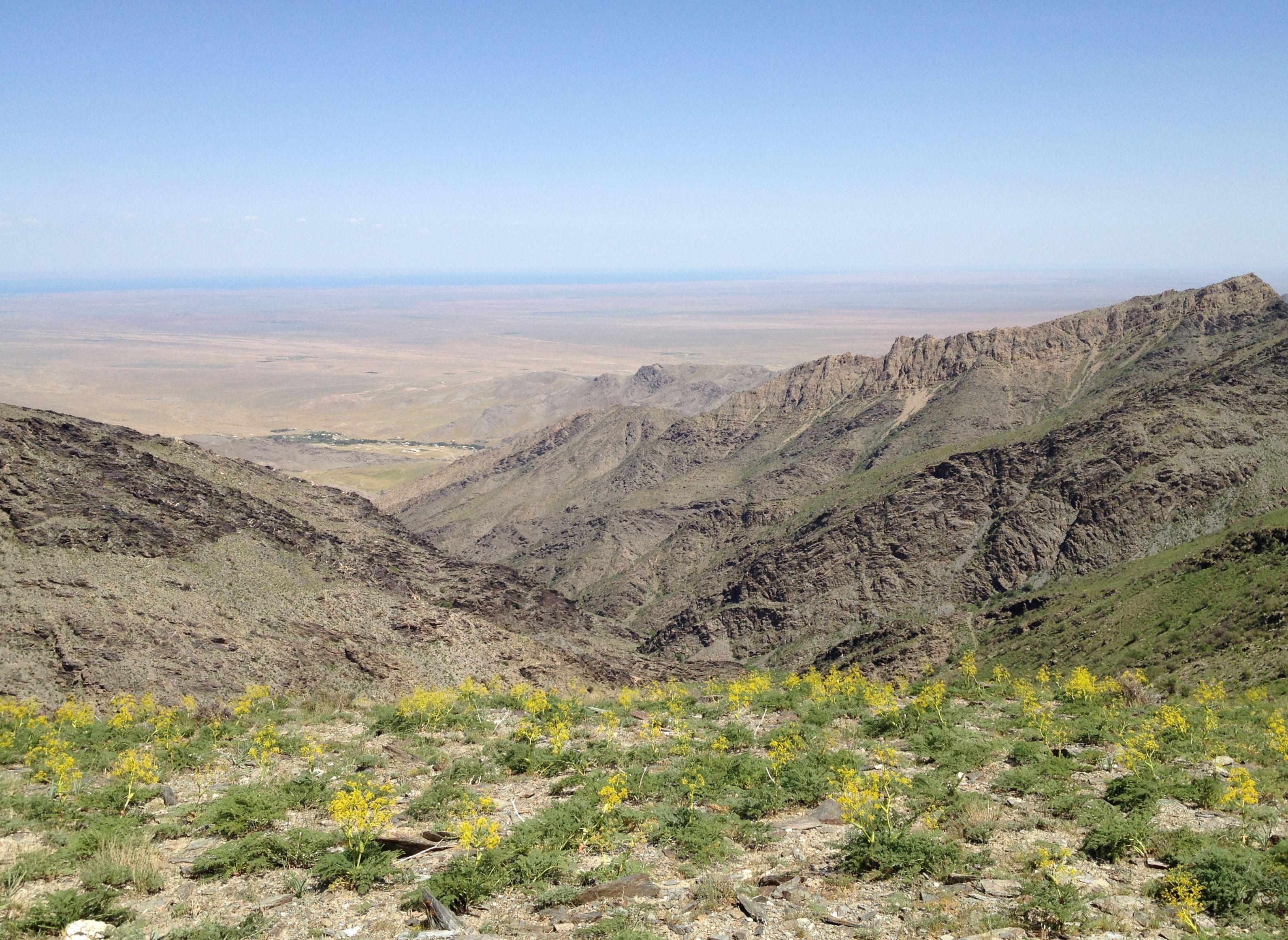
For climbing, the Chimgan and Charvak area 80 km north-east of Tashkent is the obvious playground: the road around the Charvak reservoir rolls through villages and the climb to Chimgan at 1,600 m is a proper ascent with mountain views. Weekend traffic from the capital is the downside; ride on weekdays. Day rides from Tashkent to Parkent and the Sukok forest reserve, past the Soviet solar furnace, are a quieter option. Our Chimgan and Charvak guide describes the area.
The Kyzylkum stretch: Bukhara to Khiva by bicycle
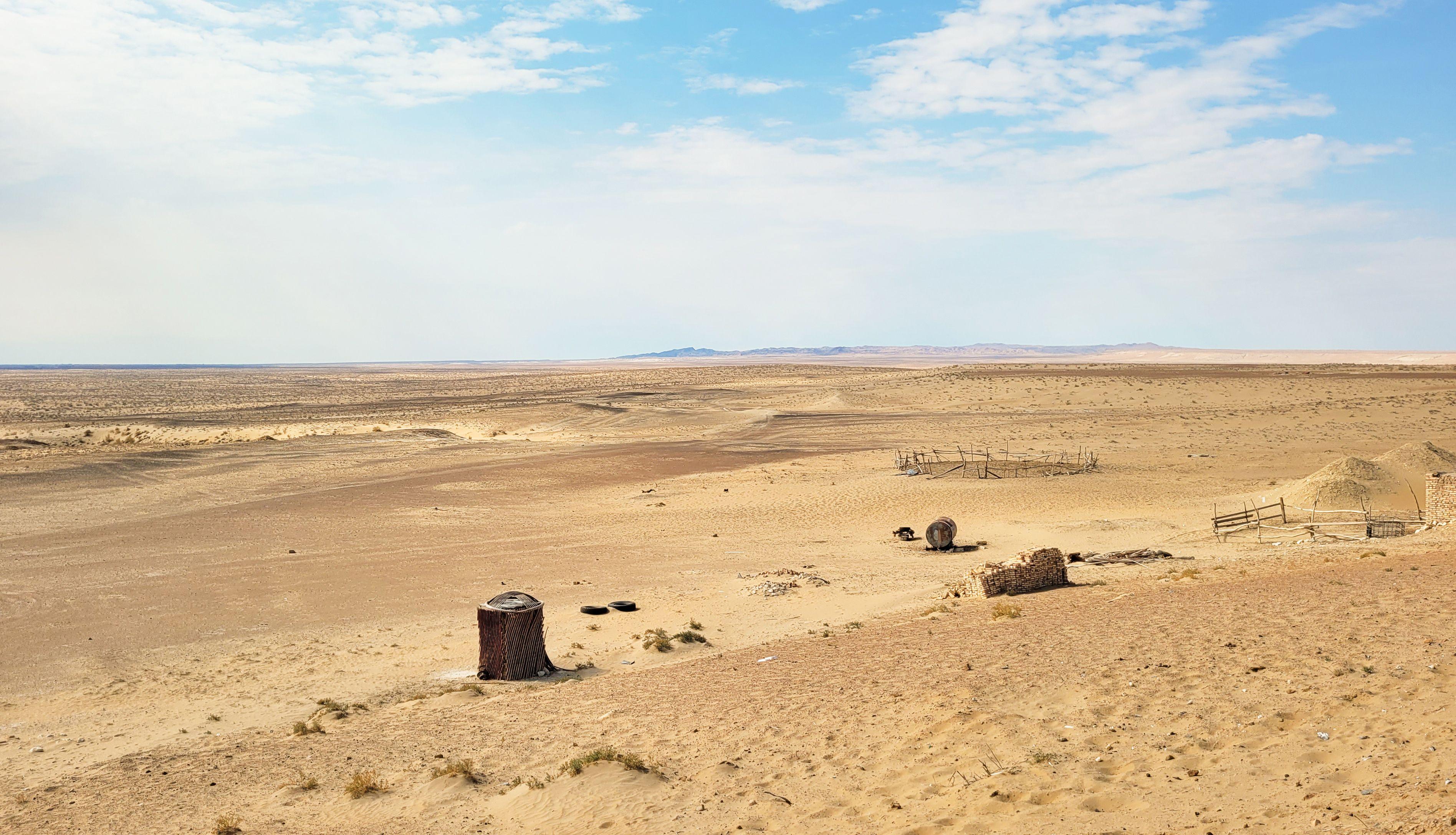
Between Bukhara and Khiva lies about 450 km of Red Sands desert on the main road, and this is the section that makes or breaks a trans-Uzbekistan ride. Riders in 2025 reported:
- Services: almost nothing for stretches of 100 km or more once past Gazli; a handful of chaikhanas and truck stops at long intervals, closed in some seasons.
- Surface: mostly fair tarmac with rough patches, including a 55 km stretch of broken surface reported in May 2025; sand can blow across the road.
- Heat: 43 degrees was recorded by one rider in late spring; in July it can be hotter. Wind is often from the north-west, a headwind if you ride west.
- Water: carry 6 to 8 litres and refill at every opportunity; trucks will stop and share.
It is four to five days of hard riding with wild camping in the open desert, which is permitted in practice and easy to find. Strong riders do it in April or October and remember it fondly; most touring cyclists take the train or put the bike in a vehicle and resume in Khiva, where the Khorezm fortresses and the flat roads of the oasis make for pleasant day rides. There is no shame in that. The new high-speed line across the desert makes the choice easy; see our Bukhara to Khiva guide.

Best months to cycle in Uzbekistan
Two windows, and they are short:
- Early April to late May: spring, green fields, 18 to 30 degrees, occasional rain. The best season for the Bukhara–Samarkand corridor and the Nuratau. May is already hot in the desert.
- Mid-September to late October: dry, clear, 15 to 30 degrees, melon season. The best season for the Kyzylkum and for photography.
June to August is 35 to 45 degrees in the lowlands; only the Chimgan area is comfortable. November to March is cold, with frost and occasional snow in Tashkent and Samarkand, and bitter wind in the desert; roads are rideable but the days are short. Our weather by month guide gives the figures for each city, and our spring and autumn guides describe the seasons.
Water, food, camping and the rules
Water: bottled water is sold in every village shop, usually in 1.5 and 5 litre bottles; tap water is not recommended for drinking. Wells and taps in front of houses are a tradition of hospitality and locals will fill your bottles. In the desert plan for at least 4 litres a day in spring and far more in heat.
Food: samsa, bread and tea are the cyclist's fuel, cheap and everywhere. Plov at lunchtime, shashlik in the evening. Our street food guide explains what is what. Fruit is abundant and cheap from May to October.
Camping: there is no specific law against wild camping and the practice is tolerated; the difficulty on the main corridors is finding unfarmed land, and the courtesy is to ask a farmer or a village elder, who will often offer a courtyard instead. In the desert and the Nuratau, camp freely but out of sight of the road.
Registration: hotels and guesthouses register foreign guests automatically. The rules have relaxed and short gaps for camping nights are no longer the problem they once were, but keep hotel receipts and read our guide to registration of foreigners before a long self-supported ride.
Police checkpoints at regional borders are routine; have your passport and a map ready, expect friendly questions, and carry on.

Taking a bike on Uzbek trains
Trains are the cyclist's friend in Uzbekistan, and the practice, as of 2026, is this:
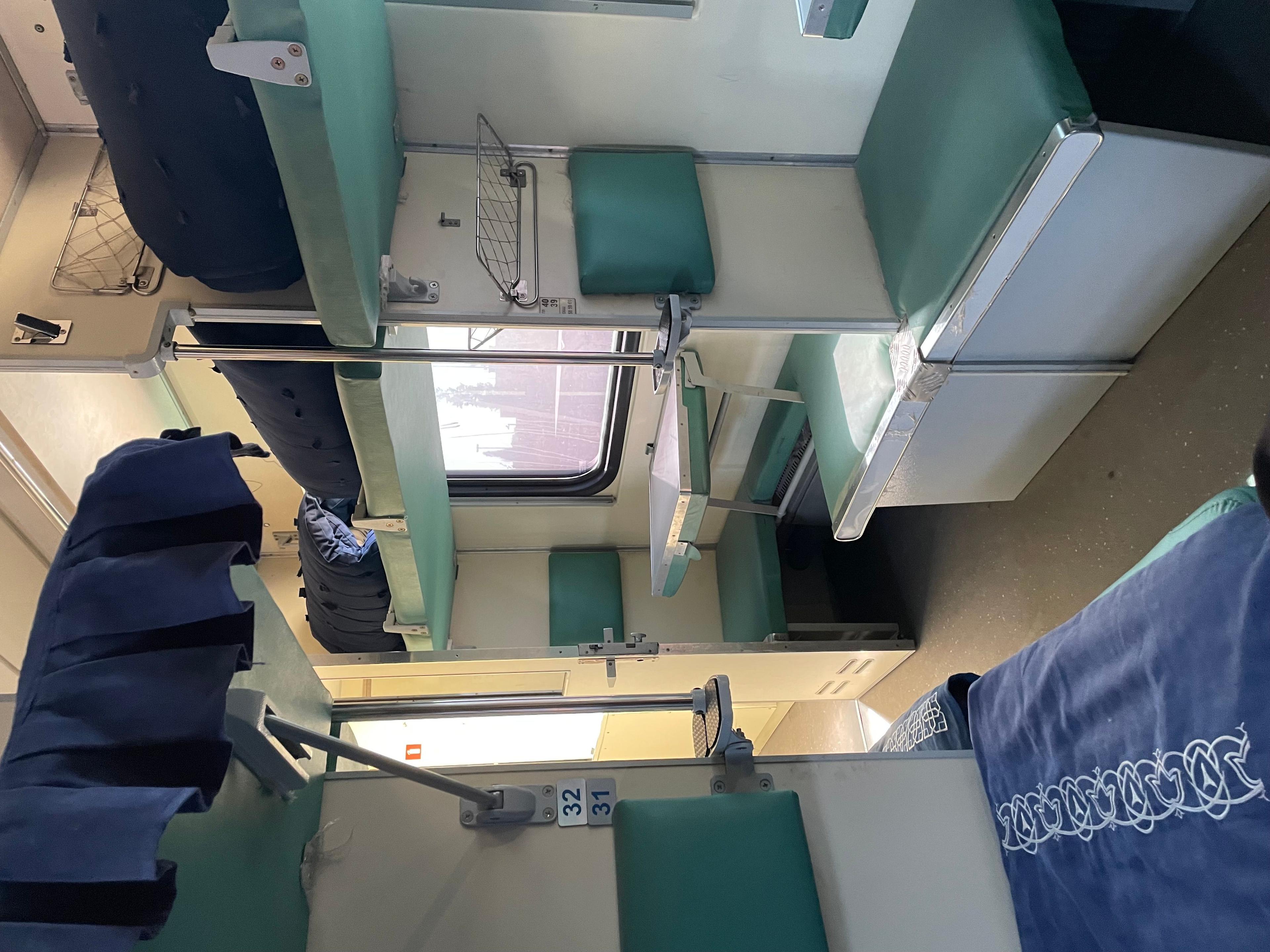
- Conventional and overnight trains, including the Sharq and the sleepers to Urgench and Termez: bicycles travel as luggage in the carriage, usually with the front wheel removed and the bike bagged or wrapped, placed in the luggage space at the end of the carriage or under a lower berth. Conductors are generally accommodating for a small tip. This is the reliable way to move a bike long distances.
- Afrosiyob high-speed trains: luggage racks are small and there is no dedicated bicycle space; a boxed or bagged bike with wheels removed is sometimes accepted and sometimes not, depending on the train and the staff. Do not rely on it. If you must use the Afrosiyob, arrive early and ask the platform supervisor.
- Booking: there is no bicycle ticket in the online system; buy your seat on the Uzbekistan Railways app and deal with the bike at the station.
We could not find a published English-language rule for bicycles from Uzbekistan Railways, so treat this as practice rather than policy, and ask at the station before you buy. Our guide to booking Uzbekistan train tickets covers the app and the stations.
Bike hire in Tashkent and bringing your own
Bringing your own touring bike is the standard choice, and airlines flying to Tashkent accept boxed bikes as sports equipment; Tashkent airport has a lift and trolleys and taxis with roof racks can be found with a little negotiation.
Hire is improving but still limited:
- Tashkent has a growing cycling scene, with a city bike-share scheme, several bike shops in the centre and workshops that rent mountain and hybrid bikes by the day; quality varies and touring bikes with racks are rare. Expect roughly US$10 to 25 a day in 2026 for a decent hybrid, more for a mountain bike.
- Rental for the Chimgan area is available in Gazalkent, the town below the mountains.
- Organised multi-day programmes supply bikes; one operator's 11-day programme listed a bicycle at around US$120 for the whole tour in 2026, which gives a sense of prices.
- E-bikes can be arranged for supported rides in limited numbers with advance notice.
Spares are a problem outside Tashkent. Carry tubes, a chain link, brake pads and spokes; the bazaars sell basic parts for Chinese bikes, not for yours.

Supported rides with a vehicle
A support vehicle changes what is possible. With a car or minibus carrying luggage, water and a spare bike, a group can ride the pleasant sections, from Bukhara to Gijduvan, through the Nuratau villages, around Charvak, across the Khorezm oasis to the fortresses, and be driven through the desert and the traffic. Days become 50 to 90 km of chosen road rather than 120 km of necessity, and the evenings are in guesthouses with the monuments on the doorstep.
That is the format that suits most active travellers who are not committed long-distance tourers, and it suits families with teenagers. We can arrange the vehicle, driver, luggage transfer and hotel nights for self-guided riders, or a full guided programme for a group.
Cycling Uzbekistan with TourEast
We are not a bicycle company, but we know the roads, the guesthouses and the station staff, and we can build a supported ride around your own bikes or arrange hire for a group: a support vehicle on the Samarkand to Bukhara corridor, a Nuratau loop with homestays and a yurt night, or a Khiva base for the desert fortresses, with trains for the long gaps. Tell us your dates, your daily distance and whether you want to cross the Kyzylkum or be driven across it.