How Uzbeks keep the month of Ramazon: the iftar table that UNESCO lists as heritage, nisholda and evening bread, taraweeh in Tashkent, Samarkand and Bukhara, children's door-to-door songs, fitr sadaqa and the Night of Power, and how a visitor joins in with good manners.
Facts, prices and schedules checked on November 11, 2026
In Uzbekistan the month is called Ramazon, and its sound is the soft rattle of a teapot lid at dusk. Across the country, in courtyards in Bukhara, apartment blocks in Tashkent and village houses in the Fergana Valley, families sit down at the same minute, a date in one hand and a glass of water in the other, and wait for the call to prayer. In 2023 UNESCO added iftar and its social traditions, shared by Uzbekistan, Azerbaijan, Iran and Turkey, to its list of the intangible heritage of humanity.
The month is best understood through its traditions: what is eaten, where people pray, what the children sing and how a visitor, Muslim or not, can take part with good manners. For the practical side, such as dates, what stays open and Eid, see our guide to travelling in Uzbekistan during Ramadan.
A secular state, a devout month
Uzbekistan is a secular republic with a Muslim majority, and the Soviet decades left a mark: many people fast, many do not, and nobody is asked. Cafés and restaurants stay open by day, and in the cities life looks almost normal until late afternoon. Then the rhythm changes. Traffic thickens around five, bakeries sell out of evening bread, and the streets go quiet for half an hour at sunset while the country eats.
The practice is organised by the Muslim Board of Uzbekistan, whose Fatwa Centre fixes the first day of the month, publishes the official timetable of saharlik and iftar for Tashkent with corrections for each region, and sets the amounts of charity. In 2026 Ramazon began on 19 February and Ramazon Hayit, the festival at its end, fell on Friday 20 March, the day before Navruz. In 2027 the month is expected to run from about 8 February to 9 March, so it falls again in late winter, with short days and a fast of roughly twelve to thirteen hours.
Saharlik and iftorlik: the two meals
Saharlik, the pre-dawn meal, is eaten in the dark, usually between four and five in the morning: tea, bread, eggs, kaymak or cheese, last night's plov or soup reheated, and plenty of water. In older neighbourhoods a relative or neighbour still knocks on doors to make sure no one oversleeps.
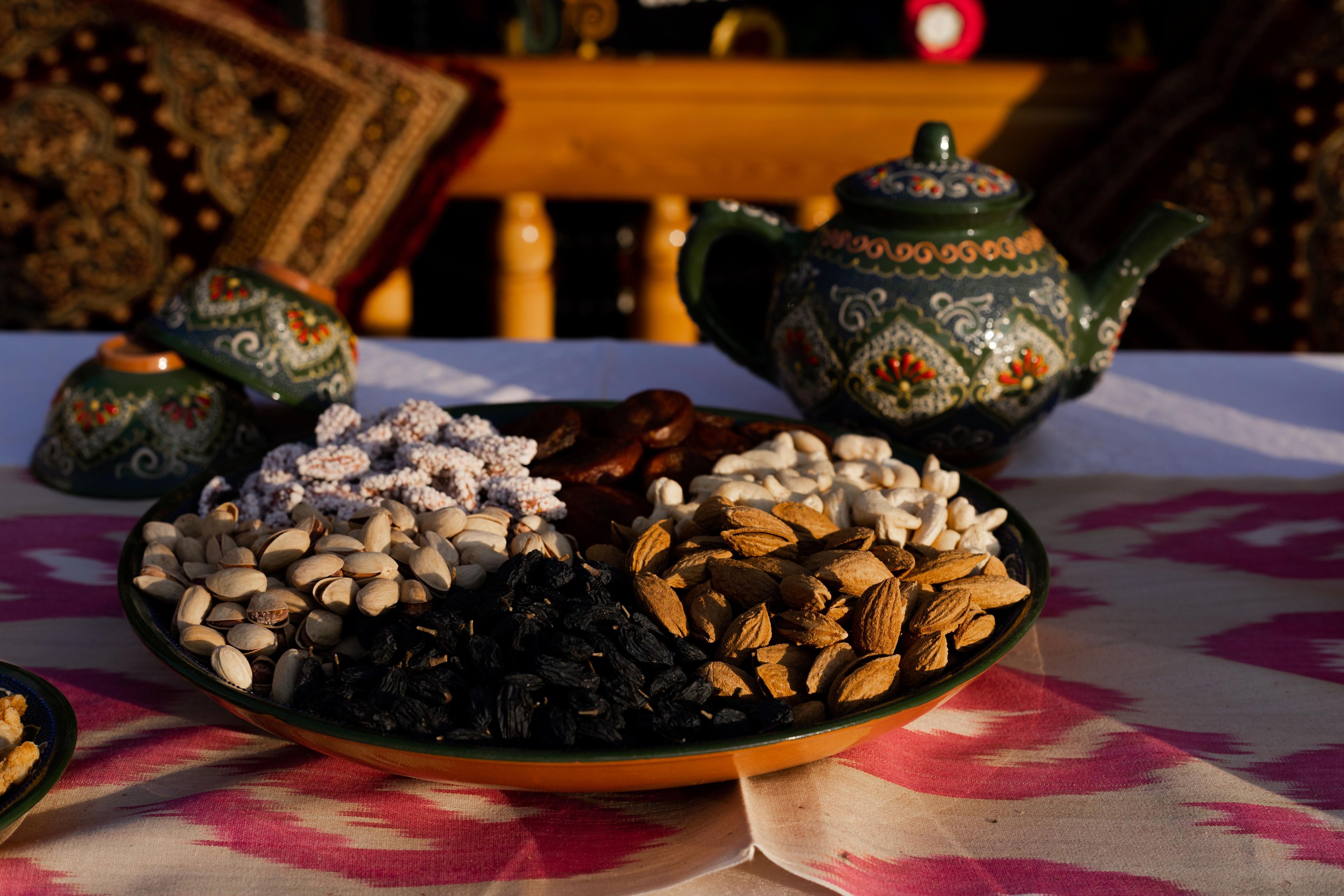
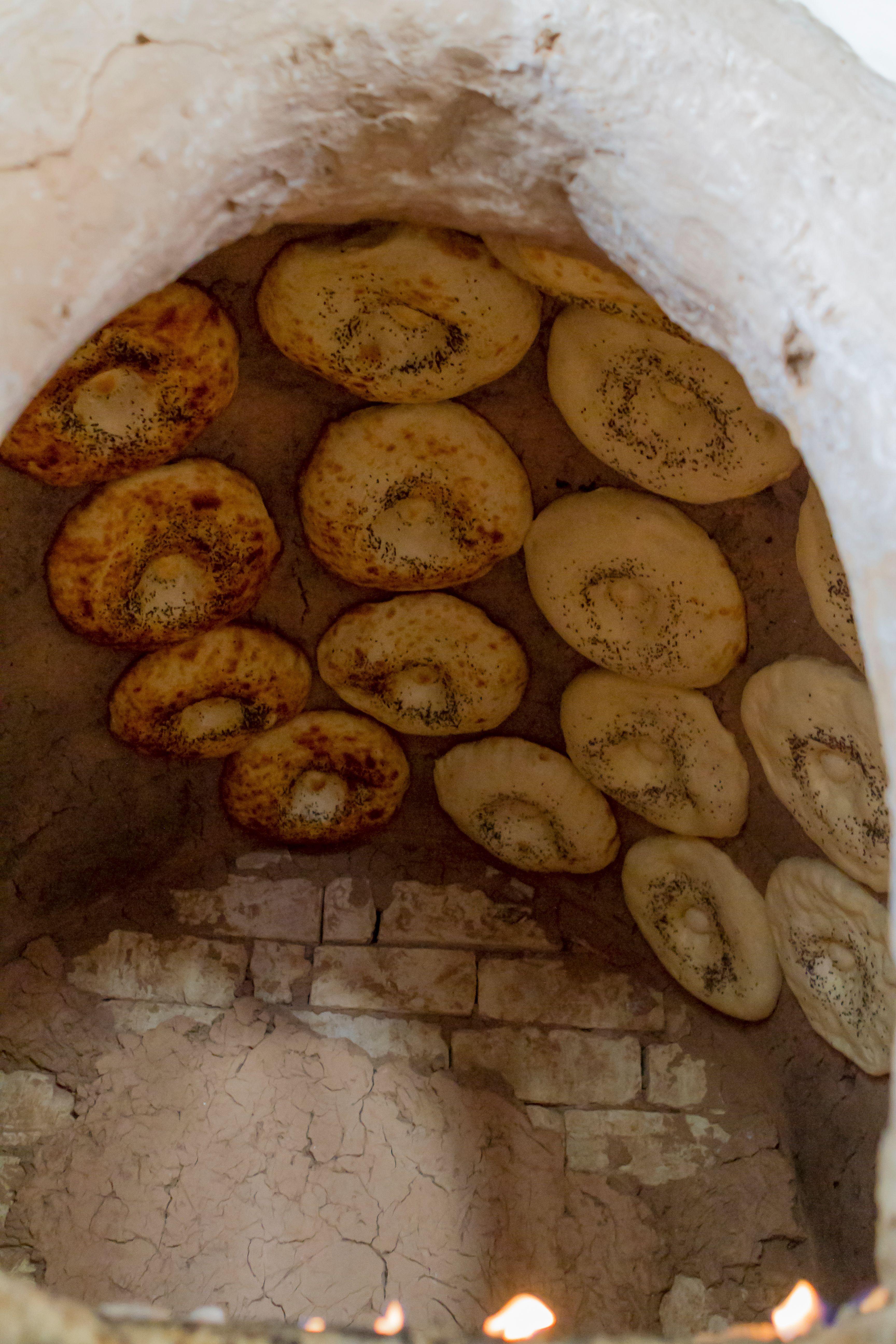
Iftorlik, the evening meal, begins with the intention prayer and a date or a sip of water, as the Prophet is said to have broken his fast, then moves in stages. First the light things: tea, dried fruit, nuts, halva, fresh non from the tandoor and soup. Then, after the sunset prayer, the main dish, often plov, manti or a meat and vegetable stew, followed by more tea.
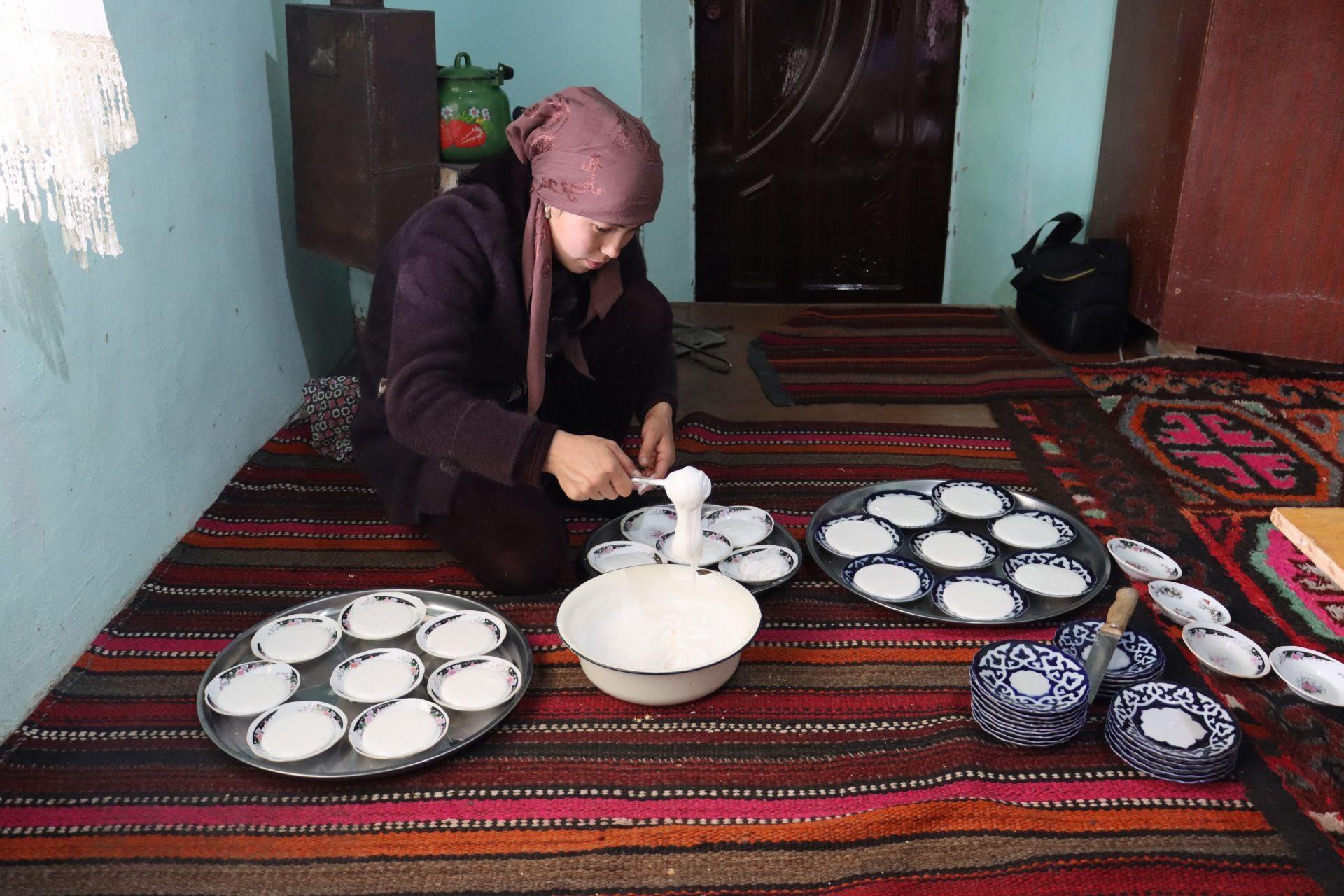
The sweet of the month is nisholda, a white, glossy cream of egg whites and sugar syrup flavoured with liquorice root, sold from big bowls at bazaars and roadside stalls only during Ramazon and eaten with warm bread. If you see it, try it; if you are invited to a home, bring a tub.
The iftar table as hospitality
The UNESCO listing describes iftar less as a meal than as a social bond, and in Uzbekistan that is exactly how it works. Families invite relatives, neighbours and colleagues in turn through the month; mahallas, the traditional neighbourhood communities, set long tables in a courtyard or a mosque for those who live alone; businesses and charities feed passers-by in tents near bazaars and big mosques.
A visitor will often be invited. If you are:
- Arrive a little before the time on the calendar, not after, and wait for the host to start.
- Do not eat or drink until the host breaks the fast with a short prayer, even if you are not fasting.
- Bring something small: sweets, fruit, nisholda or a cake.
- Accept tea; your cup will be filled only halfway, a sign that the host wants to keep pouring for you.
- Expect men and women to sit apart in some households, especially in villages, and follow your host.
- Ask before taking photographs of the table or the people around it, and put the phone away during the prayer.
The gesture people will remember is simple: saying "Ro'zangiz qabul bo'lsin", may your fast be accepted, to anyone who has fasted.
Taraweeh: the night prayers
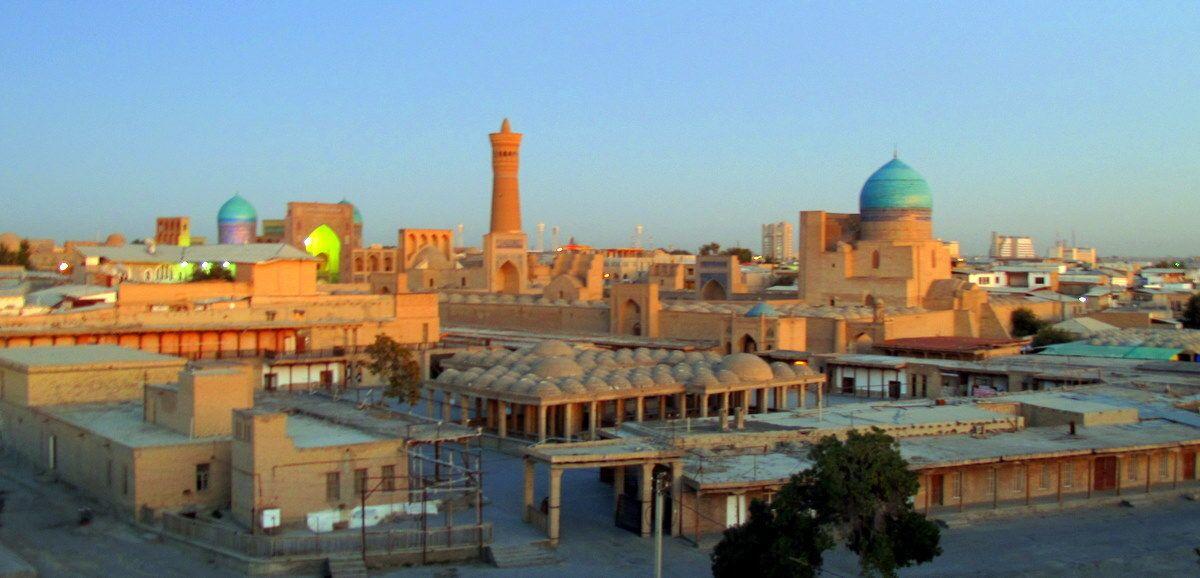
After the night prayer, mosques fill for taraweeh, the long additional prayers of Ramadan in which the imam recites the Quran section by section. The Muslim Board reported that in 2025 taraweeh was held in more than 2,100 mosques across the country, and that over 1,700 of them completed the recitation of the whole Quran during the month. In the big city mosques the courtyards are full and the overflow prays on mats in the street.
Where to go:
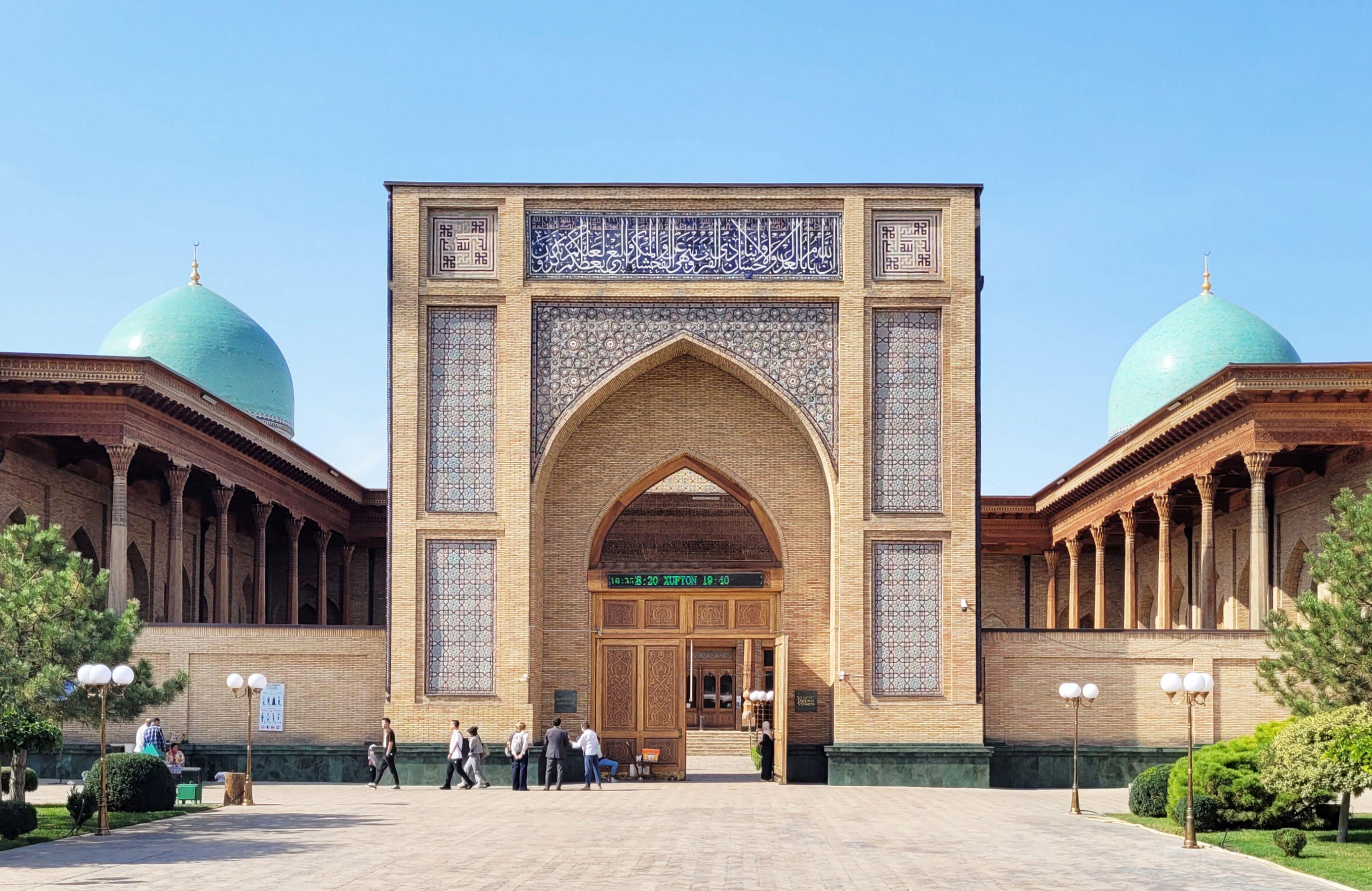
- Tashkent: the Hazrati Imam mosque at the Khast-Imam complex, next to the new Centre of Islamic Civilization, and the white-marble Minor Mosque by the Ankhor canal.
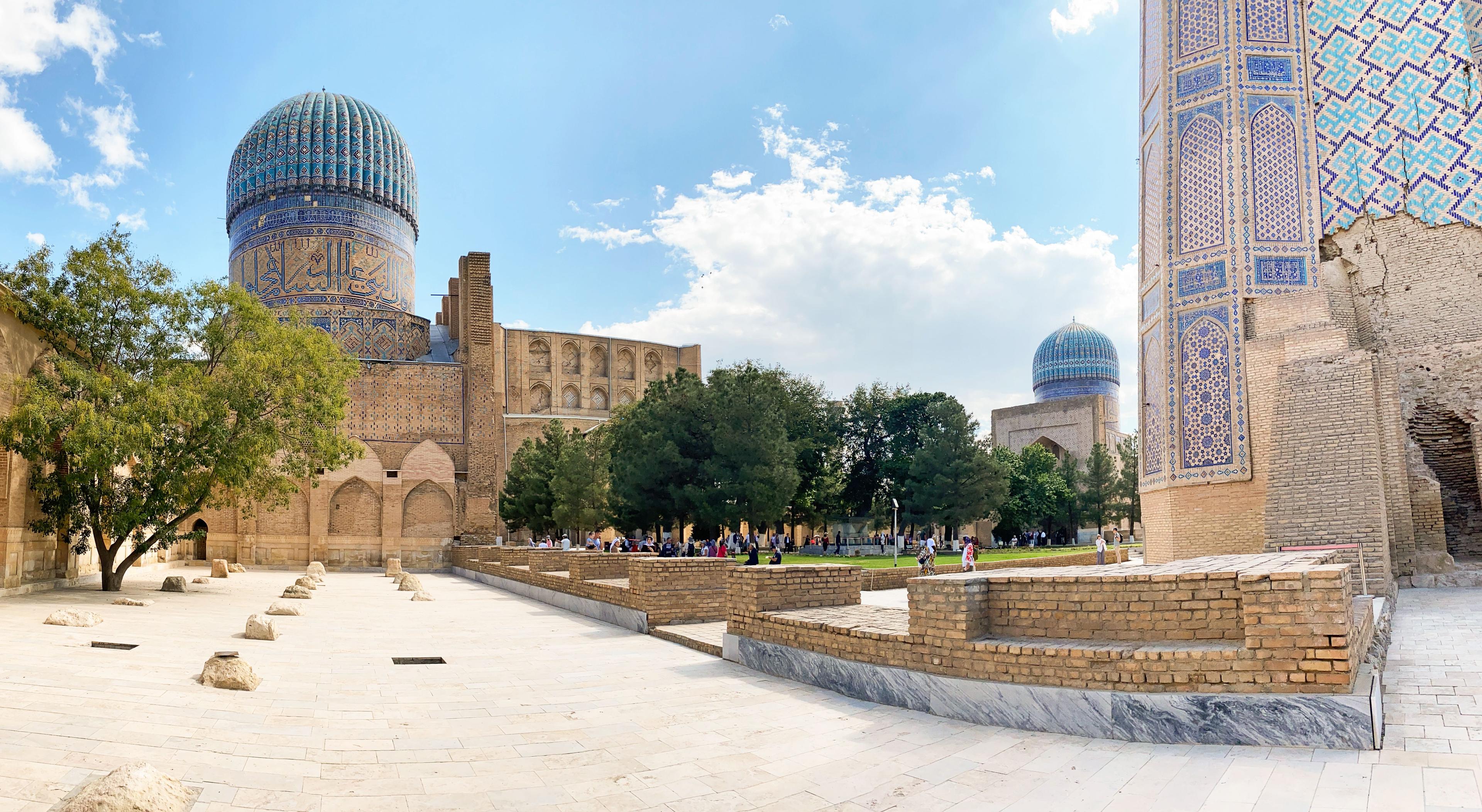
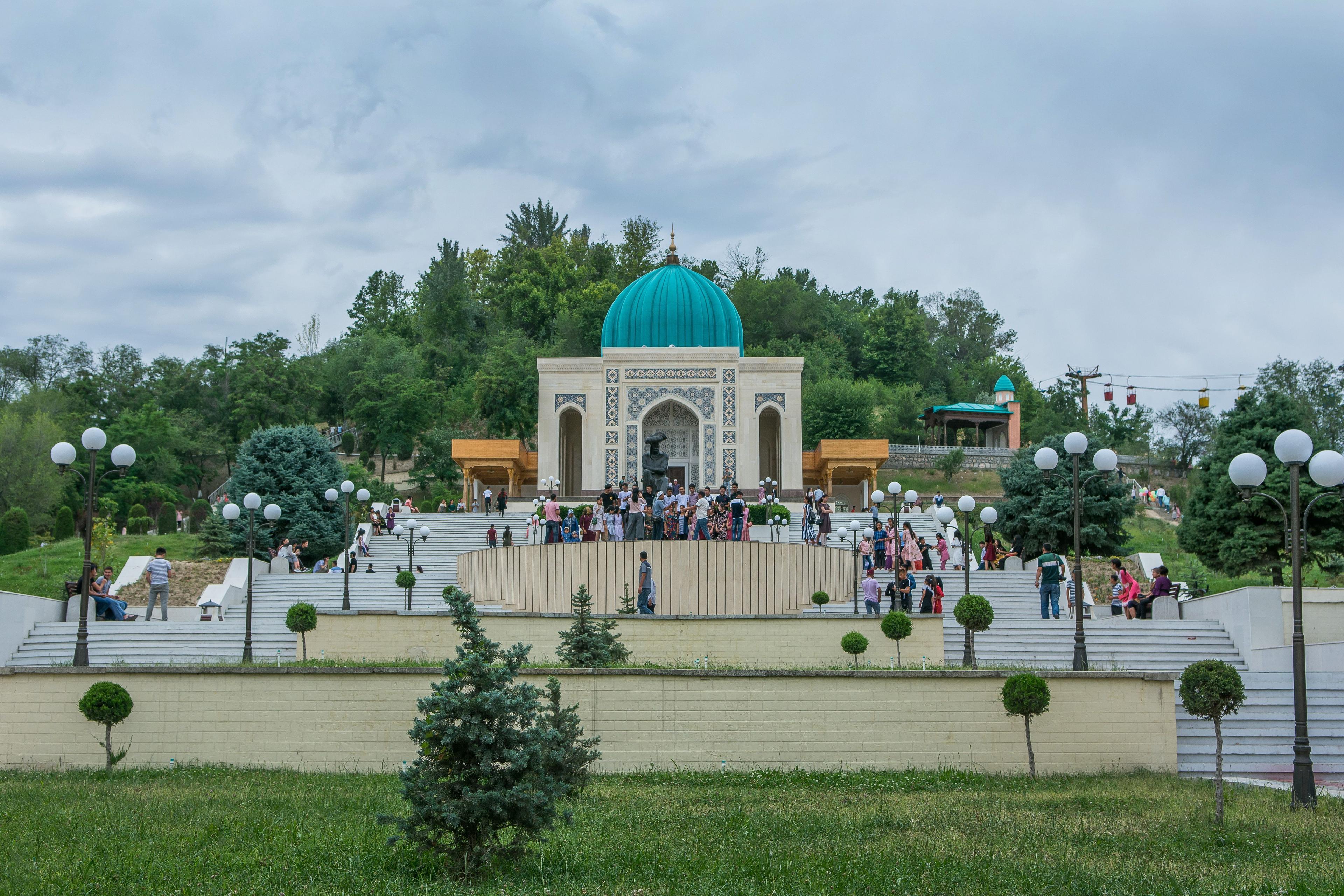
- Samarkand: the Hazrat Khizr Mosque above the Siab bazaar, and the rebuilt Imam al-Bukhari complex outside the city, whose new mosque holds 10,000.
- Bukhara: the Kalyan mosque of Po-i-Kalyan, the Bolo-Hauz Mosque opposite the Ark, and the Bahauddin Naqshband memorial.
Muslim visitors are welcome to pray. Non-Muslims can watch from the edge of a courtyard if a guide checks first, but should not enter prayer halls during prayer or photograph worshippers. Women should ask locally: some mosques have a women's section, many do not, and in that case women usually pray taraweeh at home.
Songs at the door and the Night of Power
One of the loveliest Central Asian customs of the month is Ramazon aytish, carolling for Ramadan. After iftar, groups of children, and in villages sometimes young men, go from gate to gate singing verses that begin "Yo Ramazon", wishing the household health, a good harvest and, in the old lyrics, a strong baby boy. The verses vary by region and singers improvise to fit the house. In return they receive sweets or small coins. The tradition is shared with Kazakhstan, Kyrgyzstan and Turkmenistan; it is fading in big cities but you may hear it in old mahallas of Bukhara and in Fergana Valley villages.
The most solemn night is Qadr kechasi, the Night of Power, observed in Uzbekistan on the night before the 27th day of the month, when the first verses of the Quran are believed to have been revealed. Mosques stay full until late, families pray at home, and many people make their largest donations of the year.
Charity: fitr, fidya and zakat
Ramazon is also the month of giving, and the Fatwa Centre publishes the sums each year.
- Fitr sadaqa must be paid for every member of a household before the Hayit prayer. For 2026 it was set in kind or cash at five levels: about 10,000 som for 2 kg of wheat, 12,000 for 2 kg of flour, 20,000 for 4 kg of barley, 110,000 for 2 kg of raisins and 200,000 for 4 kg of dates.
- Fidya, paid by those who cannot fast through illness or age, equals one fitr for each missed day.
- Zakat is due on wealth above a threshold based on 85 grams of gold, set at 100 million som for 2026.
You will notice the results: food parcels at mosques, collection boxes in shops and long communal tables. A visitor who wants to give can ask a guide or a mosque office; buying bread or nisholda for a host family is also welcomed.
Ramazon Hayit and the end of the month
The month ends with Ramazon Hayit, Eid al-Fitr, a public holiday. It begins with an early prayer, often held in the open air outside the largest mosques, then a day of visits. Families go first to homes that have lost someone during the year, then to elders and relatives, and tables are laid with sweets, samsa, plov and the pastries of the season. Children collect small gifts as they go from house to house.
For travellers this means museums and monuments mostly open, many shops and offices closed for the day, and full trains and flights on the days either side. Our guide to Eid in Uzbekistan covers it in detail.
Travelling in Ramadan with TourEast
We are preparing our Ramadan programme, an eight-day journey for the 2027 season from Tashkent to Samarkand and Bukhara, built around taraweeh in the great mosques, iftar at a family table in a mahalla, the shrines of Imam al-Bukhari and al-Maturidi, and, when the dates fall right, the Hayit prayer in Bukhara. Ask us to be notified when bookings open.
In the meantime, any of our itineraries can be arranged around the fast, with the day's walking in the cooler morning, rest in the afternoon and iftar booked each evening. Four Crowns covers Tashkent, Samarkand, Bukhara and Khiva in eight days; Bukhara After the Buses Leave gives you four days in the city of the Seven Pirs; and 48 Hours in Samarkand is a short trip for a long Ramadan weekend.
Frequently asked questions
Photo gallery
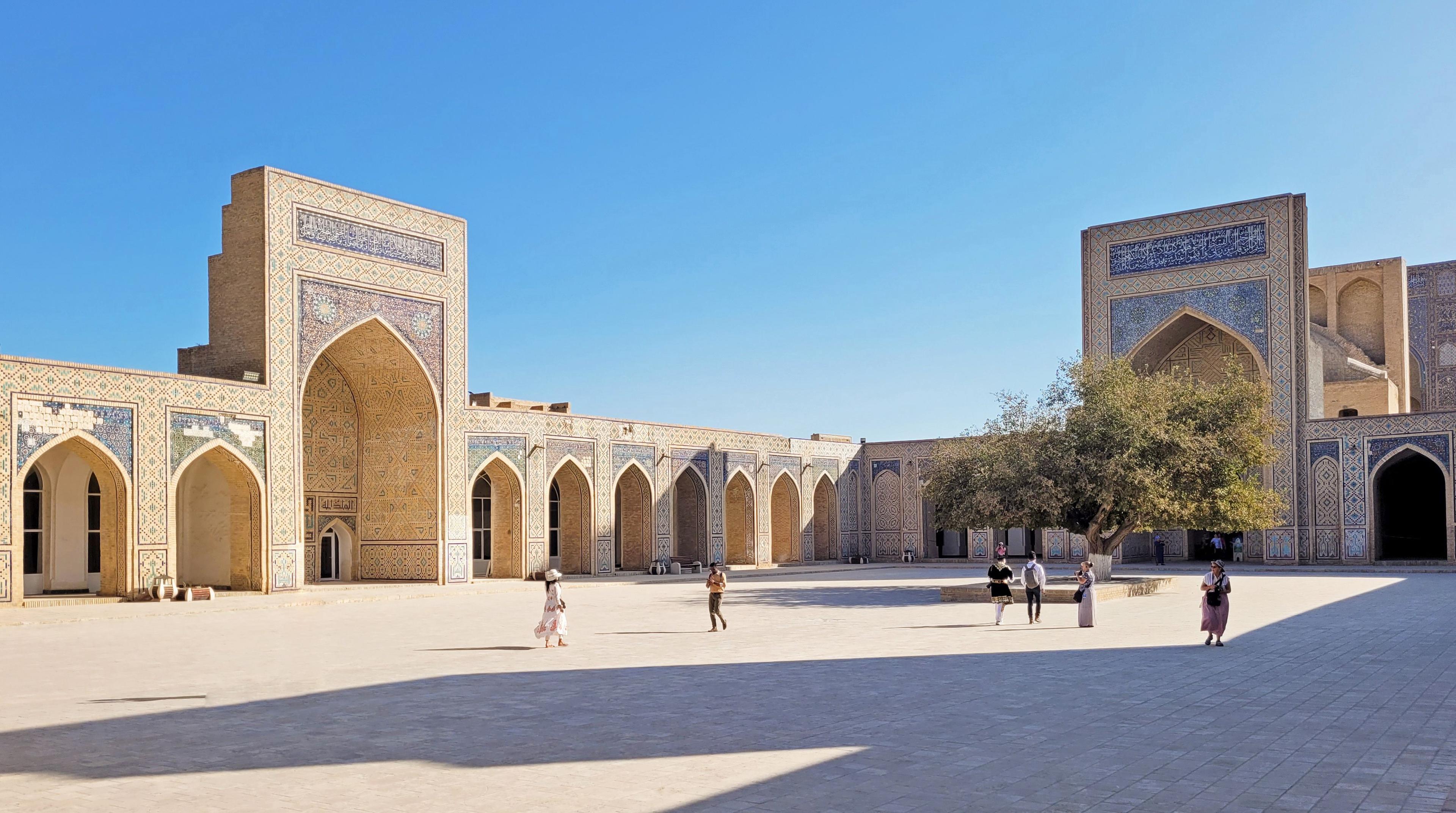
Photo: Bgag / Wikimedia Commons, CC0; Bunyod Rustamov / Wikimedia Commons, CC BY-SA 4.0; Benjamin Goetzinger / Wikimedia Commons, CC BY-SA 4.0; Peretz Partensky from San Francisco, USA / Wikimedia Commons, CC BY-SA 2.0; Alaexis / Wikimedia Commons, CC BY-SA 3.0