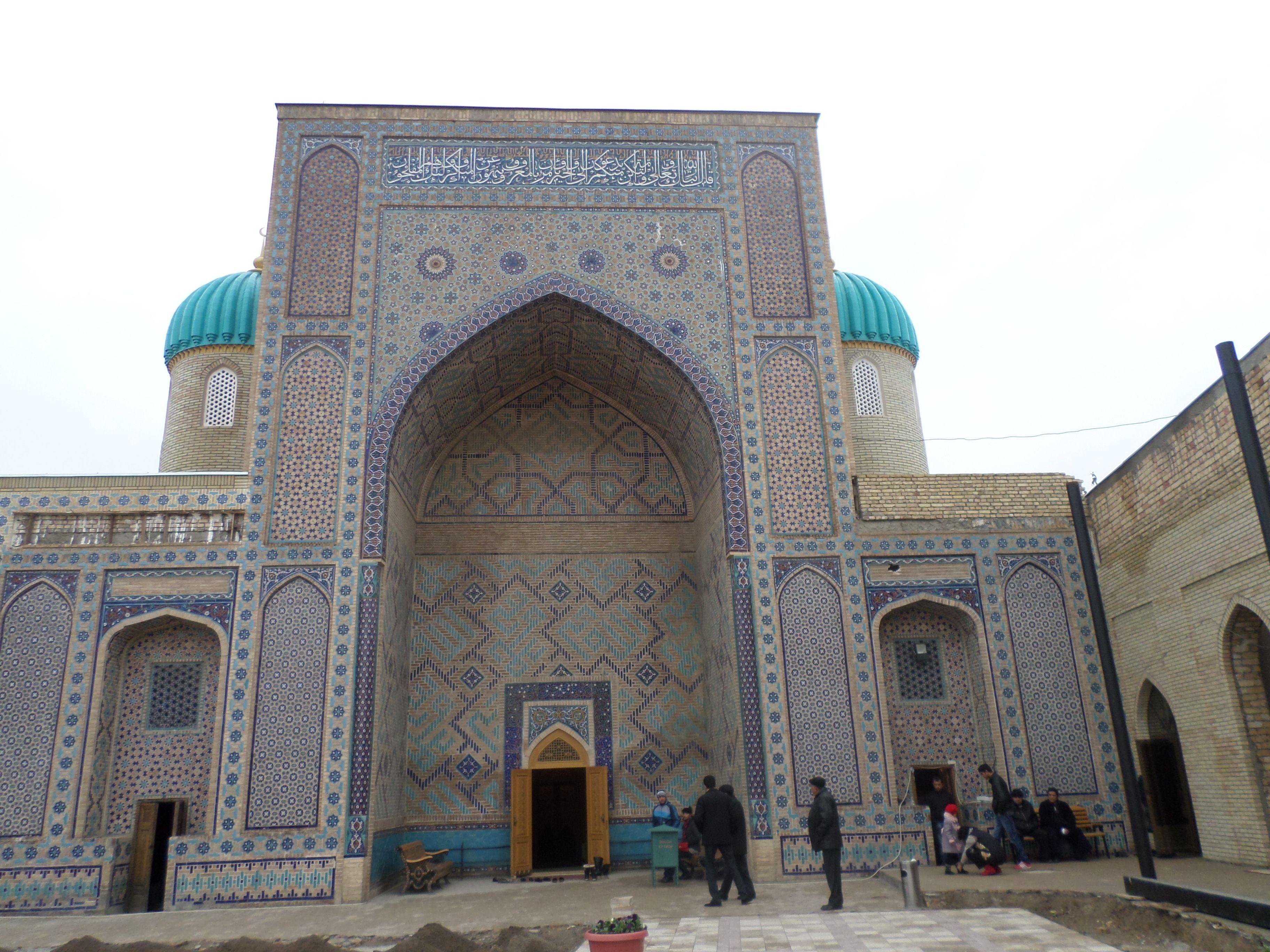
A one-day route through the shrines of Tashkent that most visitors never see: three medieval mausoleums at Sheikhantaur, the craftsmen's saint at Suzuk-ota, the 12th-century chillakhona at Kukcha and the Zangi-ota complex 20 km south of the city. Order, timings, taxi costs, etiquette and where to eat.
Facts, prices and schedules checked on November 11, 2026
Tashkent is usually sold as the modern capital, a place for the metro, the plov centre and an early train to Samarkand. Under that city lies another one, older than Timur: a ring of Sufi shrines where people still come on Thursday evenings with bread and a request. Four of them can be visited in a single day without strain, and together they explain how ziyarat, the visiting of saints' graves, works in everyday Uzbek life.
The route runs from the centre outwards: Sheikhantaur, a medieval cemetery hidden between office blocks; Suzuk-ota, the shrine of the craftsmen's saint with a working artisan quarter; Kukcha, where a 12th-century underground cell is the oldest building still in use in the city; and Zangi-ota, 20 km south, the main pilgrimage site of the Tashkent region. Distances are short, entry is free everywhere, and the day costs little more than a few taxi rides and lunch at Chorsu.
Who the saints were, in two minutes
All four shrines belong to the Yasawi and related Sufi traditions that spread through the Tashkent oasis from the 12th century. Sheikh Khovendi at-Tahur, the Sheikhantaur of the quarter's name, was born in the late 13th century in Bogustan, a village now under the Charvak reservoir, studied in Turkestan and died in Tashkent between 1355 and 1360. Suzuk-ota, properly Sheikh Mustafakul-khoja (1140–1217), was a grandson of Ahmad Yasawi and a master woodcarver who taught his trade to the quarter around him. Sheikh Zayniddin-bobo of Kukcha was, in the tradition, sent from Baghdad by his father, the founder of the Suhrawardi order, and lived to 95. Zangi-ota, "the dark-skinned father", was a 13th-century shepherd-sheikh of the Yasawi line who died around 1258; his wife Ambar-bibi became a saint in her own right.
None of them is a household name abroad. In Tashkent their names are on metro stations, districts and streets, and their graves are busier on a Friday than any museum in the city.
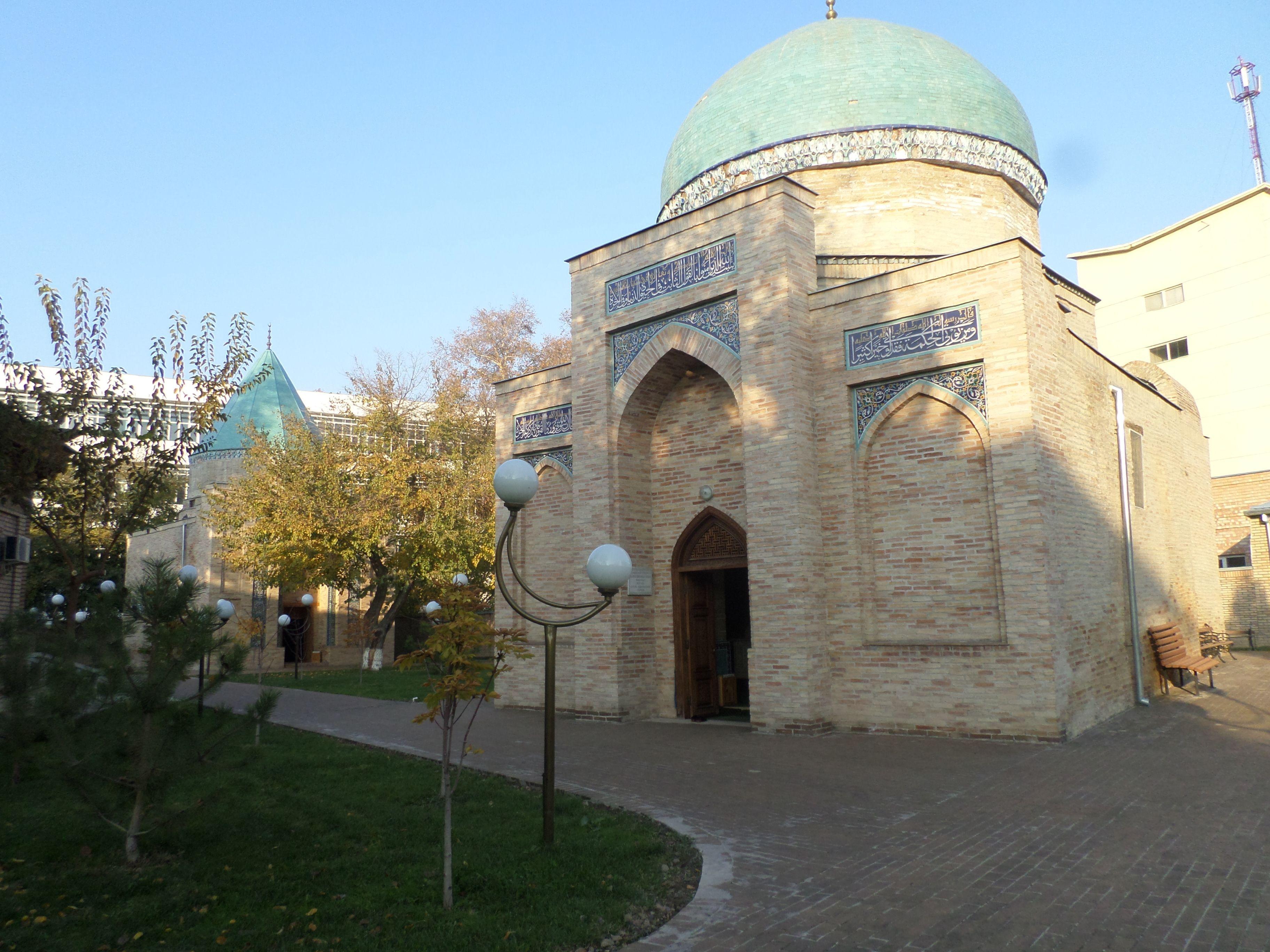
Stop 1, 09:00: Sheikhantaur and the petrified tree
Start at Sheikhantaur, five minutes on foot from Alisher Navoi metro station, between Navoi and Abdulla Kadiri streets. Until the 1920s this was a large cemetery with some sixteen monuments; three mausoleums survive in a leafy block beside the Islamic academy.
The saint's own mausoleum is a brick building with two domes, rebuilt in the 19th century on a 14th-century plan. Inside, beside the marble cenotaph, stands the trunk of a petrified juniper-like tree, the last of a grove of sacred saur trees among which the sheikh asked to be buried. Local legend says Alexander the Great planted the grove; the tree is real, the Alexander story is a story. A few steps away is the small Kaldirgach-biy mausoleum, unmistakable for its twelve-sided pyramidal roof, a steppe form almost unique in Uzbekistan. It is dated to the first half of the 15th century and identified by tradition with Tole-biy, the Kazakh judge who governed Tashkent in the 1740s, which is why Kazakh visitors come here in numbers. The largest building is the mausoleum of Yunus Khan (1415–1487), ruler of Moghulistan and maternal grandfather of Babur, a T-shaped khanaqah with a tall portal built by his sons at the end of the 15th century. It stands inside the academy grounds, so you may only see the exterior; ask at the gate.
The caretaker unlocks the mausoleums on request. Remove shoes, keep voices low, leave a small donation. Allow 40 minutes.
Stop 2, 10:15: Suzuk-ota and the craft quarter
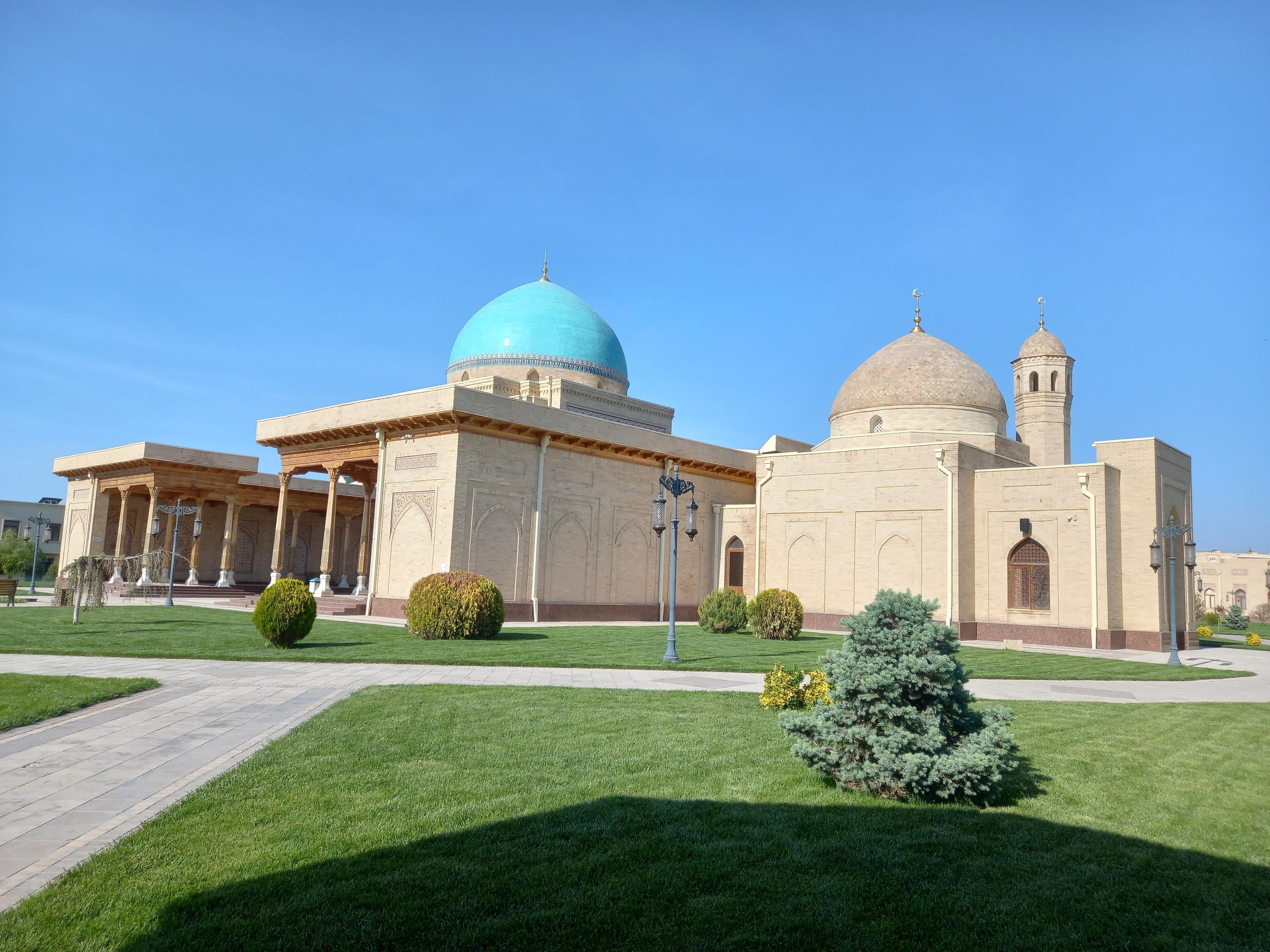
Take a taxi (10 minutes, about 15,000 som) or ride the metro to Chorsu and walk 15 minutes west along Beruni and Sagban streets. Suzuk-ota is the shrine Tashkent's artisans have claimed as their own for seven centuries. The local account says Timur ordered a mosque and mausoleum over the saint's grave in 1363–64 after recovering from an illness. The mosque was closed in 1936 and turned into a metal works; prayers returned in 1996, and the whole ensemble was rebuilt in 2017–19, so what you see is clean and new: a square mausoleum under a turquoise dome, a columned summer mosque with carved wooden pillars and painted ceilings, gardens and a fountain.
The reason to linger is the street of 34 two-storey houses built in 2019 for working masters. Downstairs are the workshops, upstairs the families live. On a weekday morning you can watch woodcarving, lacquer painting, ceramics, copper chasing, suzani embroidery, skullcap making and miniature painting, and buy from the person at the bench at prices well below the bazaar's. A small museum at the entrance tells the saint's story. Workshops keep roughly 10:00 to 18:00; some close on Sundays. Allow an hour and a quarter.
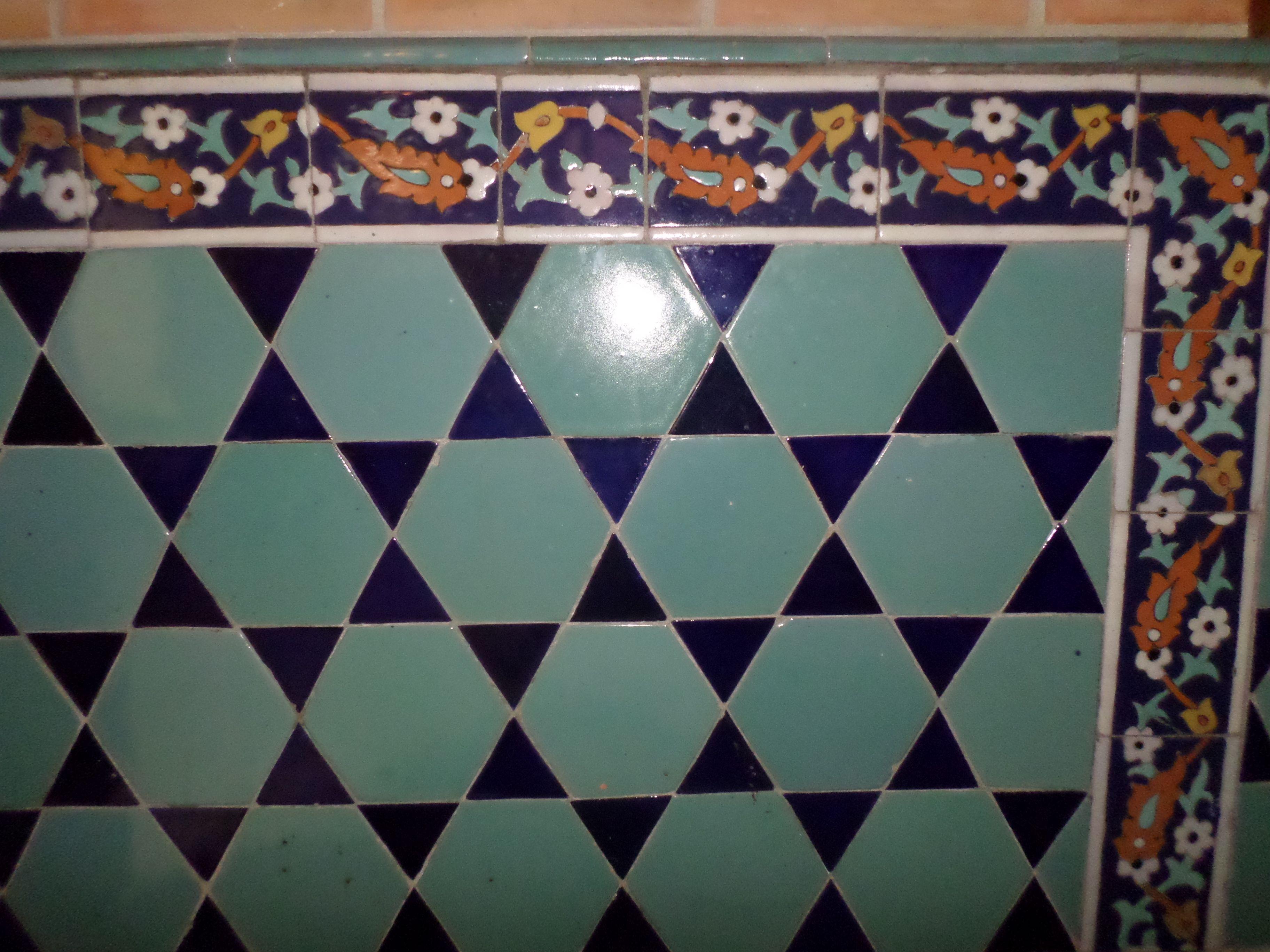
Stop 3, 11:45: Kukcha, the oldest building in Tashkent
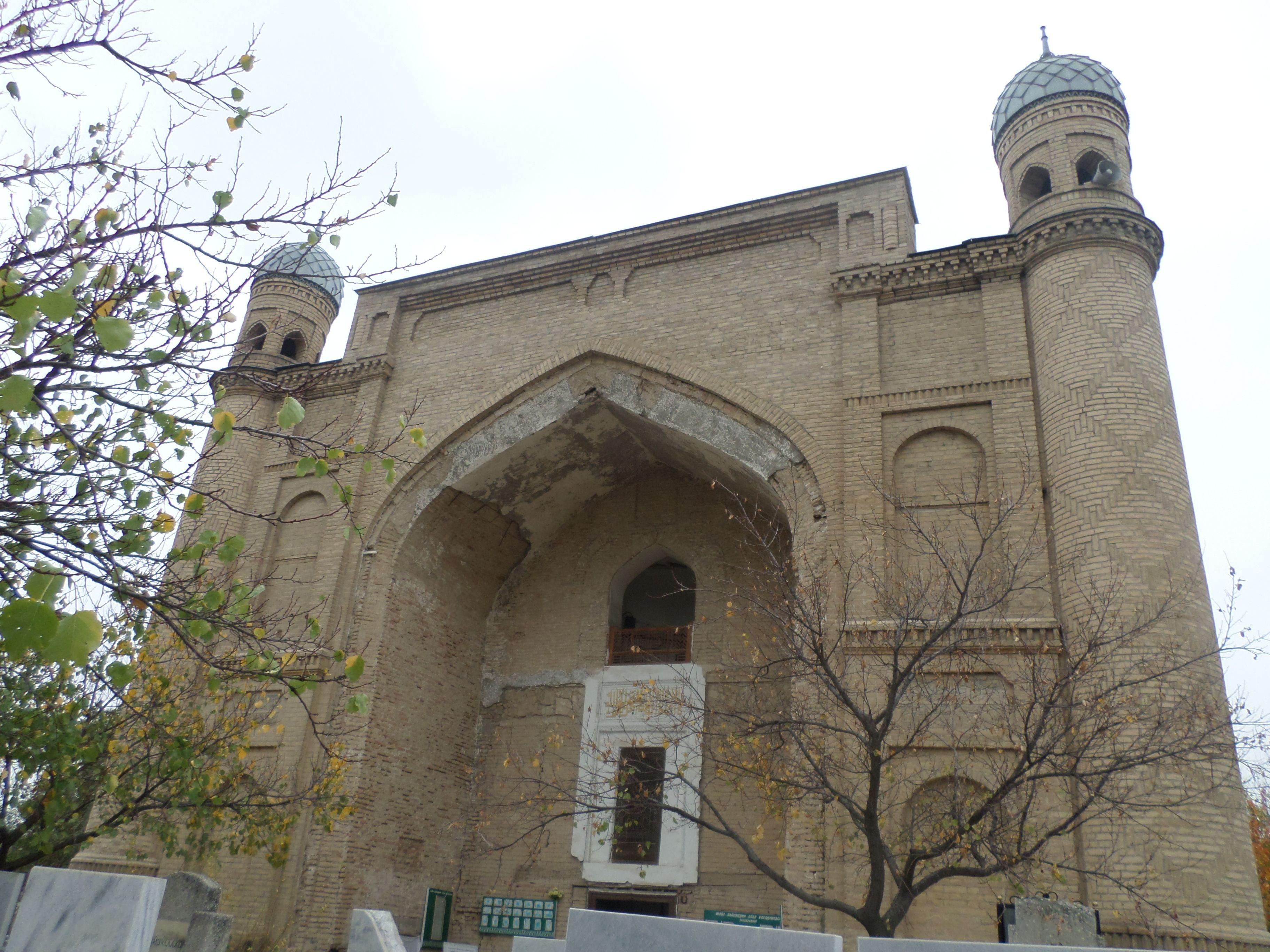
Kukcha was one of the four historic quarters of the old city and the name of its western gate. A 10-minute taxi west from Suzuk-ota (about 3 km, 12,000 to 18,000 som) brings you to the cemetery and shrine of Sheikh Zayniddin-bobo.
The building to ask for is the chillakhona, a small domed brick cell sunk into the ground beside the mausoleum, where the sheikh is said to have withdrawn for forty-day retreats. Its brickwork is dated to the 12th century, which makes it the oldest structure still in use anywhere in Tashkent. A narrow stair leads down to a chamber lit by an opening in the dome; the caretaker will open it if you ask. The mausoleum itself, a dignified square chamber under a dome on a high drum, belongs to the 16th-century Shaybanid building programme and was rebuilt at the end of the 19th century, whatever the guides say about Timur. Beside it stands the Kukcha Friday mosque, rebuilt in 2011 in white and green with a tall minaret and reported to hold around 6,000 worshippers, one of the largest in the capital.
Time this stop to finish before Friday midday prayer, roughly 12:30 to 14:00, when the lanes fill and non-Muslim visitors are better off elsewhere. On other days 45 minutes is enough.
Lunch at Chorsu
Return east to Chorsu Bazaar, 10 minutes by taxi. The food rows on the bazaar's east side serve plov from the kazan until it runs out, usually by 14:00, and tandir samsa all day; a plate of plov with salad and tea costs 40,000 to 60,000 som in 2026. If you prefer a table and a menu, the chaikhanas on the streets around the Kukeldash Madrasah are a few minutes' walk. Buy a round of Tashkent bread to take to Zangi-ota; pilgrims traditionally bring bread or sweets to share.
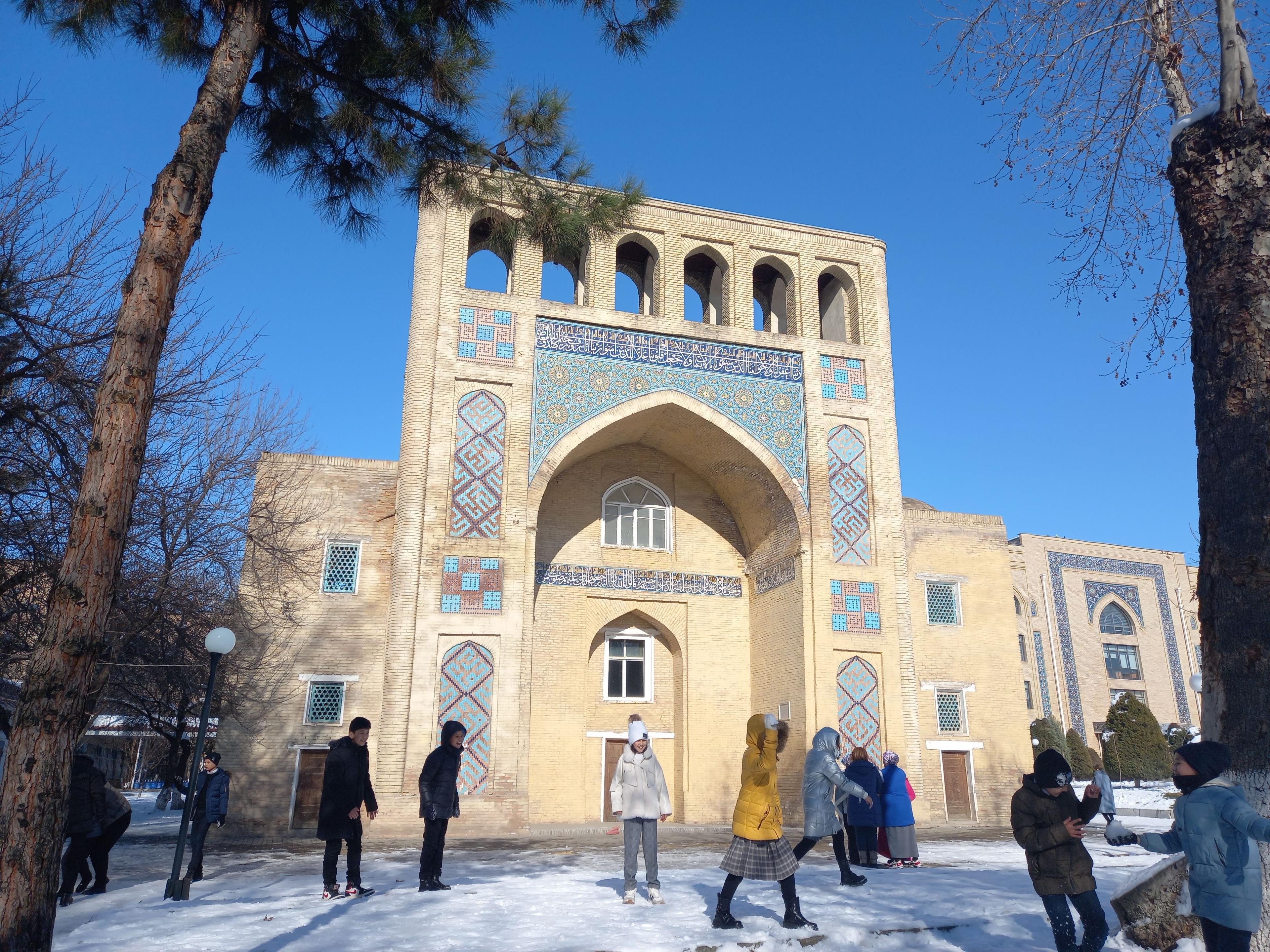
Stop 4, 14:30: Zangi-ota and Ambar-bibi
Zangi-ota lies about 20 km south-west of the centre in the district town that carries its name, 30 to 40 minutes by Yandex Go along the Samarkand road (40,000 to 60,000 som each way; ask the driver to wait, or book a return). Minibuses also run from the Olmazor (Sobir Rakhimov) bus station.
The mausoleum is attributed to Timur in the 1390s and its tiled portal to Ulugbek in the early 15th century; scholars treat the attributions with caution, but the four-chambered brick tomb with its glazed portal, majolica interior and inscribed mihrab is unmistakably Timurid in spirit. The founding legend, told by every guide, says Timur first tried to build a mausoleum for Ahmad Yasawi in Turkestan, but the walls kept collapsing until Yasawi appeared in a dream and asked that his pupil Zangi-ota be honoured first. Around the tomb the Kokand khanate added a madrasah and winter mosque in 1832, and in 1870 a master from Kokand raised the courtyard minaret with its carved coloured tiles. The complex was landscaped in the 1990s and again in recent years, with a new entrance arcade, gardens under old plane trees and a tea house by the gate.
In the cemetery to the south-west stands the small mausoleum of Ambar-bibi, Zangi-ota's wife, revered as a protector of women and motherhood. The rituals are practical and specific: an unmarried woman sweeps around the grave with a broom kept for the purpose, a woman hoping for a child walks three times clockwise around the building, and both tie a strip of cloth. Women visitors may be invited to take part; men wait outside. Allow an hour, more on a Friday or during the wedding season, when families arrive in convoys of decorated cars.
Etiquette at living shrines
These are places of prayer first and monuments second, and the courtesies are the same at all four:
- Dress modestly: long trousers or skirts, covered shoulders; women cover their hair inside mausoleums and mosques.
- Remove shoes where carpets begin; the caretaker will show you.
- Do not photograph people praying, and ask before photographing anyone at all. Buildings and courtyards are fine.
- Greet the caretaker (a simple assalomu alaykum goes a long way), accept tea if it is offered and leave a note in the donation box; 10,000 to 20,000 som is normal.
- Walk around a tomb clockwise if you join pilgrims, and never step over a grave.
- Friday midday and the evening before are the busiest times; mornings are quiet. Non-Muslim visitors are welcome at all four sites outside prayer times.
Our guide to mosque etiquette and prayer times covers the general rules in more depth.
Costs, timing and alternatives
Entry to all four shrines is free. Budget 150,000 to 200,000 som for taxis across the day, including the return to Zangi-ota, and 60,000 to 90,000 som for lunch and tea. The full route takes about eight hours door to door; drop Kukcha if you want a shorter day, or drop Zangi-ota if you have no appetite for the drive, in which case the three city shrines fit into a morning and leave the afternoon for the Centre of Islamic Civilization and Khast-Imam.
Spring and autumn are the pleasant seasons; in July the Zangi-ota gardens are the only shade. In Ramadan the shrines stay open but the tea houses close in daylight. Pilgrims extending the circuit go on to Zangi-ota's teacher's line at Turkestan in Kazakhstan, a day trip by train from Tashkent, or south to the Imam al-Bukhari complex near Samarkand.
Doing it with TourEast
We run this circuit as a private day with a driver and a guide who knows the caretakers by name, which is the difference between seeing a locked door and standing inside the chillakhona. It is the Tashkent day of the private ziyarat programmes we build on request for pilgrims from Malaysia, Indonesia, Turkey and the Gulf, with prayer times built into the schedule, and it can replace the standard city tour on the first day of Four Crowns, our classic eight-day route, or be added as an extra day before the small-group Eight Days, One Table departures. Tell us whether you want the shrines, the craft quarter or both, and we will set the pace.
Frequently asked questions
Photo gallery
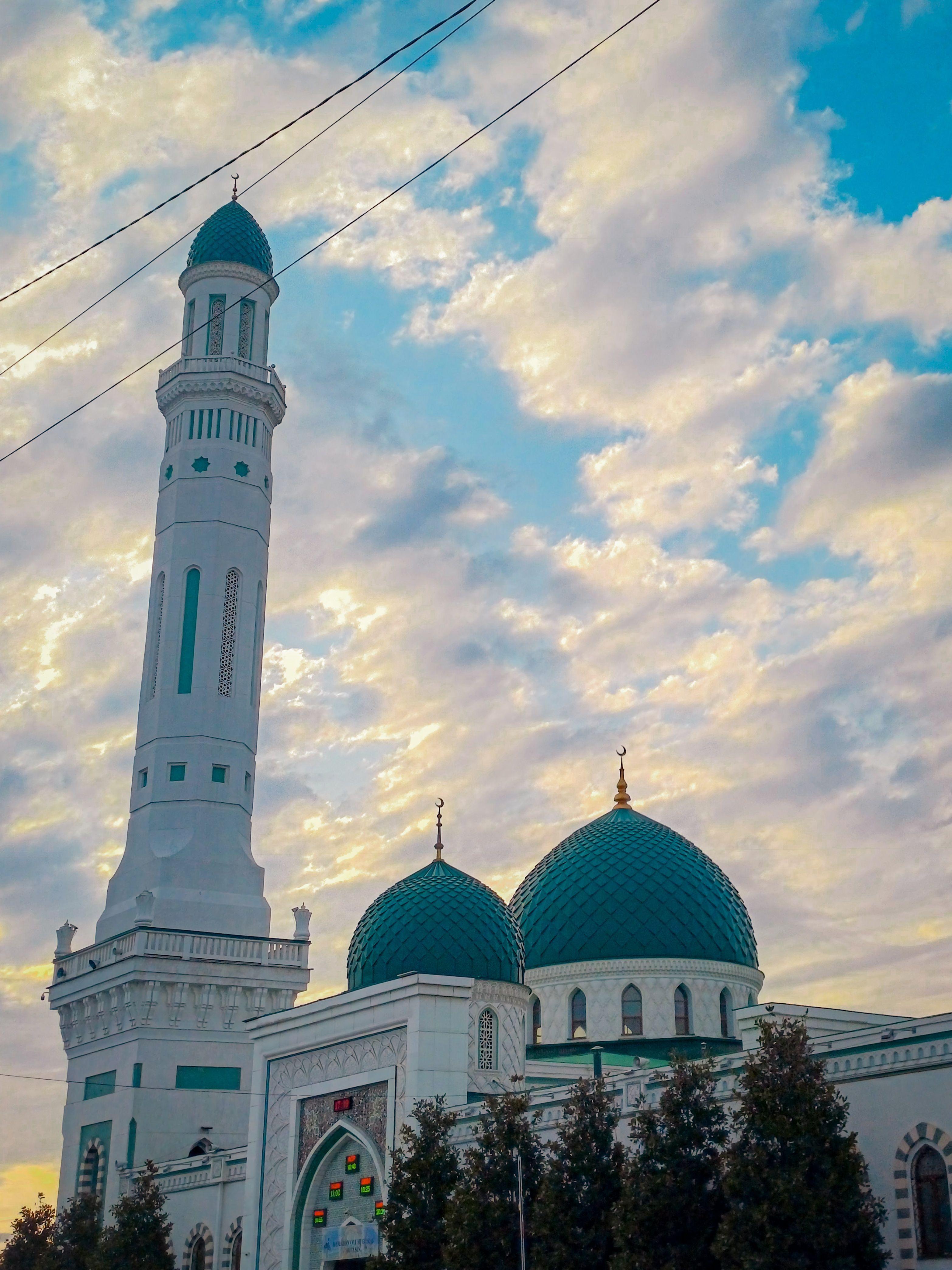
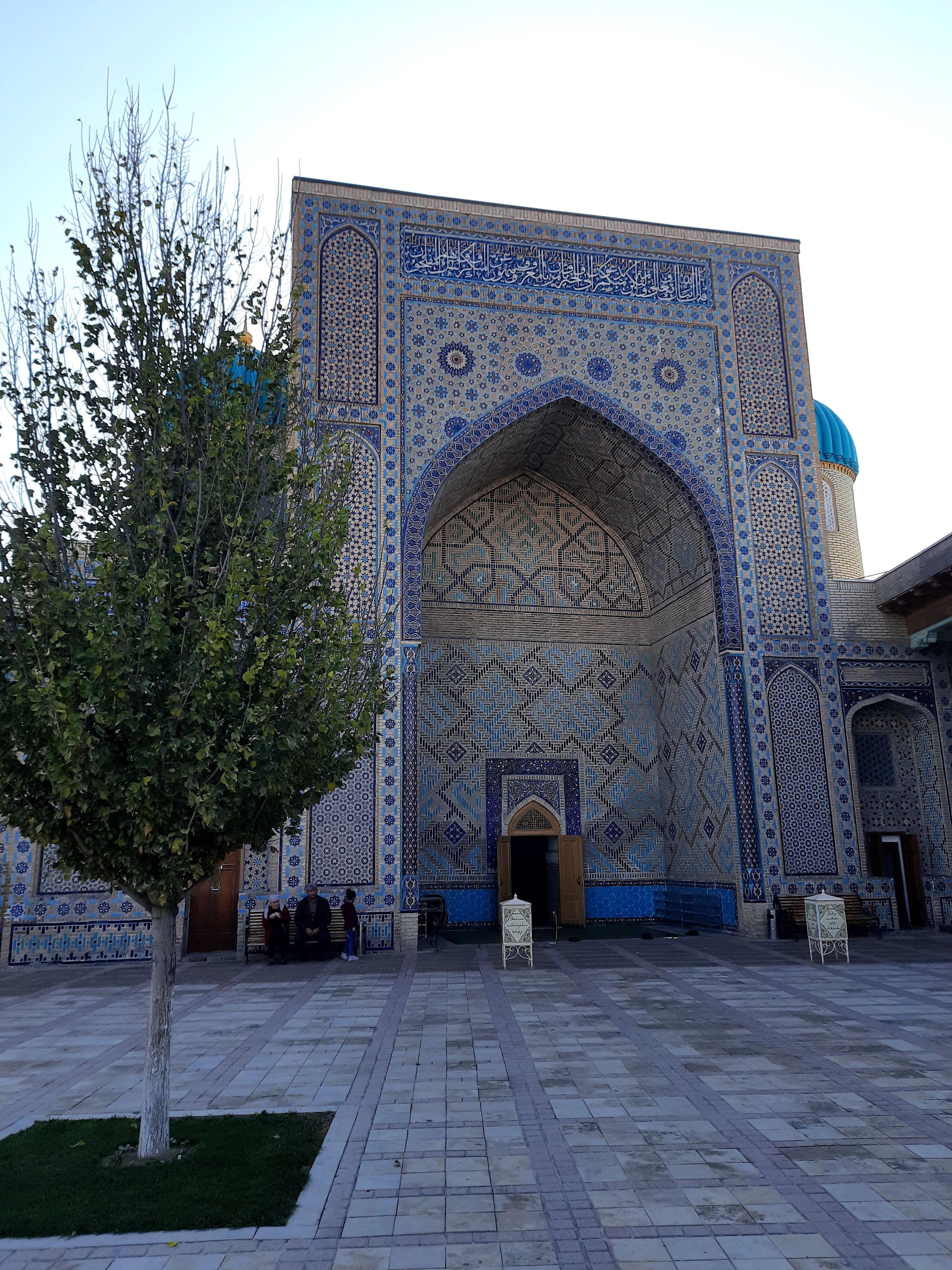
Photo: Bobyrr / Wikimedia Commons, CC BY-SA 4.0; Jamshid Nurkulov / Wikimedia Commons, CC BY-SA 4.0; Nurillo4506 / Wikimedia Commons, CC BY-SA 4.0; Дмитрий Кошелев / Wikimedia Commons, CC BY-SA 4.0