Tashkent's Centre of Islamic Civilization opened on 17 March 2026 after eight years of construction. What is inside the five museum halls, where the Uthman Quran now sits, ticket prices for foreign visitors, opening hours, queues, and how to pair it with Khast-Imam and Chorsu in one morning.
Facts, prices and schedules checked on November 11, 2026
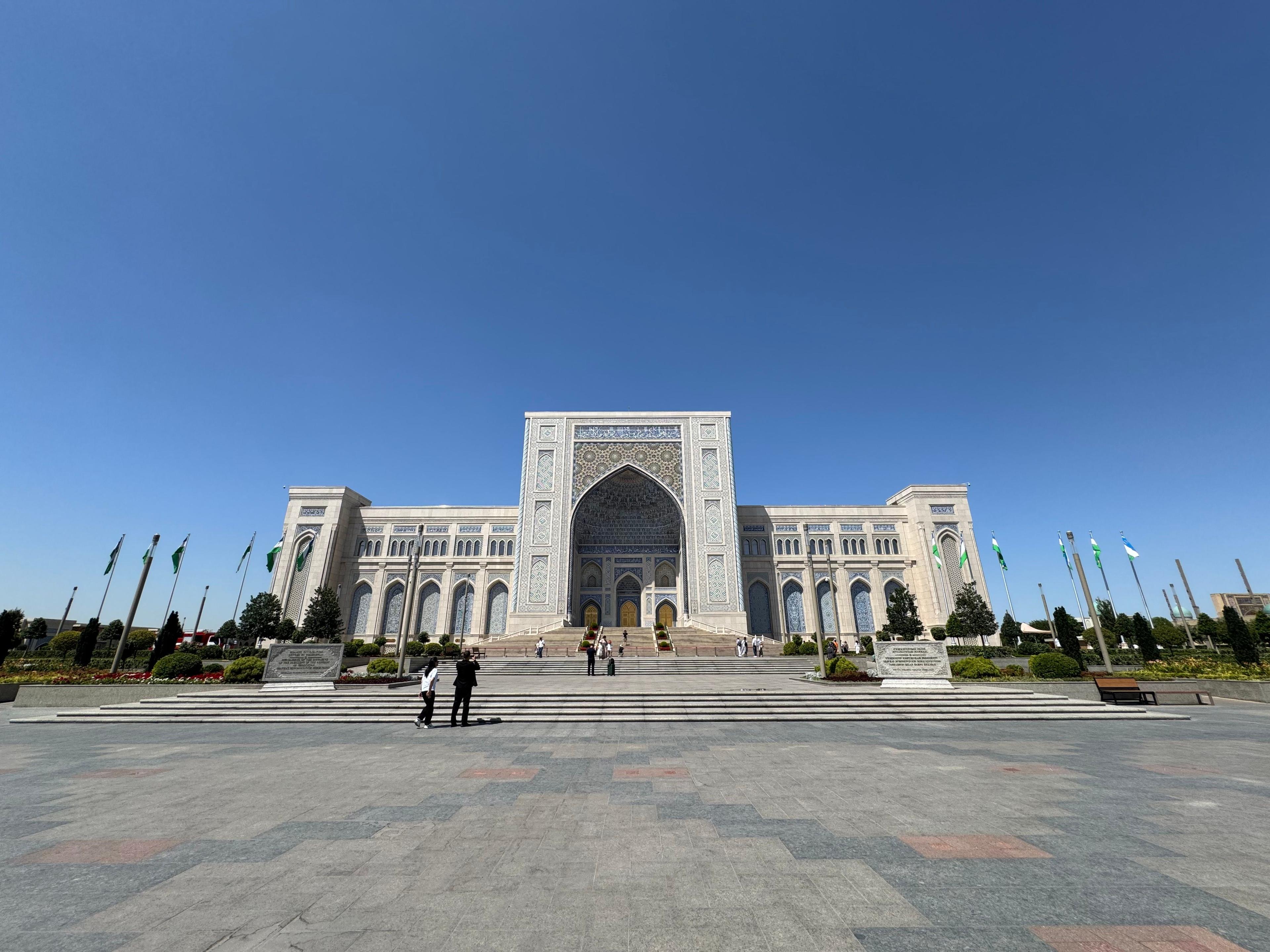
On 17 March 2026, a few days before Eid al-Fitr, President Mirziyoyev opened the Centre of Islamic Civilization beside the Khast-Imam complex in Tashkent. The cornerstone had been laid in June 2018, so the building took almost eight years, and for most of that time Tashkent residents watched a 65-metre turquoise dome rise behind construction fences without quite knowing what would be inside. Now we know: a museum of Central Asian scholarship built around the Uthman Quran, a research library, a conservation laboratory and a great deal of carved ganch and painted ceiling.
Now that the centre is open, the practical questions are what the five halls contain, where the Quran is now kept, what tickets cost for foreign visitors, when to come to avoid the queues and how to fold the centre into a morning of old Tashkent. Our earlier article on Islamic Tashkent was written while the centre was still a building site; this one replaces its practical advice.
What opened in March 2026, and why it took eight years
The project was announced in June 2017, and the site next to Khast-Imam was chosen that September. The first director was appointed the same year; the present director, Firdavs Abdukhalikov, took over in June 2024. Construction was meant to finish in early 2024, but the interior work, which involves marble, inlaid wood, carved plaster and mosaic by workshops from across Uzbekistan, with Italian and French consultants on mosaics and museum design, took longer than planned. The reported budget was at least US$161.8 million.
The delay also allowed the collection to grow. In the twelve months before the opening the centre added more than 1,500 exhibits, among them around 800 manuscripts, and it says 743 original artefacts were bought back to Uzbekistan through international auction houses and dealers. Every object passed through the centre's own laboratory for analysis of age and materials before going on display, which the museum presents as a first for the country.
The leaders of Kazakhstan, Azerbaijan, Kyrgyzstan and Tajikistan toured the almost finished building with the president in November 2025. The public opening followed on 17 March 2026.
The building: a Timurid vocabulary at modern scale
Numbers first. The complex covers about ten hectares; the main building is three storeys, roughly 150 metres long and 115 metres wide (sources give slightly different figures), with about 50,000 square metres of floor space. The entrance portals stand 34 metres high and the central dome 65 metres, which makes it visible from the Chorsu side of the old town and from the Tashkent ring road.
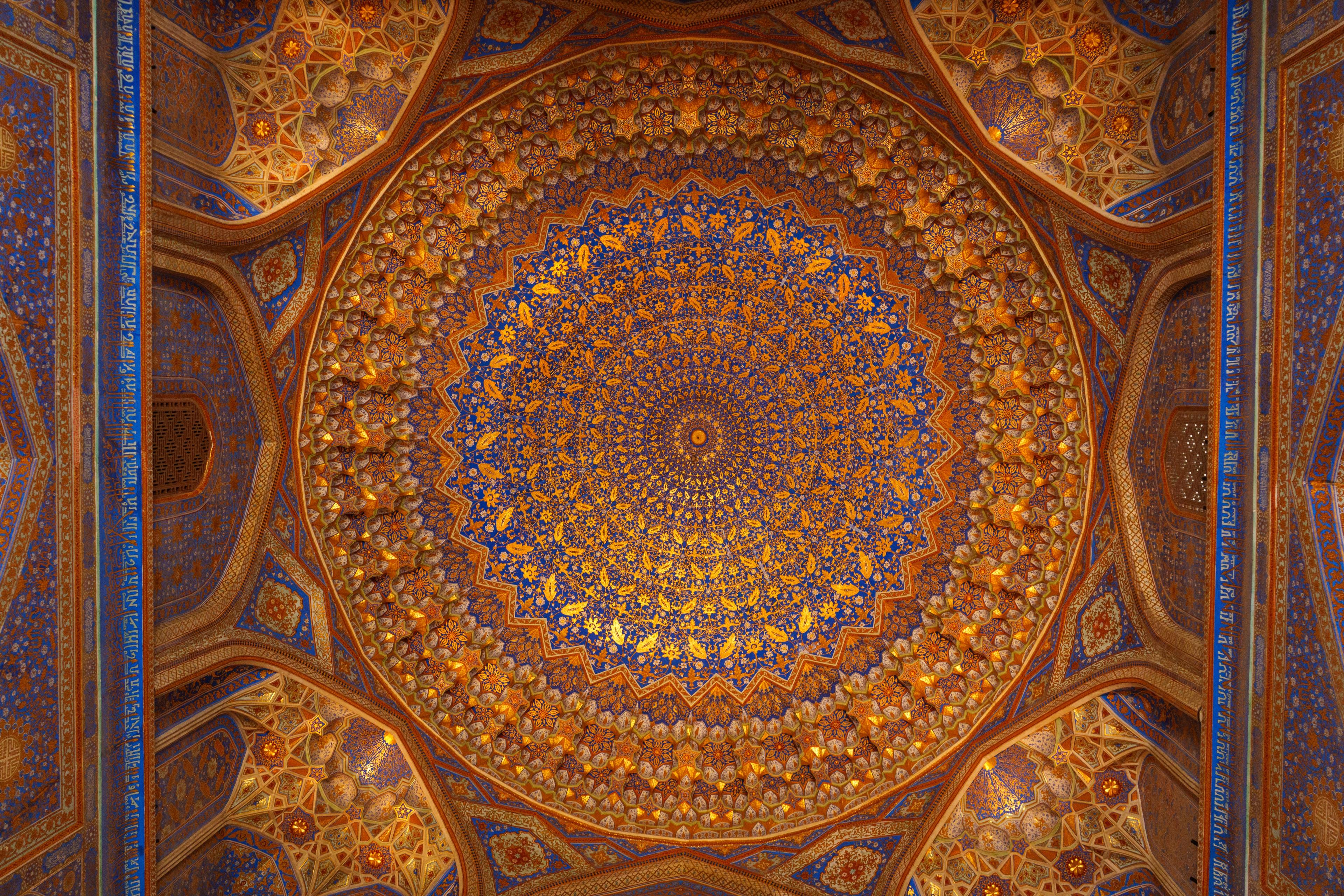
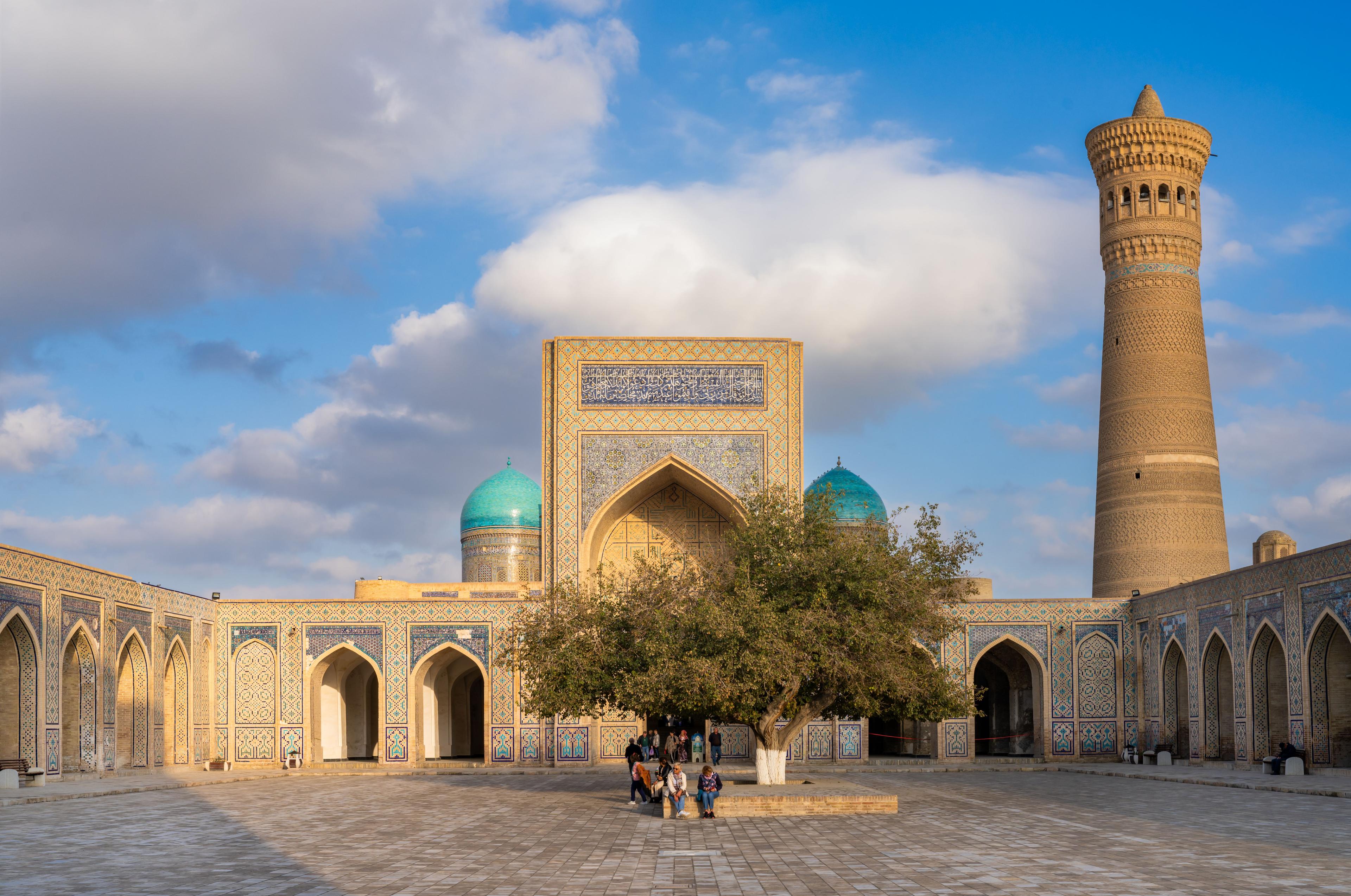
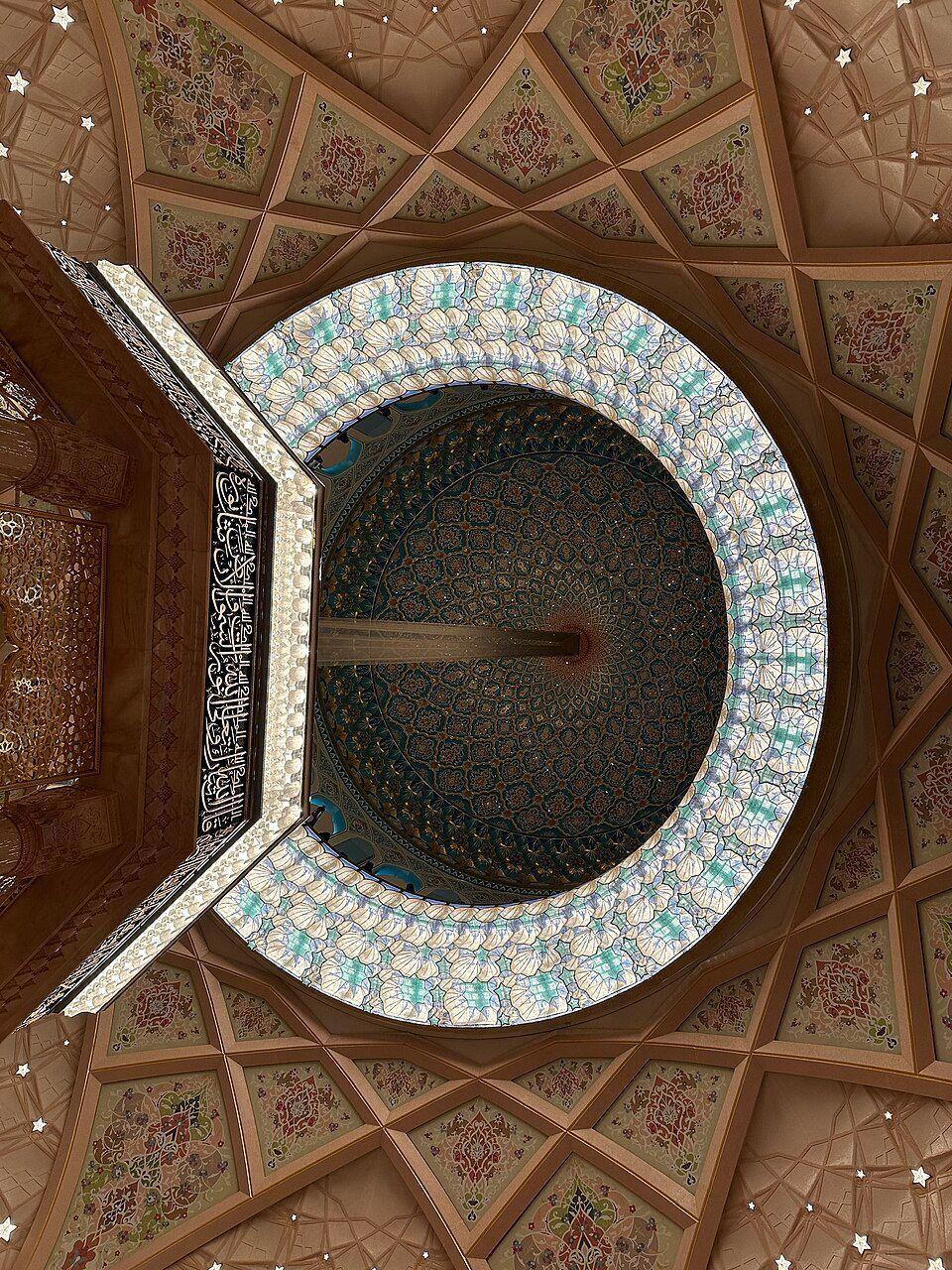
The architecture quotes Samarkand and Shakhrisabz: a tall pishtaq entrance, muqarnas vaults under the arches, a ribbed turquoise dome and panels of glazed tile. What is different is the precision. Everything is new, square-cut and symmetrical, and the interiors are finished in white marble, carved and painted ganch plaster, inlaid wooden doors and ceilings painted in the Bukhara and Khiva manner. If you have already seen the Registan, you will recognise the grammar; if you have not, the centre is a useful first lesson before the train to Samarkand.
Two details the guides point out: a time capsule sealed in the building for future generations, and a long "Wall of Time" that runs the history of the region as a single timeline.
Hall by hall: what is on the second floor
The ground floor holds the research institute, the digitisation and restoration laboratory and storage for manuscripts. The museum occupies the second floor, in five halls arranged as a walk through time:
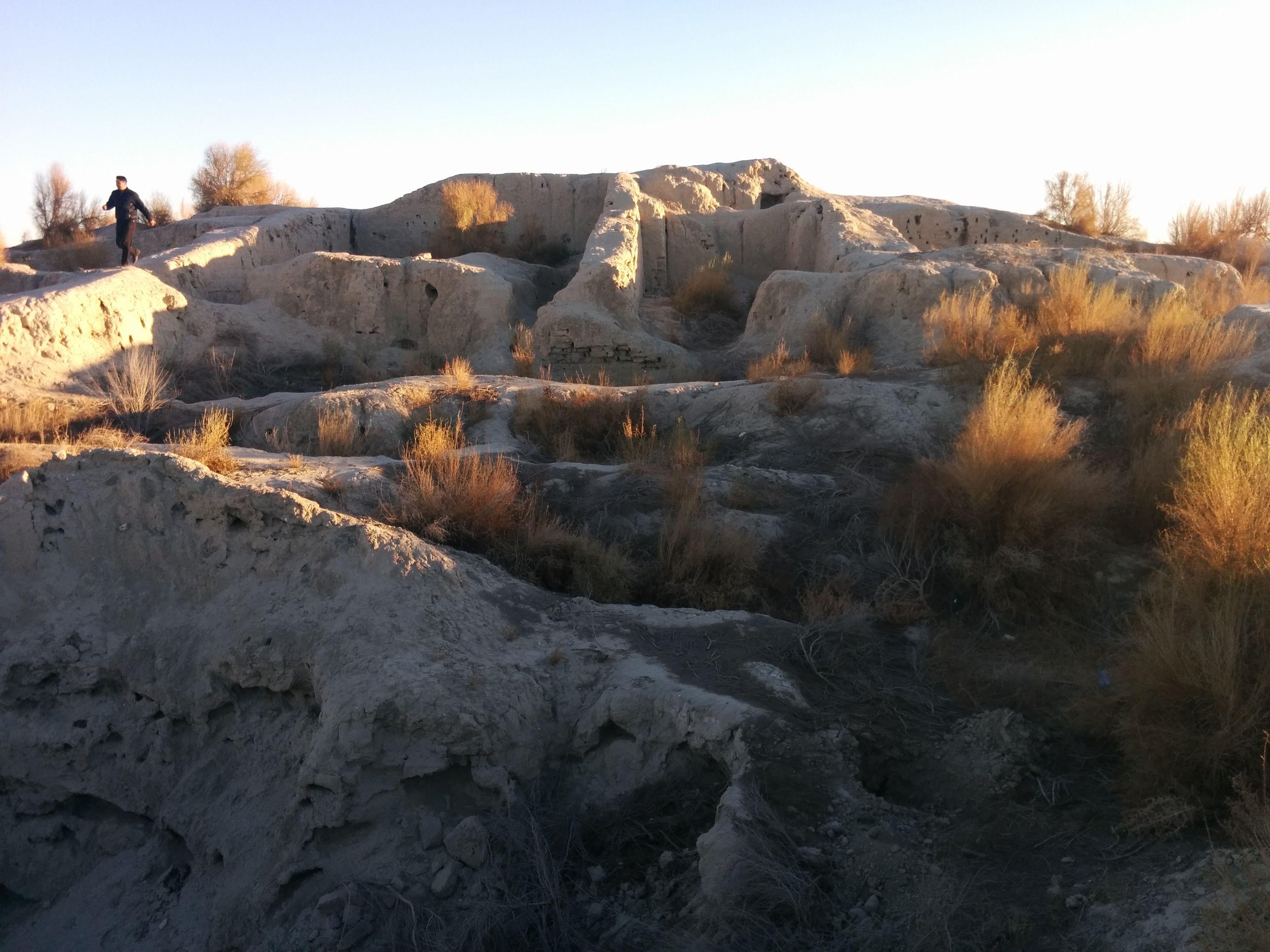
- Pre-Islamic civilisation: Sogdiana, Bactria and Khorezm before the 8th century, with archaeological finds, maps and reconstructions of the cities whose ruins you may later visit at Afrasiab or in Karakalpakstan.
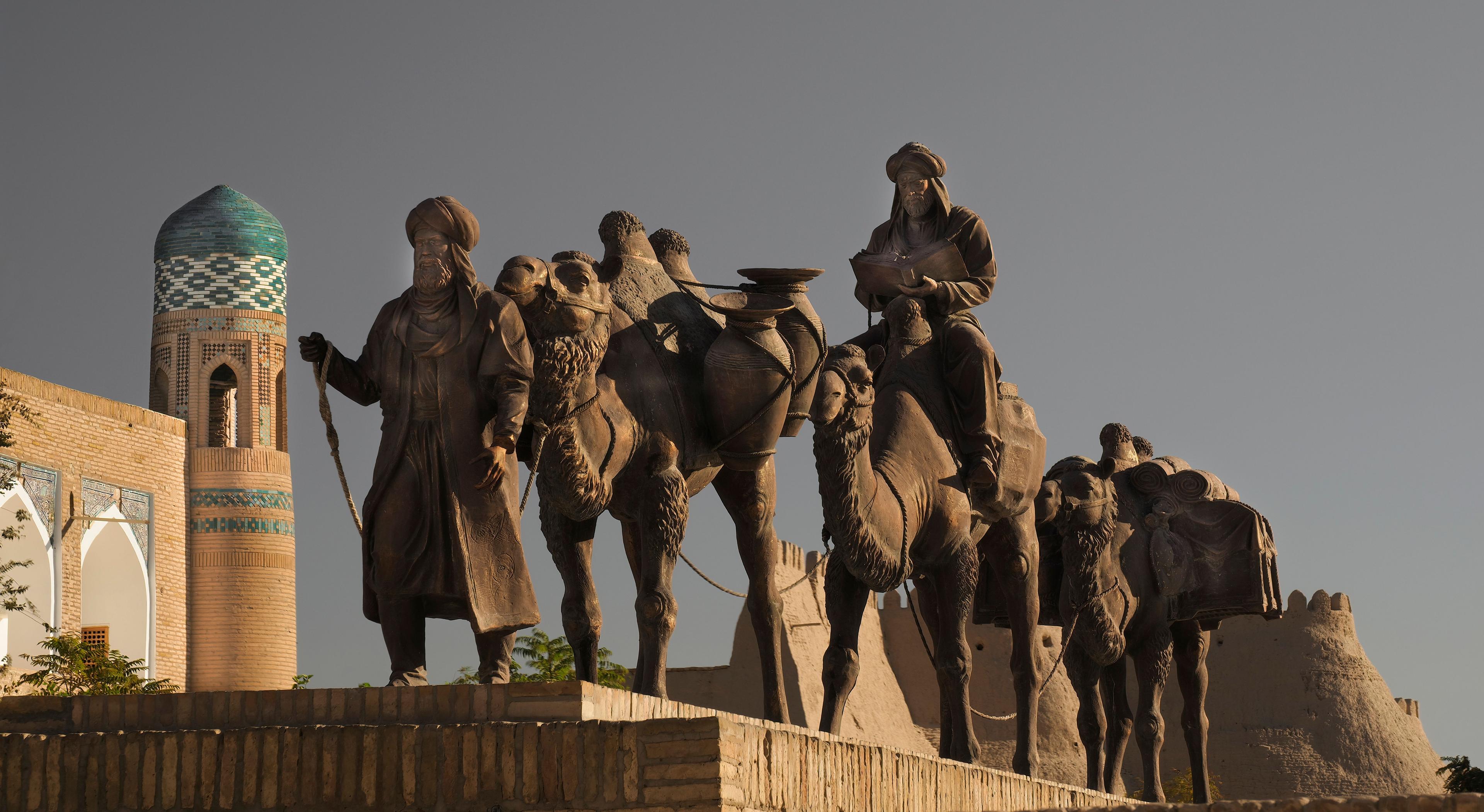
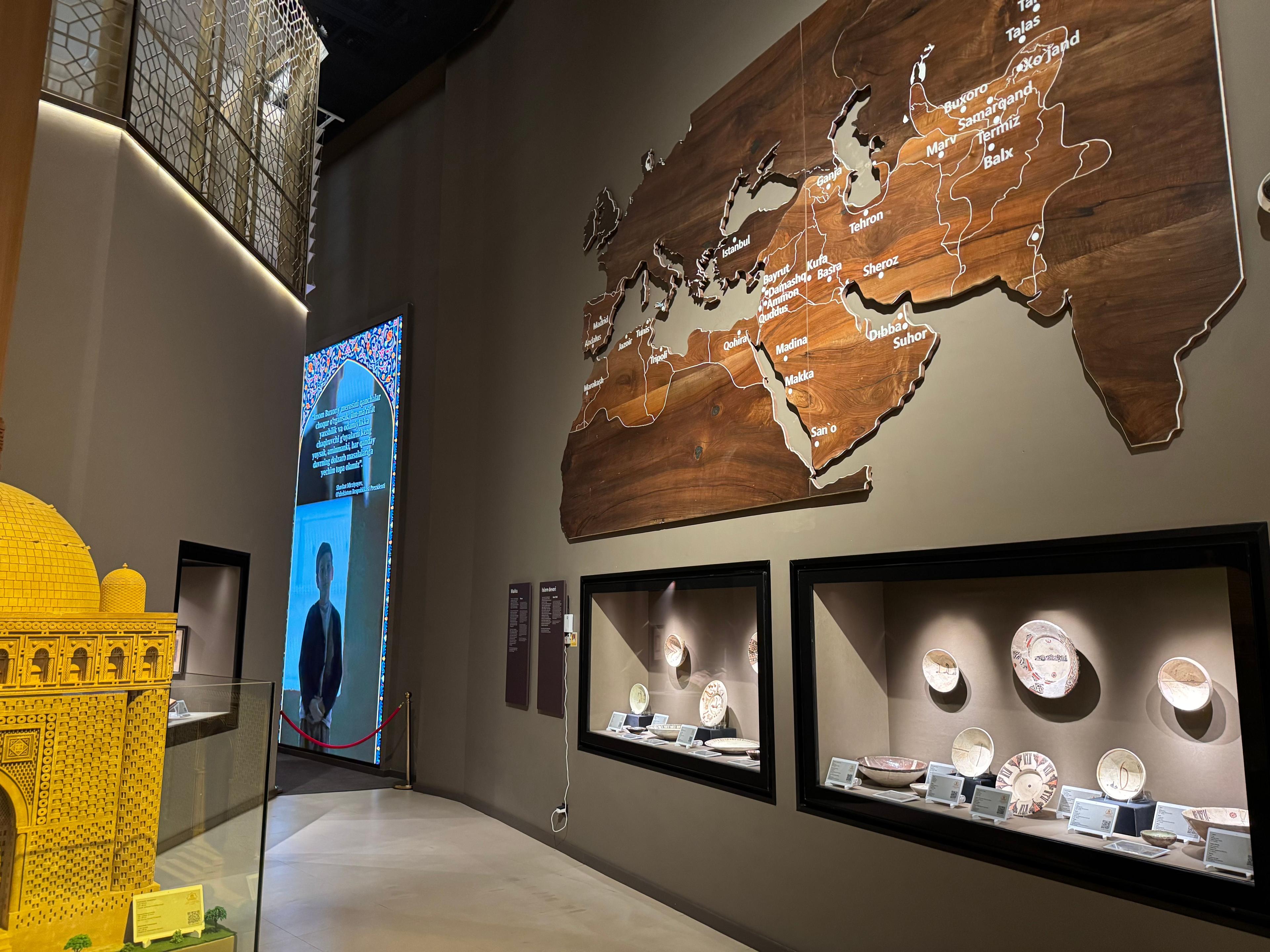
- The Islamic Golden Age, often called the first renaissance of Maverannahr: al-Khwarizmi and the origins of algebra, al-Biruni, al-Farghani, Ibn Sina, and the hadith scholars Imam al-Bukhari and Imam at-Termizi, with the theologian al-Maturidi. Expect manuscripts, astronomical instruments and models.
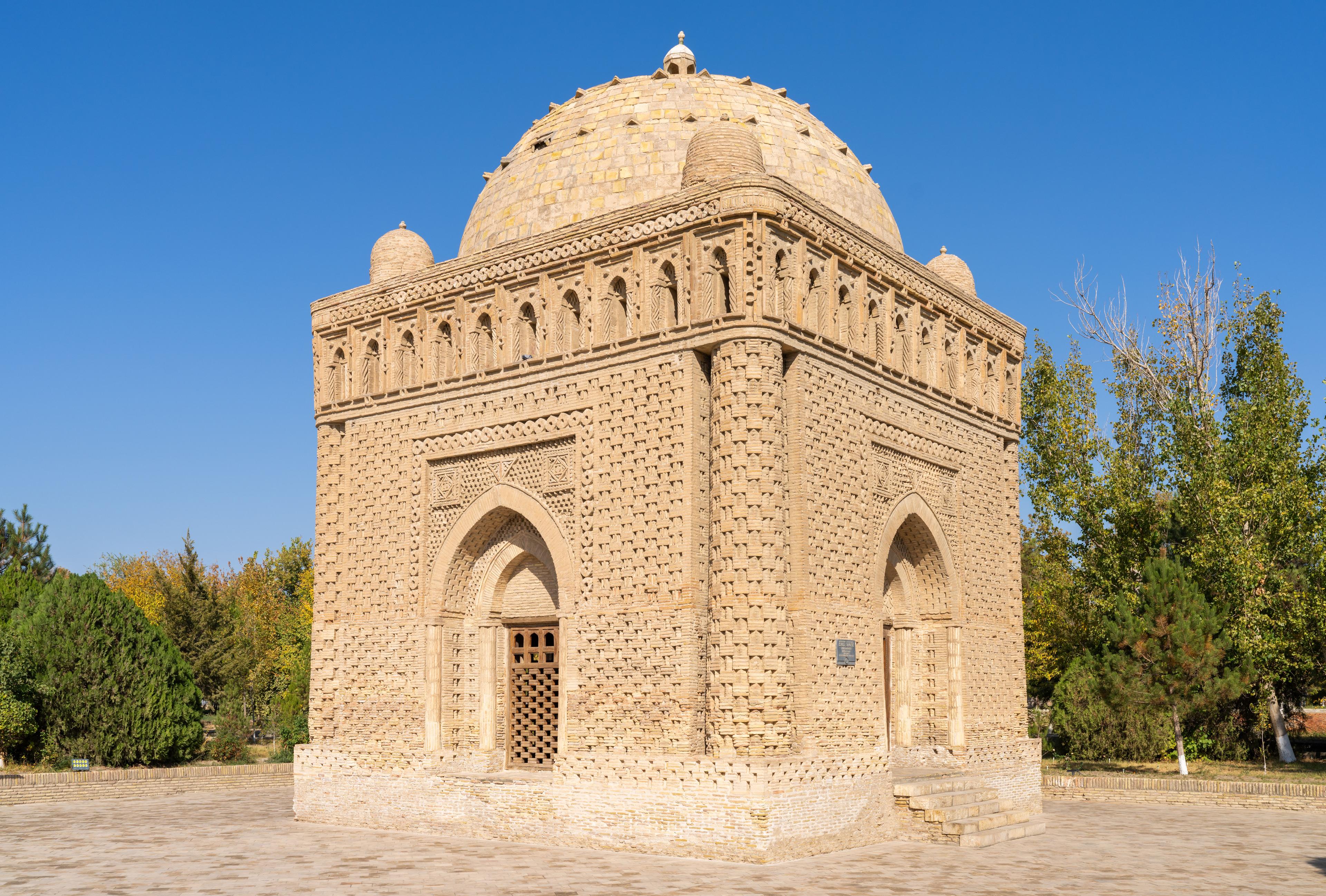
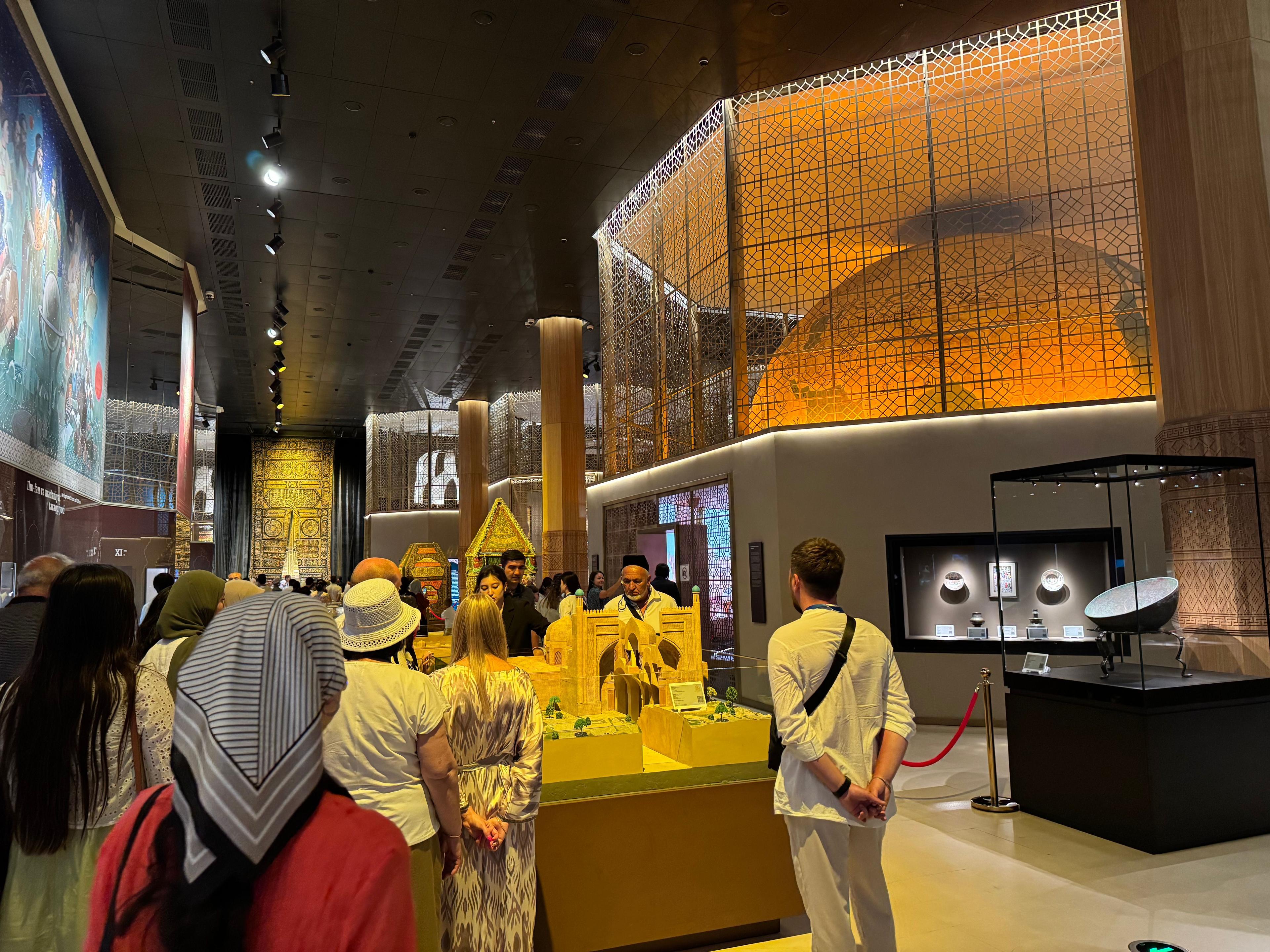
- The Timurid Renaissance: Timur, Ulugbek's observatory and star catalogue, Navoi, and the architecture of Samarkand, with scale models of Ak-Saray, the Samanid Mausoleum and other monuments.
- The Hall of the Holy Quran, described below.
- Modern Uzbekistan: the revival of religious life since independence and the restoration of the country's shrines.
The centre lists more than 2,000 items on display, among them more than 60 rare Quran manuscripts. Each hall uses tablets, audio guides and, in places, robotic guides and "living portrait" screens of the scholars; an interactive children's museum and a wing devoted to notable women of the region were announced as future additions. Allow two hours for the museum alone, three if you read the labels, which are in Uzbek, English, Russian and Arabic.
The Uthman Quran: where it is now
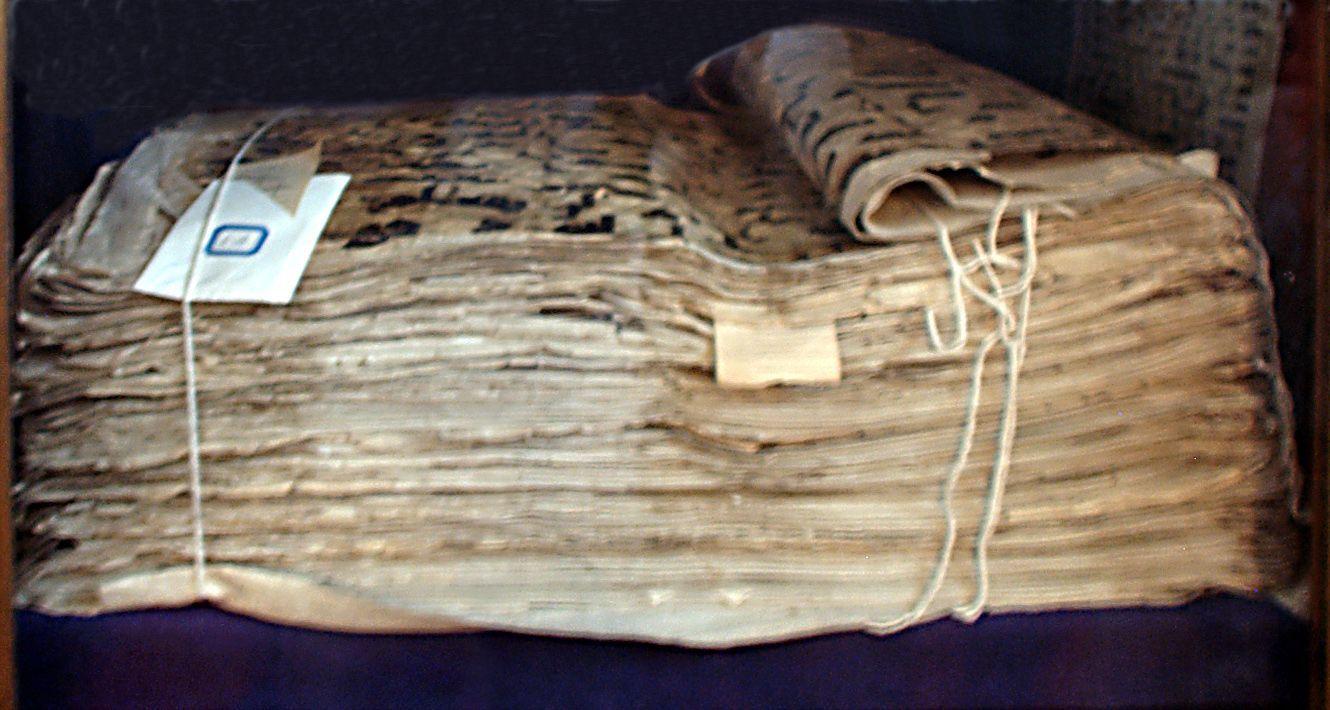
The reason most pilgrims come is the Samarkand Kufic Quran, the parchment manuscript that tradition links to the third caliph, Uthman, and that Tashkent has guarded since it was returned from St Petersburg in 1924. From March 1989 it was displayed in the Muyi Muborak madrasah at Khast-Imam, a few hundred metres from the new building.
In November 2025 the manuscript was moved to the Hall of the Holy Quran in the centre, where it is shown in a climate-controlled case at the centre of a domed hall, surrounded by 114 further Qurans from different centuries and regions, one for each surah. The hall is the emotional climax of the visit and the one place where photography is restricted; follow the attendants' instructions. A facsimile remains at Khast-Imam, and the Muyi Muborak madrasah still shows its collection of smaller manuscripts, so a visit there is not wasted.
One caveat: because the transfer is recent and the two sites are run by different bodies, ask your guide on the day which hall is showing the original. In the months since the opening it has been in the centre.
Library and laboratory
The third floor is a library planned to hold around 100,000 manuscripts and printed books together with their digital copies. The opening figures were more than 2,500 manuscripts and lithographs, about 40,000 printed books and over 350,000 electronic texts, with a reading room open to researchers and, unusually, free entry for anyone who wants to use it. Scholars from abroad can apply for access to the digitised manuscripts; ask at the information desk or write to the centre in advance.
The laboratory on the ground floor is not open to casual visitors, but the guided tour sometimes passes its windows, where conservators work on parchment and paper.
Tickets, hours and queues, as of 2026
Prices were announced on 20 March 2026 and are quoted here as published; check iccu.uz or the iTicket.uz booking site for changes.
- Foreign visitors: US$25 for adults, US$20 for children, with an extra US$10 for additional services such as an audio guide. A premium package at US$150 includes three hours with a personal guide.
- Citizens of Uzbekistan: 60,000 som for a two-hour group tour, 120,000 som for an all-day individual ticket, with reduced rates for children aged 7 to 17.
- Free: children under 7, people with first- and second-group disabilities, and the library for everyone.
The opening announcement gave hours of 09:00 to 22:00 daily; other 2026 guides report 09:00 to 18:00 and a closure on Mondays for maintenance. Treat the shorter hours as the safe assumption and confirm the day before. Capacity is set at 5,000 visitors a day, and on weekends and public holidays the queue at the ticket desks has stretched to an hour. Weekday mornings are calm. Book online if you can, and arrive at opening time if you cannot.
The guided tour lasts about two hours and runs in several languages; the centre says it has prepared programmes for visitors from ten countries, and more than 30 guides were working at the opening.
How to get there and what to combine it with
The address is Karasaray Street 47 in the Almazar district, about 3 km north-west of Amir Timur Square. A Yandex Go taxi from the centre takes 10 to 15 minutes and costs around 15,000 to 25,000 som. By metro, ride to Gafur Gulyam or Chorsu and walk 15 to 20 minutes north, or take a short taxi from the station.
The natural half-day is this: the centre at opening time, then the five-minute walk to the Khast-Imam complex for the Barak-Khan madrasah, the Tillya-Sheikh mosque and the Kaffal Shashi mausoleum, then down through the old streets to Chorsu Bazaar for lunch at the plov and samsa rows and a look at the Kukeldash Madrasah. Add the Suzuk-ota craft quarter west of Chorsu if you have an afternoon, or read our guide to a full day of Tashkent's shrines.
For a pilgrim's visit, Friday is busy at the mosques next door and the centre is correspondingly quieter in the early morning; for a museum visit, any weekday works.
Etiquette and small practicalities
The centre is a museum rather than a mosque, but it stands in a religious quarter and the Quran hall is treated as sacred space. Dress as you would for Khast-Imam: shoulders and knees covered, a scarf in the bag for women who wish to cover their hair in the Quran hall, no hats for men inside the hall. There is a cloakroom and a security check at the entrance; large bags go into lockers. Photography without flash is allowed in most halls and restricted in the Quran hall. There is a café and a bookshop with good facsimile editions and exhibition catalogues, and prayer rooms with ablution facilities. The building is fully step-free with lifts, which makes it one of the easiest major sights in Uzbekistan for visitors with limited mobility.
Visiting with TourEast
We can include the centre in the Tashkent day of our private programmes that start in the capital, such as the classic eight-day Four Crowns route through Tashkent, Samarkand, Bukhara and Khiva; just ask when you book. Our private Silk Road in Silk spends only the arrival day in Tashkent, so there we add a morning at the centre on request. For Muslim travellers we build it into private ziyarat routes together with Khast-Imam, Zangi-ota and the Imam al-Bukhari complex near Samarkand, with prayer times respected and tickets booked ahead so that nobody waits in the Saturday queue. Tell us your dates and we will reserve the slot.
Frequently asked questions
Photo: Зинҳор Насрӣ / Wikimedia Commons, CC BY-SA 4.0; Gulzoda Abduhalilova / Wikimedia Commons, CC BY-SA 4.0; Wiggum / Wikimedia Commons, CC BY-SA 3.0