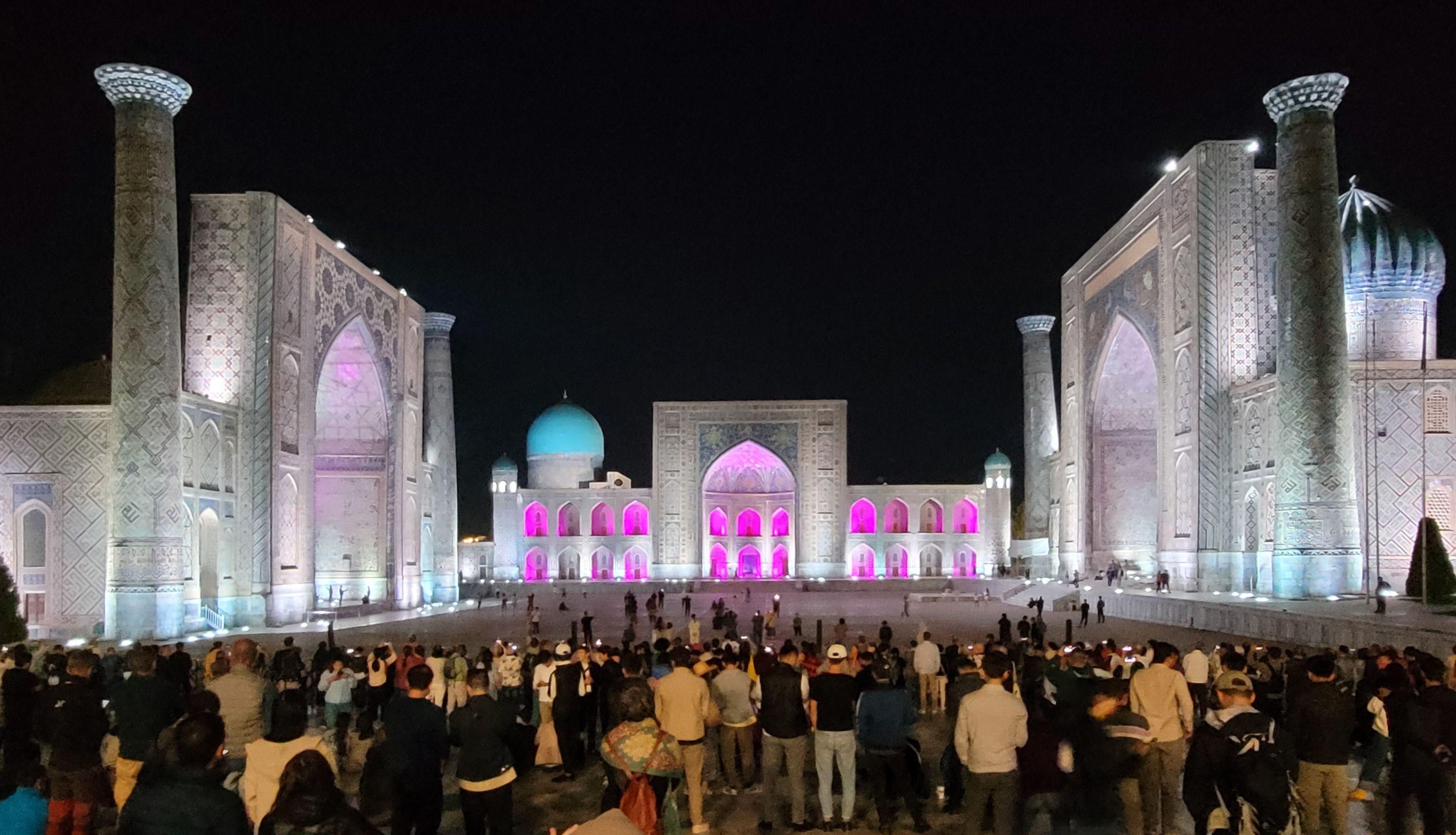
A 9-day Uzbekistan itinerary with two options: the classic cities plus a yurt night near Nuratau and Aydarkul, or Samarkand and Bukhara with the Fergana Valley. Trains, transfers, seasons and how to choose.
Facts, prices and schedules checked on November 4, 2026
Nine days in Uzbekistan is the sweet spot between the rushed eight-day circuit and the full two-week journey. It gives you the classic cities, Tashkent, Samarkand, Bukhara and Khiva, plus the one extra day that makes a trip feel like travel rather than a checklist. This guide offers two ways to spend that extra time: a night in a felt yurt on the edge of the Kyzylkum desert near Nuratau and Aydarkul, or a short loop through the Fergana Valley for silk, ceramics and bazaars.
Both plans are built around the Afrosiyob high-speed train, short transfers and at least two nights in each major stop. They work for first-time visitors, couples and families with teenagers, and you can reverse them or swap Khiva for the Fergana Valley if you prefer. We note the best seasons, what each option costs in time and how to decide. For shorter and longer versions, see our 5-day, 6-day, 7-day and 10-day itineraries.
Is 9 days enough for Uzbekistan?
Yes, for the main Silk Road cities, and nine days is the first length at which you can add something beyond them without feeling hurried. A classic route covers Tashkent, Samarkand, Bukhara and Khiva in about eight days, and the ninth day buys you one of two things: a night under the stars in the desert, which turns a drive into a memory, or a day or two in the Fergana Valley, which shows the working, craft-making side of the country.
What nine days does not allow is both. If you want yurts and Fergana, add days: our 10-day itinerary and two-week itinerary show how. It also does not leave much room for rest, so avoid planning more than one long journey every two or three days and keep the afternoon after a late arrival free.
Pace matters more than the number of sights. Most travellers who say they would change something about their trip say they wish they had spent an extra night in Bukhara or Samarkand, not that they saw too little. Nine days with two nights in each city, and one night somewhere different, respects that.
Route A: nine days with a yurt night (Samarkand, Nuratau, Bukhara, Khiva)
This route takes the slow road between Samarkand and Bukhara, through the desert, rather than the train.
- Day 1, Tashkent. Arrive, rest, then in the afternoon see Hazrati Imam, Chorsu Bazaar and a few stops of the Tashkent Metro.
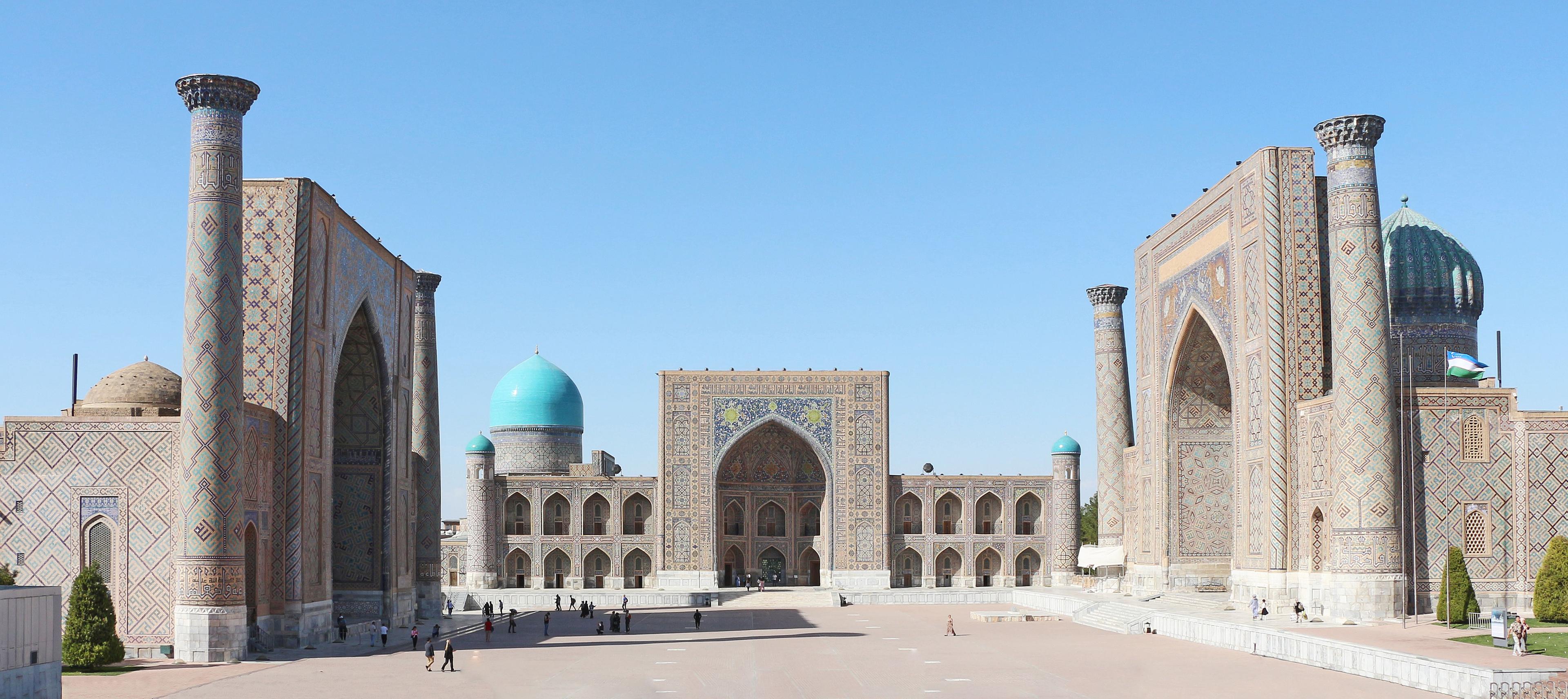
- Day 2, Tashkent to Samarkand. Take a morning Afrosiyob train, about two hours; check the live timetable. Visit Gur-e-Amir and the Registan, which looks best in the late light.
- Day 3, Samarkand. Shah-i-Zinda early, then Bibi-Khanym, Siyob Bazaar, the Ulugbek Observatory and the Afrosiab museum. A paper workshop at Konigil is a good afternoon option.
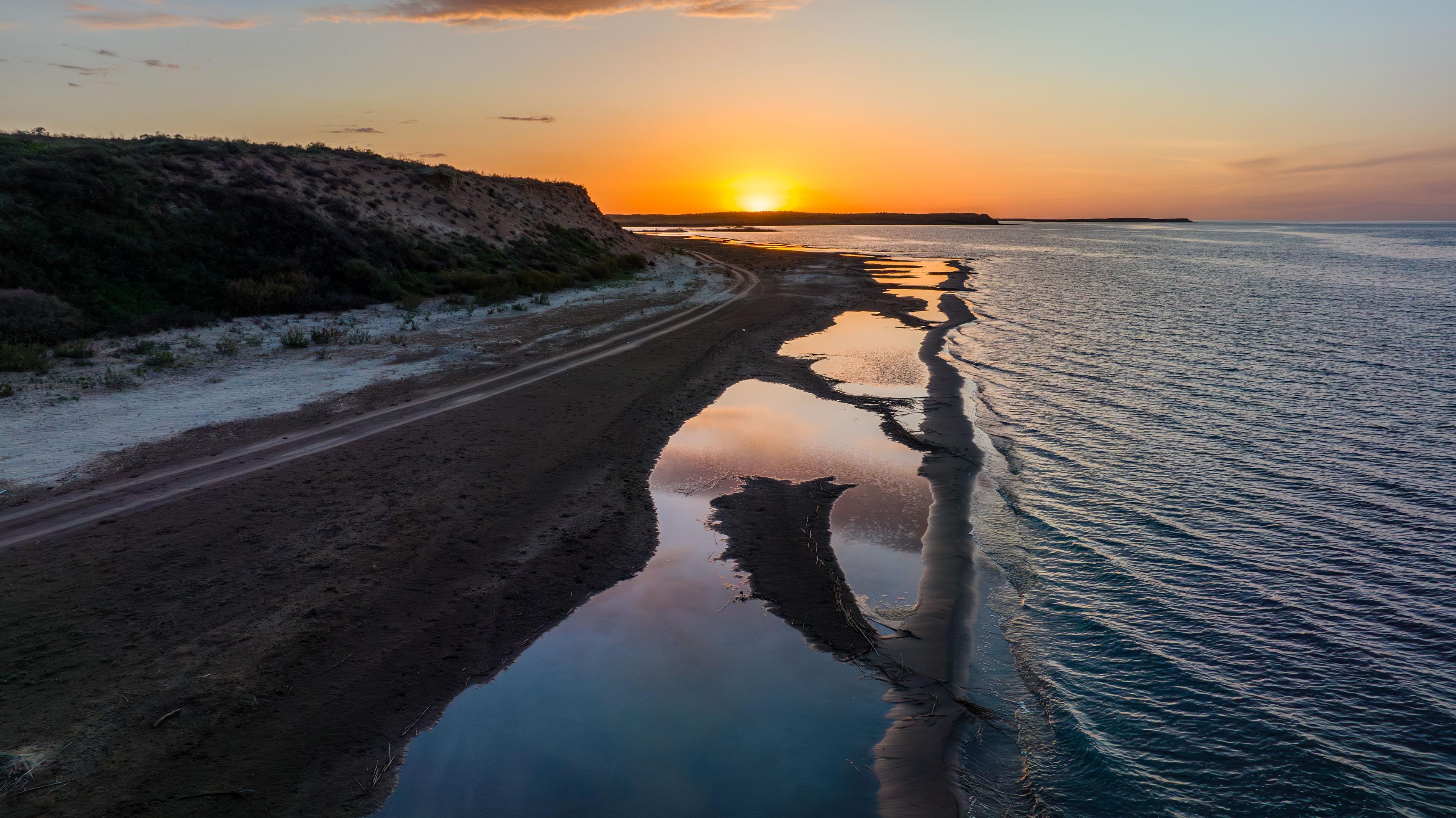
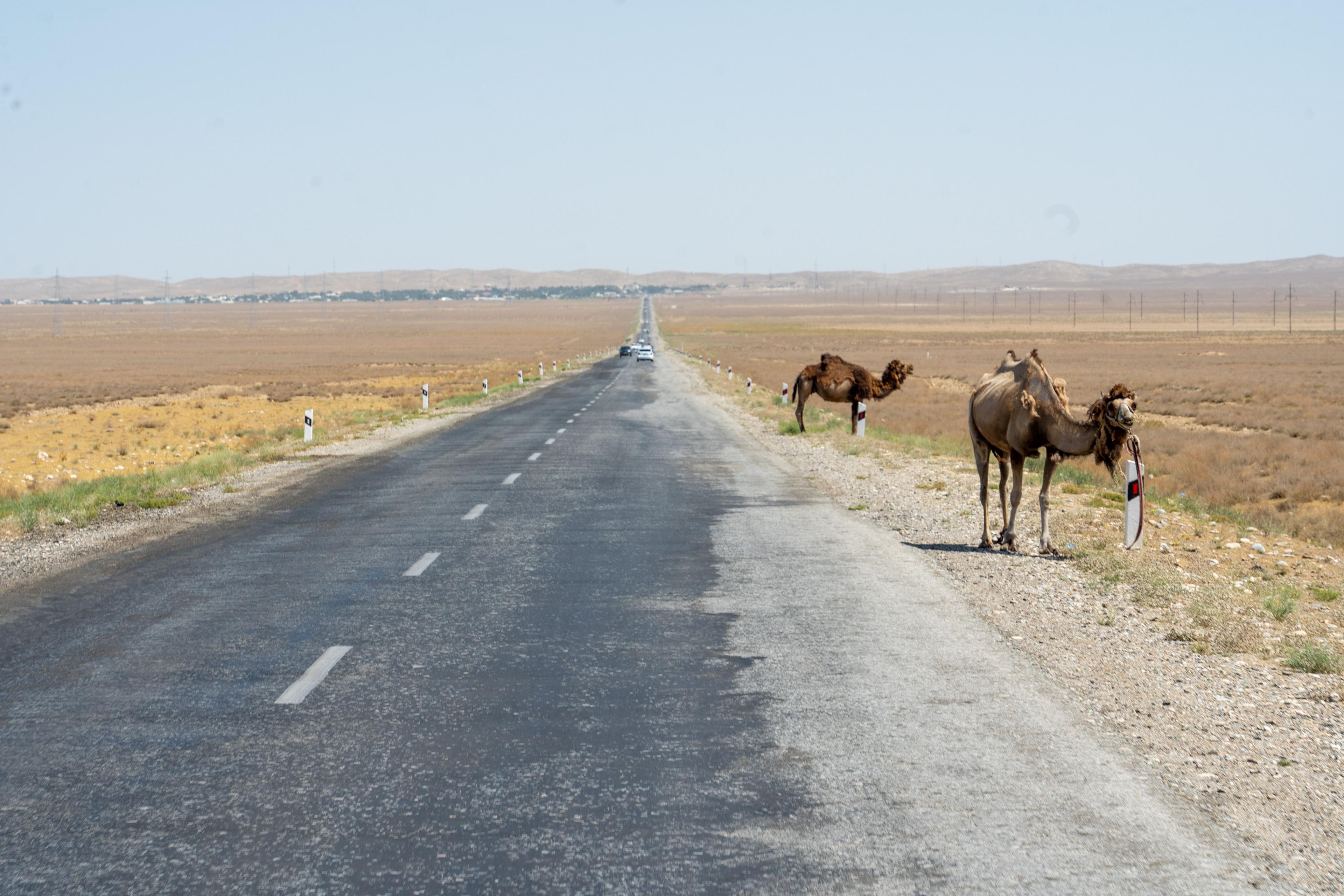
- Day 4, Samarkand to the yurt camp. Drive north-west towards Nurata, about 200 km, for the spring and fortress, then on to a yurt camp near Aydarkul lake for a camel ride, dinner and stars. The drive is roughly four hours; our Nuratau and Aydarkul guide has details.
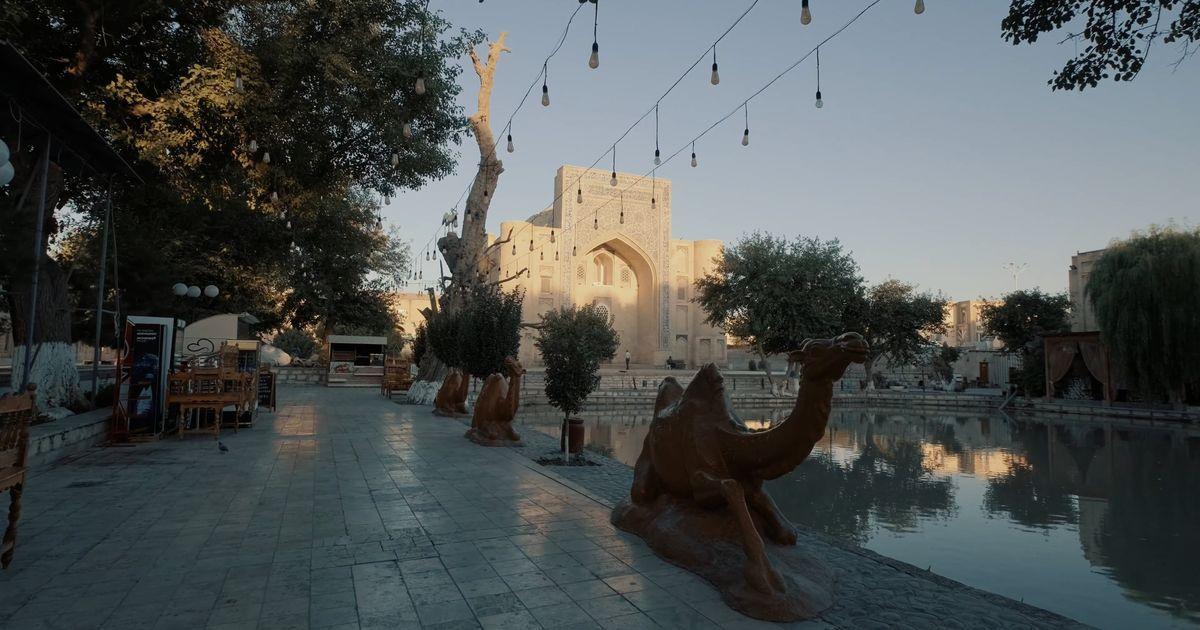
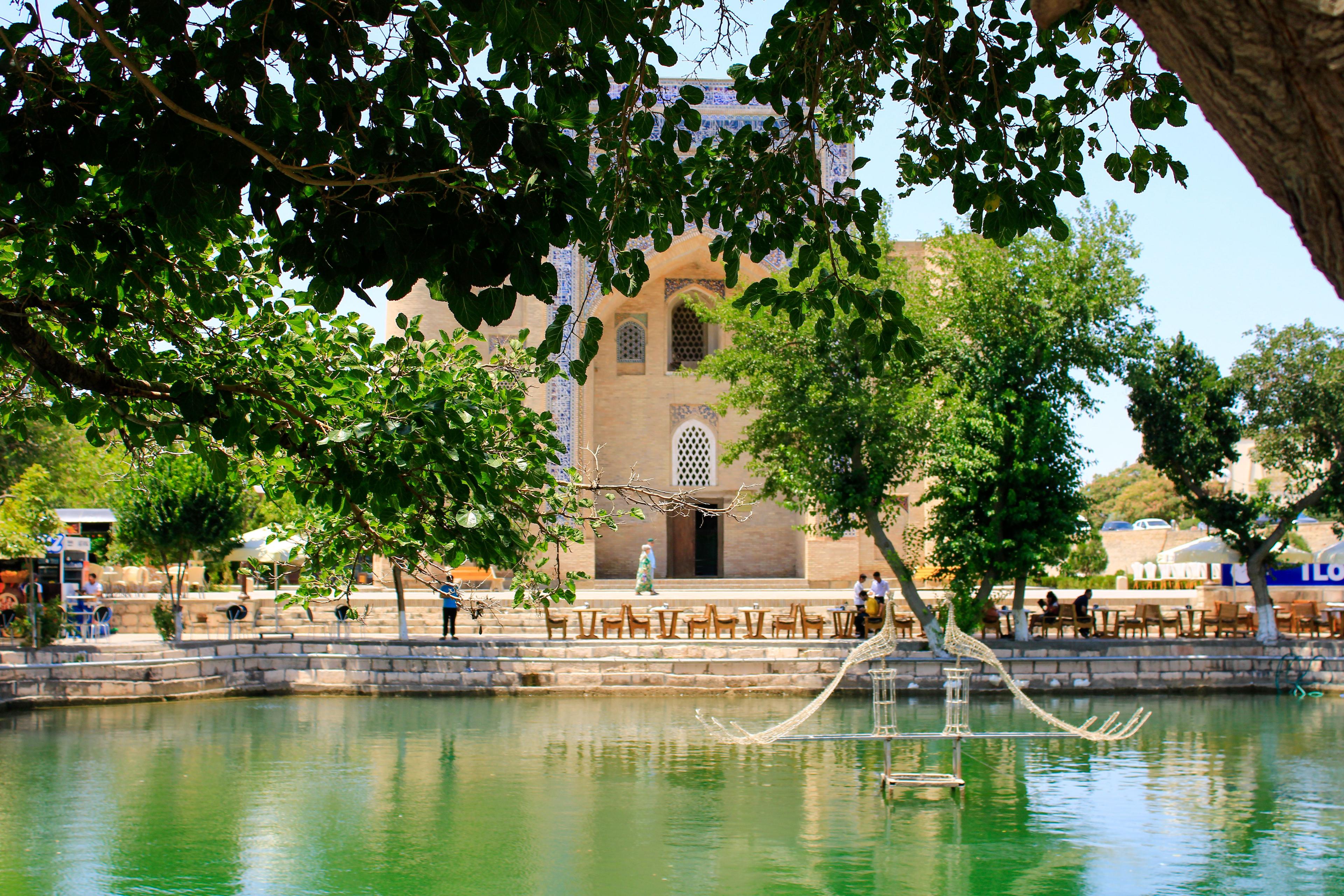
- Day 5, desert to Bukhara. Walk or swim at the lake, then drive to Bukhara with a stop at Gijduvan for pottery and at the Rabati Malik caravanserai. Arrive in the late afternoon and walk to Lyabi-Hauz.
- Day 6, Bukhara. A full day in the old town: the Ark fortress, Po-i-Kalyan, the trading domes and the madrasahs.
- Day 7, Bukhara to Khiva. A high-speed train now takes around three and a half hours; our Bukhara to Khiva guide has current times. Afternoon walk inside the walls of Ichan-Kala.
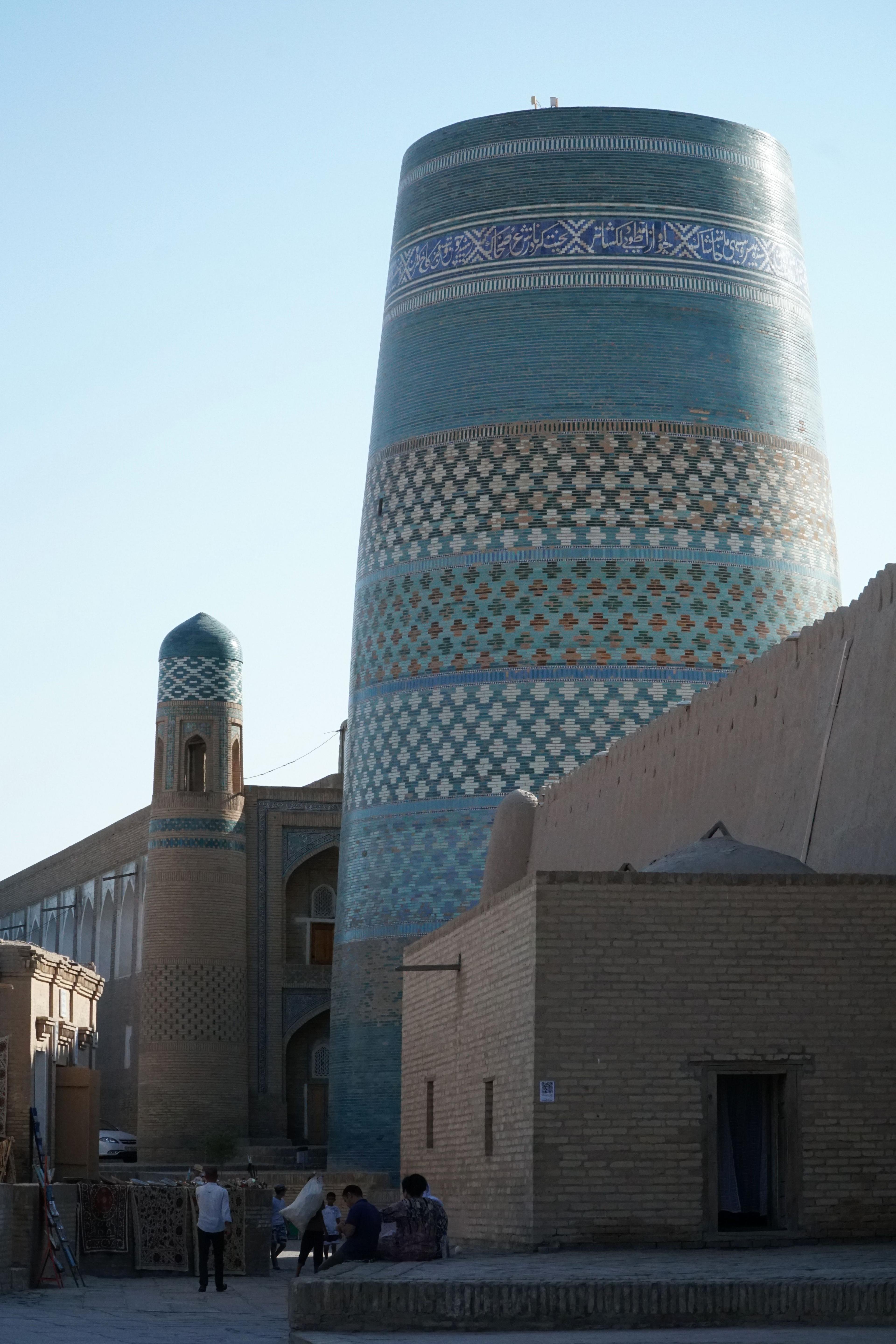
- Day 8, Khiva. Kunya-Ark, the Juma Mosque with its wooden columns, Tash-Hauli and the Kalta Minor. Sunset from the walls.
- Day 9, Khiva to Tashkent. Fly from Urgench, or take a morning train, for your onward flight.
The yurt night is operated from around March or April to October. Outside that season, replace Day 4 with a straight drive or train from Samarkand to Bukhara and add a night in Bukhara.
Route B: nine days with the Fergana Valley (no Khiva)
This route replaces Khiva and the desert with the green, populous Fergana Valley. It suits travellers who care about crafts, markets and daily life, and who would rather see fewer cities in more depth.
- Day 1, Tashkent. As above.
- Day 2, Tashkent to the Fergana Valley. Train or drive over the Kamchik Pass. Visit Kokand, then Rishtan for ceramics. Overnight in Fergana or Margilan.
- Day 3, Margilan and return. Visit a silk and ikat workshop, then the bazaar, and return to Tashkent by train or road.
- Day 4, Tashkent to Samarkand by Afrosiyob.
- Day 5, Samarkand. The Registan, Gur-e-Amir, Shah-i-Zinda and Siyob Bazaar.
- Day 6, Samarkand to Bukhara by train, about 1 hour 45 minutes. Afternoon in the old town.
- Day 7, Bukhara. Ark, Po-i-Kalyan, trading domes.
- Day 8, Bukhara outskirts. Sitorai Mohi-Hosa, Bahouddin Naqshband and a hammam.
- Day 9, Bukhara to Tashkent by train, about four hours, for your flight.
Our Fergana Valley travel guide and 3-day itinerary explain what to see in Kokand, Rishtan and Margilan, including the Thursday and Sunday markets. The Kamchik Pass can close briefly after heavy snow in winter, so a train for one leg is a good insurance.
Which option should you choose?
Choose Route A if you want atmosphere, scenery and the classic four-city circuit. Khiva is the most complete walled town in Central Asia and is worth the extra transfer. The yurt night is a highlight for families with children and for photographers. It is also the more seasonal option: from late autumn to early spring many yurt camps are closed and nights are cold.
Choose Route B if you have already seen photographs of Khiva and want something less familiar. It works well in spring, when the valley is in blossom, and in autumn, with the harvest. It involves one long day in a car and a lot of workshops, so it suits curious, active travellers. You can combine either route with our Shakhrisabz day trip from Samarkand if you like, by trimming a day elsewhere.
Other practical choices: if you hate early starts, fly rather than take dawn trains; if you are travelling with elderly relatives, choose Route A without the yurt night and keep the trains. If you are combining Uzbekistan with a Central Asian neighbour, our Central Asia itinerary explains how.
When to go
For this length of trip, the best months are April to early June and September to October. Summer is hot, especially in Bukhara and Khiva, where daytime temperatures often exceed 40 degrees. Winter is cold, and Khiva is properly cold, but empty monuments and lower prices appeal to some travellers. Our weather by month and best time to visit guides give the figures.
Seasonal notes:
- April to May: green, mild, with Navruz atmosphere in March. Ideal for both routes.
- June to August: very hot; start early, rest at midday. Yurt nights are warm; nights are pleasant.
- September to October: harvest, settled weather, strong demand for trains and hotels.
- November to March: cold; yurt camps mostly closed; the Fergana Valley route works but expect shorter days.
Getting around on a 9-day trip
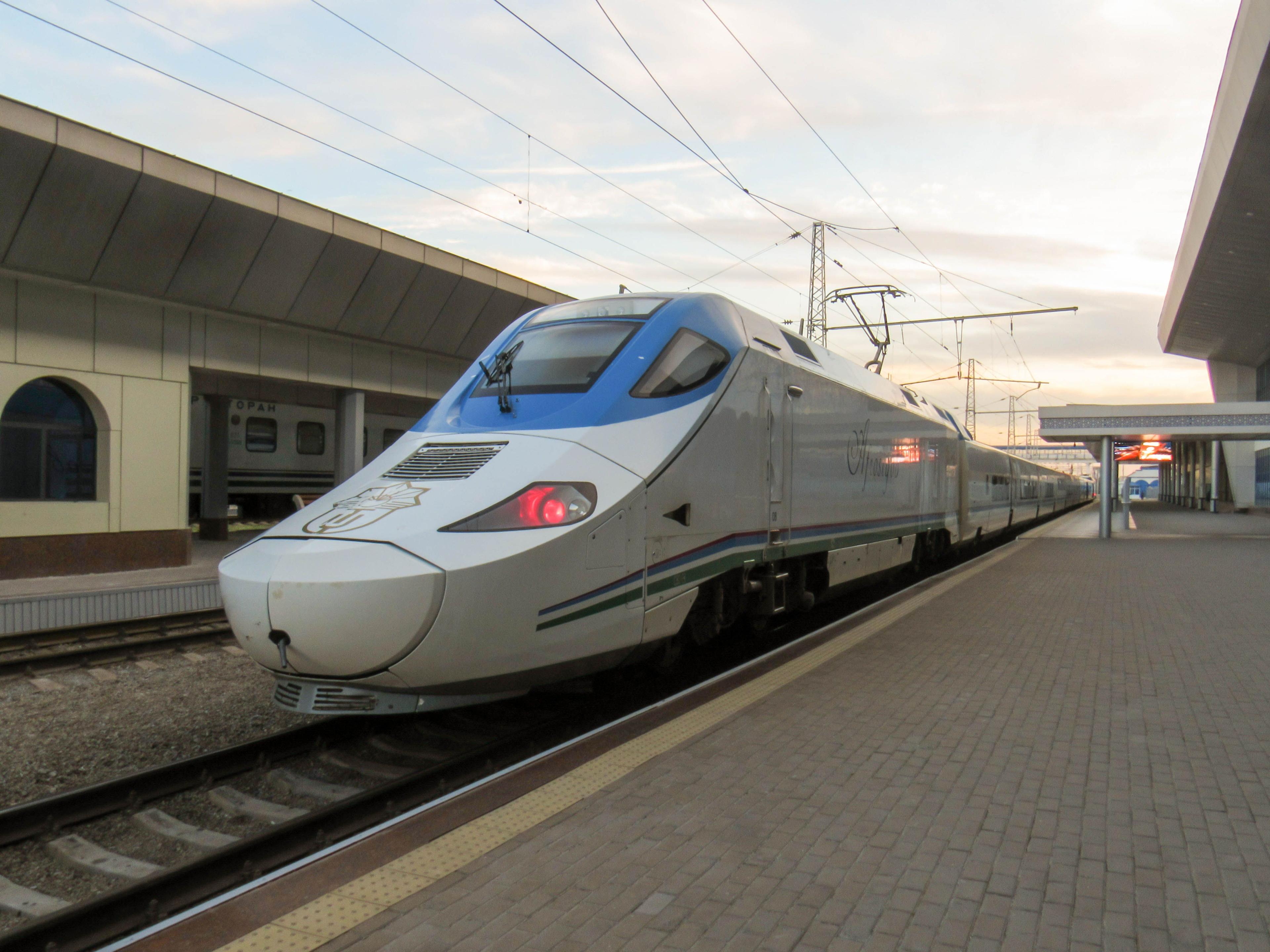
Trains do most of the work. The Afrosiyob connects Tashkent, Samarkand and Bukhara, and a new high-speed train reaches Khiva, so you can cross the country without a long road day. Book seats as soon as sales open, because the popular morning departures sell out in spring and autumn. Our Afrosiyob and train booking guides explain how. Flights to and from Urgench save time on the Khiva end; see domestic flights in Uzbekistan.
Where roads matter, a private car and driver is the most flexible choice, especially for the Nuratau loop and the Fergana Valley. Typical 2026 prices are around US$50 to 100 a day, depending on vehicle and distance. A guide in each city adds context to the monuments. Tickets for sights are cheap compared with Europe; our entrance fees guide has current prices.
What nine days costs
The cost of nine days depends mostly on hotels and whether you choose a guide. Our Uzbekistan travel cost guide gives realistic daily ranges for budget, comfort and premium travel, and the factors that change them: season, group size and transport. Expect trains, entrance fees and meals to be modest, and a private guide, car and good old-town hotels to be the big items.
Group tours are the most economical way to see the main cities, while private tours let you choose the route above and the pace. Our group vs private tour guide compares them.
Nine days with TourEast
Our 10-day relaxed group tour and our classic eight-day tours follow a similar route, and we can add a yurt night or a Fergana loop to a private itinerary. Tell us your dates, interests and pace, and we will build the nine days around you through our trip builder or on WhatsApp. Travellers on our tours receive a local contact number for the whole trip.
Frequently asked questions
Photo gallery