Is Uzbekistan good for older travellers? Yes, with the right plan. How much walking each city involves, which sites have steps, heat and the best season, trains versus flights, medicines, hotels with lifts and a gentle 12-day route.
Facts, prices and schedules checked on November 4, 2026
Is Uzbekistan a good destination for senior travellers? Very much so, and many of the visitors to Samarkand, Bukhara and Khiva are in their 60s and 70s. The great sights sit on flat plains, the high-speed trains are comfortable, the food is mild, and older people are treated with real respect in Uzbek culture. What needs planning is the walking, the steps at historic monuments, the summer heat and the pace.
This guide is for older travellers and anyone who prefers slower travel. It covers how much walking each city involves, which sites have stairs and which are easy, the best season, how many days you really need, trains versus flights, health and medicines, hotels with lifts, and a gentle route. It is practical advice from people who plan these trips, not medical advice; if you have a health condition, talk to your doctor before you go.
Is Uzbekistan suitable for older travellers?
Yes, for most people who can walk comfortably for an hour or two at a time. A few reasons it works well:
- Respect for age. In Uzbekistan elders are honoured. People stand up to offer you a seat, help with a bag on the train steps, and greet you warmly in the mahallas.
- Flat cities. Samarkand, Bukhara and Khiva lie on plains at modest altitude, between about 100 metres around Khiva and about 700 metres in Samarkand. Altitude is not a concern on a classic route.
- Good trains. The Afrosiyob high-speed train links Tashkent, Samarkand and Bukhara in comfort, and since May 2026 a high-speed service reaches Khiva.
- Mild food. Uzbek cooking is rarely spicy, and soups, bread, grilled meat, rice and fresh fruit suit most diets.
- Safety. Street crime against visitors is rare; our guide to whether Uzbekistan is safe covers this in detail.
The challenges are equally clear: uneven paving and high steps at many monuments, few lifts in older buildings and guesthouses, very hot summers, and long drives where there is no railway. None of these need stop you, but they should shape when you travel and how each day is planned. Wheelchair users will find access limited at most historic sites and in public transport, and should plan a fully private trip with a specialist operator.

How much walking is there in Uzbekistan?
More than many people expect, because the old towns are best seen on foot and cars cannot enter most of them. On a full guided sightseeing day you can easily walk 5 to 10 km, much of it slowly and with stops, plus time standing in courtyards while the guide explains.
City by city:
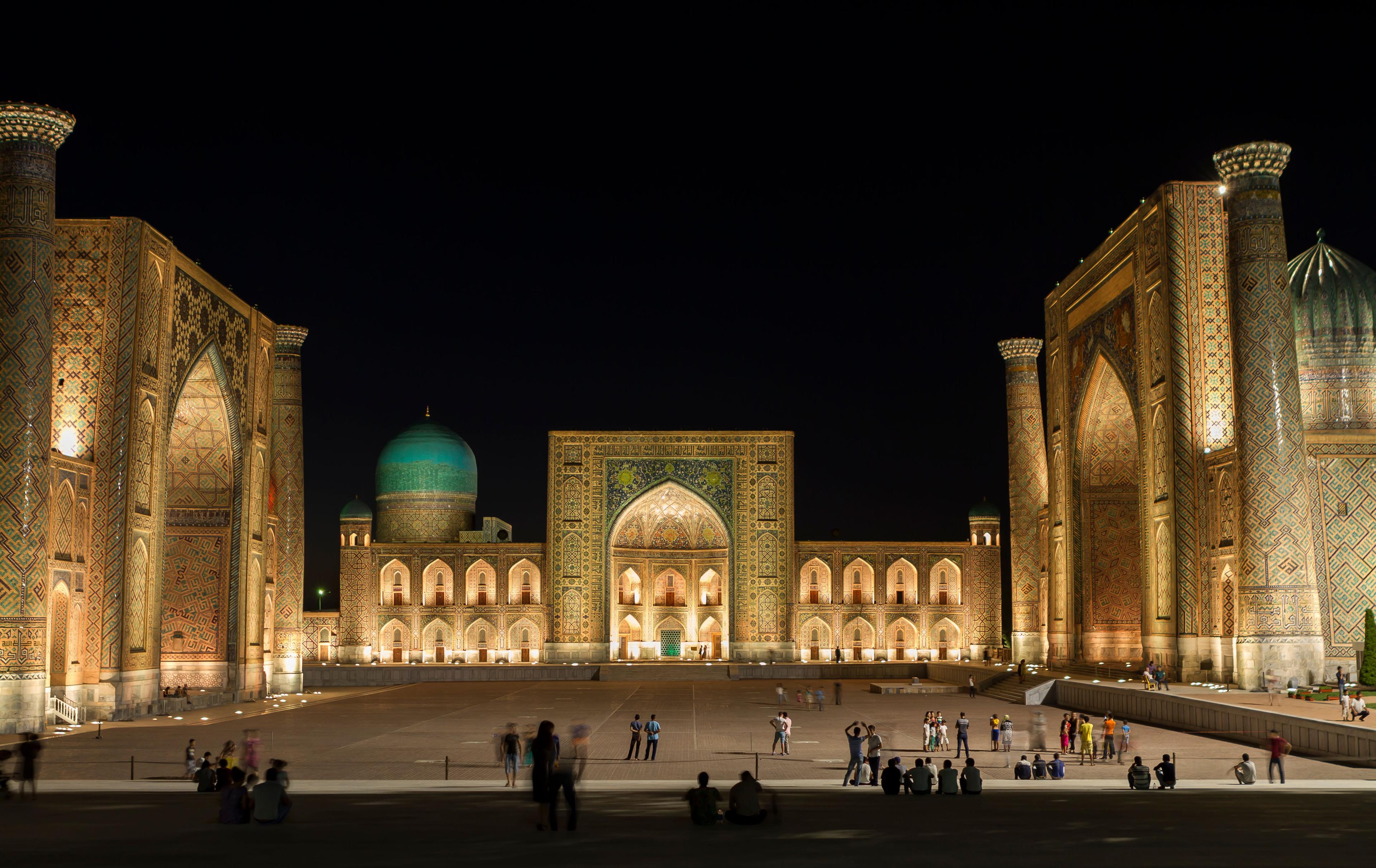
- Samarkand: the main monuments lie along a line of a little over 2 km. From Gur-e-Amir to the Registan is under 1 km; from the Registan, a pedestrian street leads past Bibi-Khanym and the Siab Bazaar to Shah-i-Zinda. A car can drop you at each site, so the walking can be cut to short stretches.
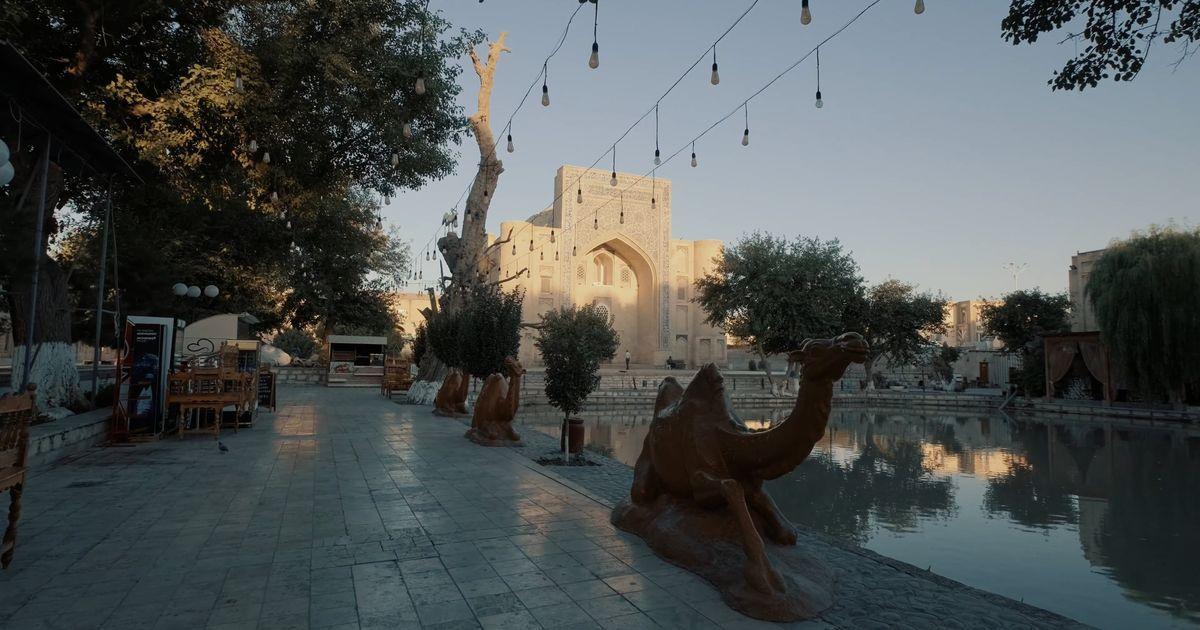
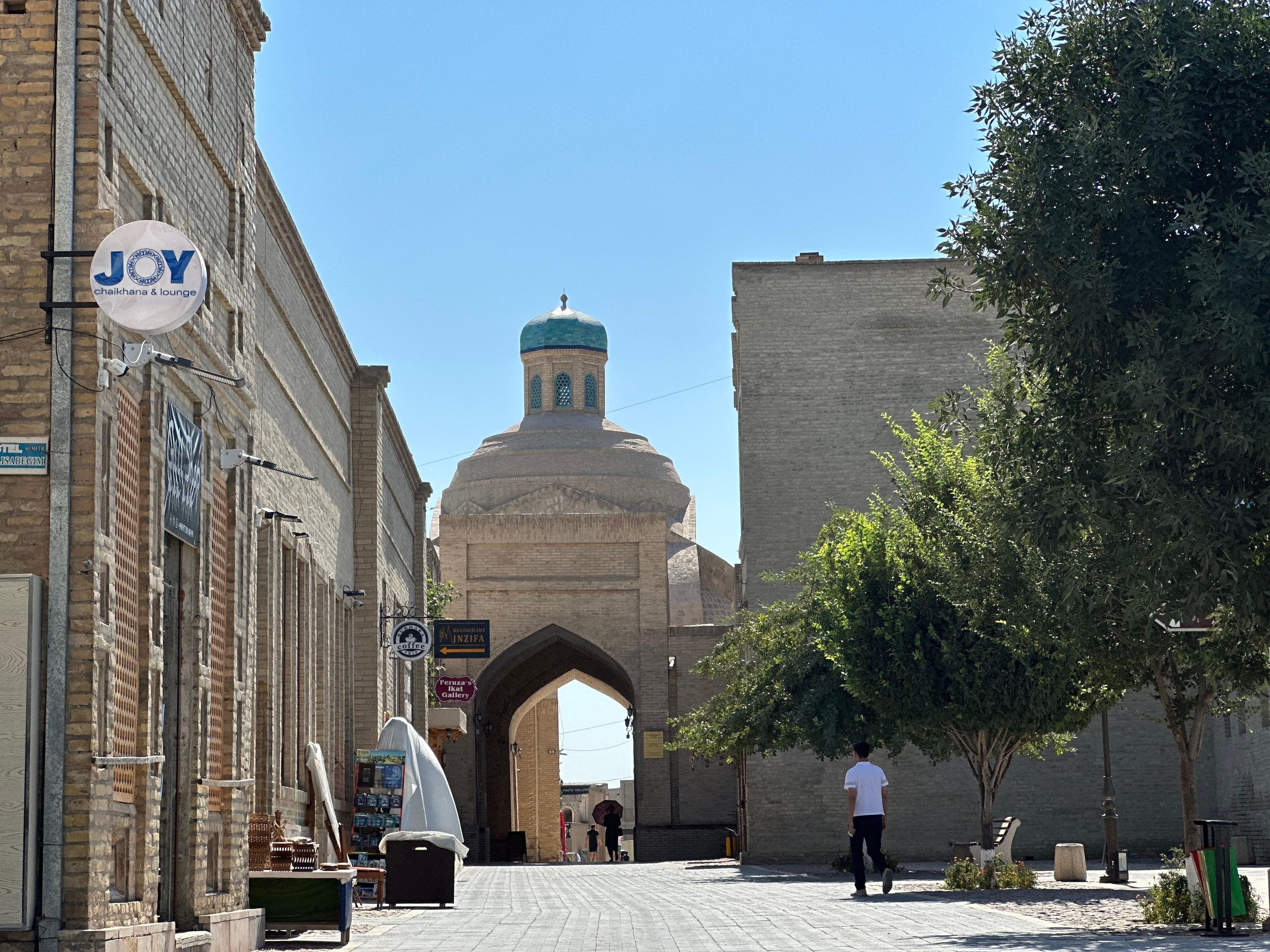
- Bukhara: the most compact of the three. Almost everything between Lyabi-Hauz, the trading domes, Po-i-Kalyan and the Ark Fortress is within about 20 minutes on foot, mostly on level pedestrian streets with benches and cafés along the way.
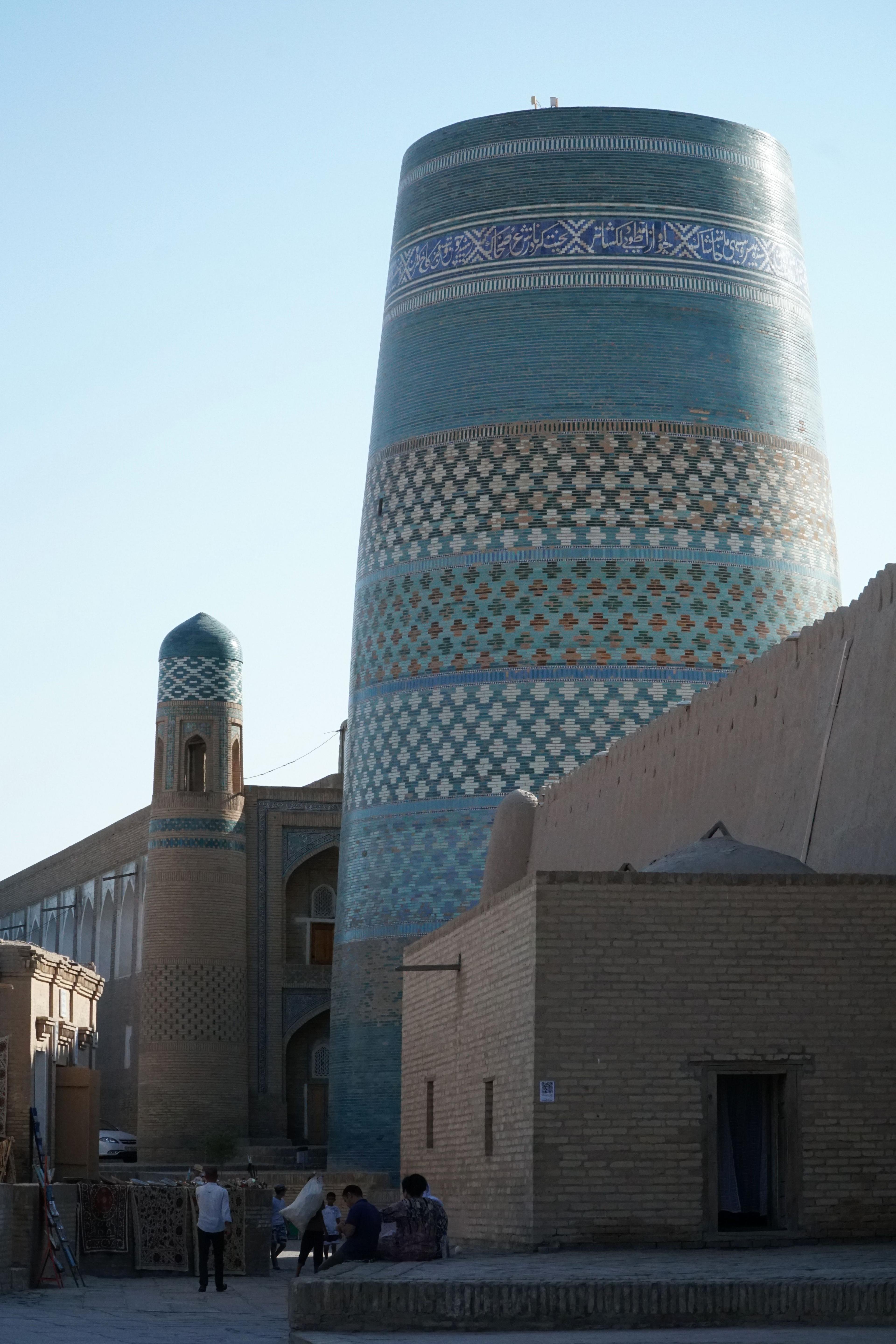
- Khiva: Ichan-Kala can be crossed on foot in about 15 minutes, but the lanes are paved with uneven brick and stone, and you are on your feet all day.
- Tashkent: a big, spread-out modern city. Distances are long, so you will use a car or the metro.
Benches, shade and tea houses are plentiful. A good guide builds in a stop every hour or so, and on a private tour the car can wait nearby.
Stairs, steps and uneven ground: which sites are easy?
Most of the great sights can be enjoyed from ground level. The climbs are usually optional.
Generally easy, mostly level:
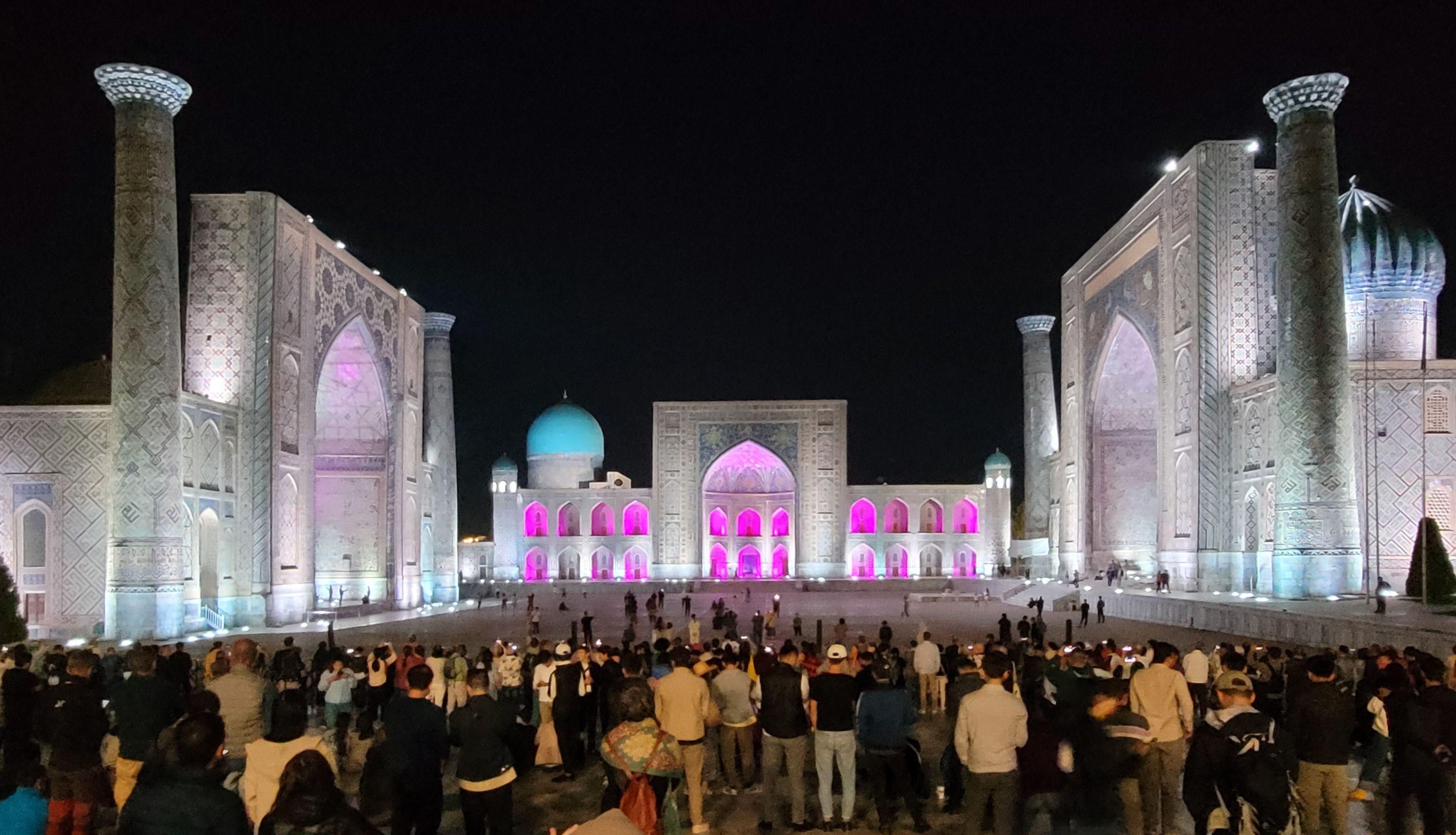
- The Registan square and courtyards in Samarkand, though there are thresholds and a few steps into the madrasahs
- Bibi-Khanym Mosque courtyard and the Siab Bazaar
- Lyabi-Hauz, the trading domes and the Po-i-Kalyan square in Bukhara
- The main street of Ichan-Kala in Khiva and the Juma Mosque with its wooden columns
- Chorsu Bazaar and the Khast Imam complex in Tashkent
Steps or slopes to know about:
- Shah-i-Zinda, Samarkand: a steep flight of roughly 40 steps at the entrance leads up to the avenue of mausoleums; there are a few more steps inside. Take it slowly, use the side rail where there is one, and rest at the top.
- Gur-e-Amir: a few steps at the entrance; the main hall is level.
- The Ark Fortress, Bukhara: the entrance is up a long, sloping ramp through the gate. Manageable at a slow pace.
- Ulugbek Observatory, Samarkand: a short climb to the site on a small hill.
- Khiva: climbing the city walls, the Kunya-Ark watchtower or the Islam Khoja minaret, with its narrow spiral staircase of more than a hundred steps, is entirely optional; the views are lovely but the steps are steep and dark.
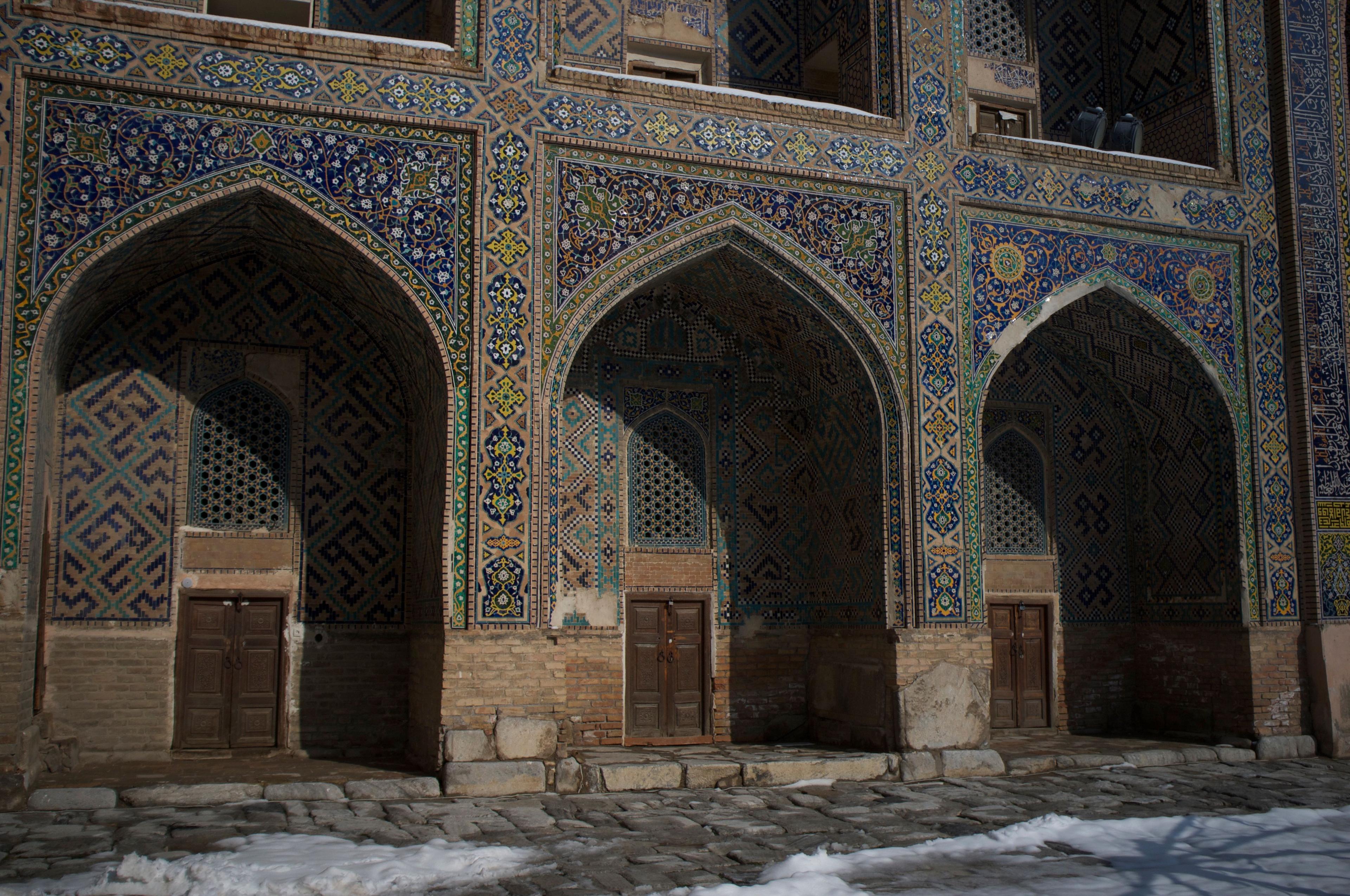
- Madrasah upper floors and rooftop cafés are usually reached by steep, narrow stairs.
Good shoes with grip, a light walking stick or folding seat-stick, and a hand on the rail make a big difference. Ask your guide which entrances have the fewest steps; there is often a side way in.

Heat and the best season for seniors
Heat is the biggest risk for older travellers in Uzbekistan. From June to August, daytime temperatures in Bukhara, Khiva and Tashkent often climb above 40°C, with intense sun and very dry air.
The best months for a comfortable trip are:
- mid-April to May: warm days, cool mornings and evenings, green courtyards;
- mid-September to October: settled weather, clear skies and the harvest in the bazaars.
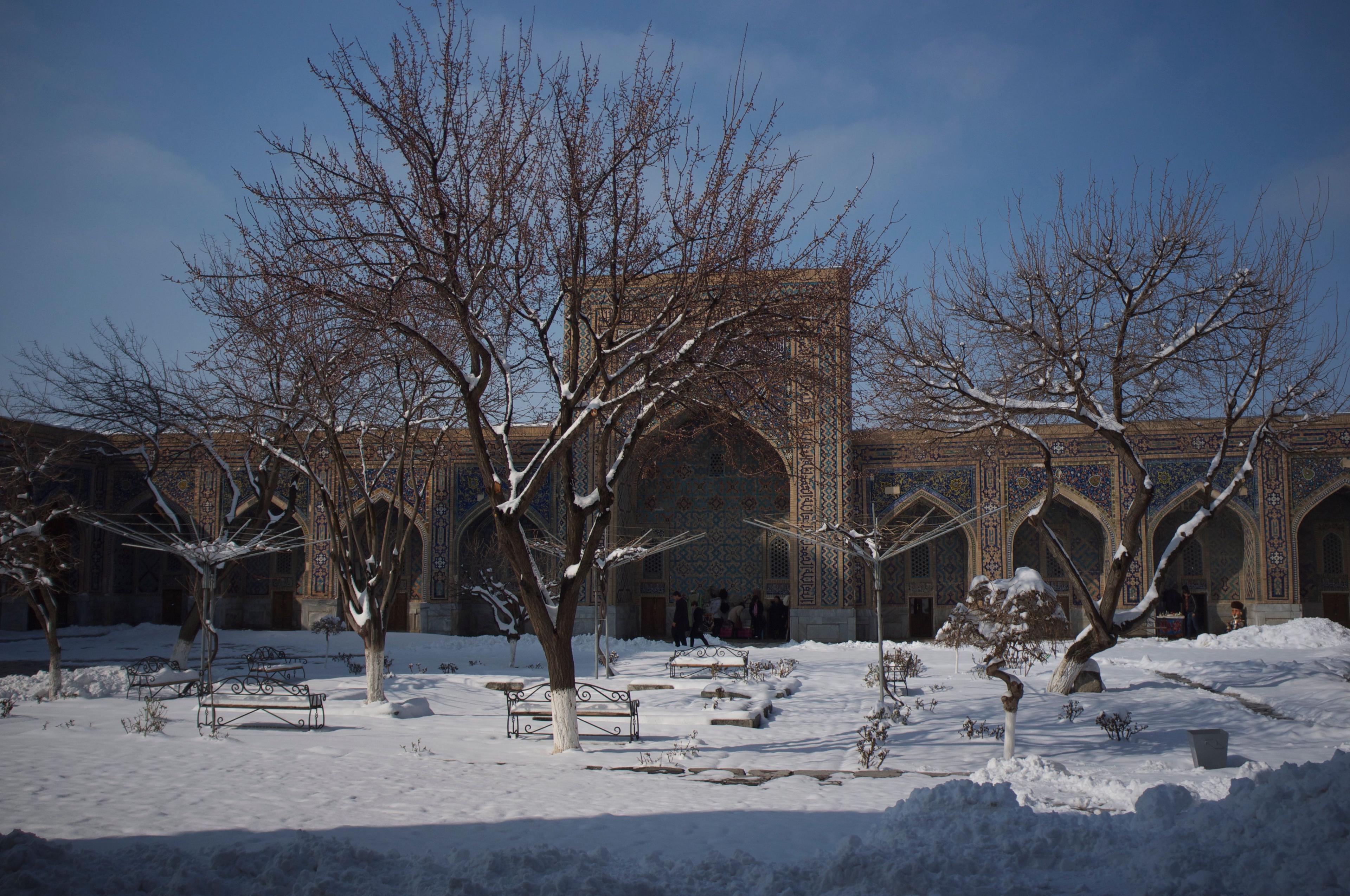
These are also the busiest months, so book trains and hotels early. Early April and early November are quieter and cooler, but evenings can be chilly and some days grey. Winter is cold, with sub-zero nights, but monuments are empty; our guide to Uzbekistan in winter explains what to expect. Our guide to the weather in Uzbekistan by month has month-by-month figures.
If you travel in summer, sightsee from early morning until about 11:00, rest through the hottest hours, and go out again after 17:00, as Uzbek families do.
Pace: how many days do you really need?
The most common mistake is trying to see too much. A classic route of Tashkent, Samarkand, Bukhara and Khiva can be squeezed into seven or eight days, but at a slower pace ten to twelve days is much better.
Our recommendations for a relaxed trip:
- At least two nights in every city, and three in Bukhara or Samarkand;
- No sightseeing on the day you arrive in Uzbekistan, especially after a night flight;
- Sightseeing starting at about 9:00 or 10:00 rather than 8:00;
- A free afternoon most days, for a rest at the hotel or a long lunch;
- No more than one long journey every two or three days;
- A spare half-day near the end of the trip.
This is the thinking behind our Relaxed small-group tour: ten days, two nights in Khiva, three in Bukhara and two in Samarkand, with late starts, free afternoons and trains instead of long drives.
Trains or flights? Getting between cities comfortably
For most older travellers, the Afrosiyob train is the most comfortable way to move between cities. It goes from city centre to city centre, there is no check-in, the seats are wide, and you can walk around.
- Tashkent to Samarkand: about 2 h 10 min to 2 h 30 min
- Samarkand to Bukhara: about 1 h 30 min to 1 h 45 min
- Bukhara to Khiva: about 3 h 30 min on the new high-speed service
Things to know: stations work like airports, with a passport check and bag scanner at the entrance, so arrive 30 to 40 minutes early. There are steps up into the carriages and the overhead racks are narrow, so travel with a medium suitcase and accept help from the staff, your guide or a porter. Business class has wider seats in a 2+1 layout. The newer Korean-built trains on the Khiva line have accessible facilities.
Flights make sense for the long hop from Tashkent to Urgench, for Khiva, which takes about 1 h 30 min. Domestic flights leave from Tashkent's separate domestic terminal, and connecting from an international flight means collecting your bags and changing terminals by car. Uzbekistan Airways offers assistance for passengers with reduced mobility, including a wheelchair to and from the aircraft and priority boarding, on request; ask when you book, and at least 48 hours before the flight.
Long drives, such as the old road from Bukhara to Khiva or a trip into the desert, are tiring. Where a train exists, take it. Where you must drive, choose a comfortable car and stop every hour or two.
Health, medicines and travel insurance
Our separate guide to health, tap water and travel insurance in Uzbekistan covers the subject in detail. The points that matter most for older travellers:
- See your doctor before a long trip, especially if you have heart, lung or mobility conditions, and ask about the heat and long days on foot.
- Bring enough of your prescription medicines for the whole trip plus a few spare days, in their original packaging, with a copy of the prescription and the generic names. Keep them in your hand luggage.
- Pharmacies are everywhere in the cities, but antibiotics and some other medicines now need a local electronic prescription, and brand names differ.
- Drink bottled water, and more of it than you think you need. Add rehydration salts on hot days.
- Ease into rich dishes such as plov over the first few days.
- Buy comprehensive travel insurance with medical cover and evacuation. Many policies have age limits or extra conditions for travellers over 70 or with existing conditions, so read the terms carefully.
- Tashkent has the best medical facilities, including private clinics with English-speaking staff; in smaller towns care is more basic. The ambulance number is 103.
Travellers with asthma or lung conditions should know that air quality in Tashkent can be poor in winter, and dust can affect Karakalpakstan and Khorezm.
Hotels: lifts, rooms and bathrooms
Hotels need more care than anything else. Many of the most charming places to stay in Bukhara and Khiva are converted old houses with steep stairs, high thresholds and no lift.
When booking, ask for:
- a ground-floor room, or a hotel with a lift;
- a walk-in shower rather than a bath, and a grab rail if you need one;
- a room away from the street and from a noisy courtyard restaurant;
- reliable air conditioning in summer and heating in spring and autumn;
- how close a car can get to the entrance, since some old-town lanes are pedestrian only.
Larger hotels at the edge of the old towns, and the modern hotels of Tashkent and Samarkand, usually have lifts and more space. In Khiva, hotels just outside the walls of Ichan-Kala are often easier than those inside. Our guide to where to stay in Samarkand, Bukhara and Khiva compares the areas.
A gentle 12-day route for slower travel
If you are planning your own trip, this route keeps journeys short and gives every city time:
- Days 1 to 2, Tashkent: arrive and rest; the next day a gentle half-day tour of the Khast Imam complex and Chorsu Bazaar, and a short ride on the Tashkent Metro if stairs are manageable.
- Day 3: morning flight to Urgench and short drive to Khiva. Rest.
- Days 4 to 5, Khiva: Ichan-Kala over two relaxed mornings; afternoons free; sunset from a ground-level spot outside the west gate.
- Day 6: train to Bukhara.
- Days 7 to 9, Bukhara: the old town in short sessions, the summer palace of Sitorai Mohi-Khosa, a pottery workshop in Gijduvan, long lunches.
- Day 10: Afrosiyob train to Samarkand.
- Days 11 to 12, Samarkand: the Registan, Gur-e-Amir and Bibi-Khanym on the first morning, Shah-i-Zinda early on the second, then the evening train to Tashkent for your flight home the next day, or fly home from Samarkand.
Prefer to travel with others and have everything arranged? Our ten-day Relaxed small-group tour follows similar principles.

Practical tips for senior travellers
- Pack light. A medium suitcase on wheels is much easier on trains and in old-town lanes than a large one.
- Bring a sun hat, sunglasses, sunscreen and a refillable water bottle every day.
- Carry tissues, hand sanitiser and some small notes in som; toilets at sites are basic and some charge a small fee.
- Wear comfortable, broken-in shoes with good grip; the old stone paving can be slippery and uneven.
- Tell your guide or tour operator in advance about any mobility, hearing or dietary needs, so that the plan fits from day one.
- Keep a card with your hotel's address in Uzbek or Russian.
- Rest without guilt. A chaikhana with green tea in the shade is as much a part of Uzbekistan as any monument.
Slower travel with TourEast
We plan private and small-group trips at an easy pace, with short journeys, ground-floor rooms where possible and guides who know where the steps are. Travellers on our tours get a local contact number for the whole trip. Tell us about your needs and pace, and we will build a custom itinerary or suggest the group tour that fits.