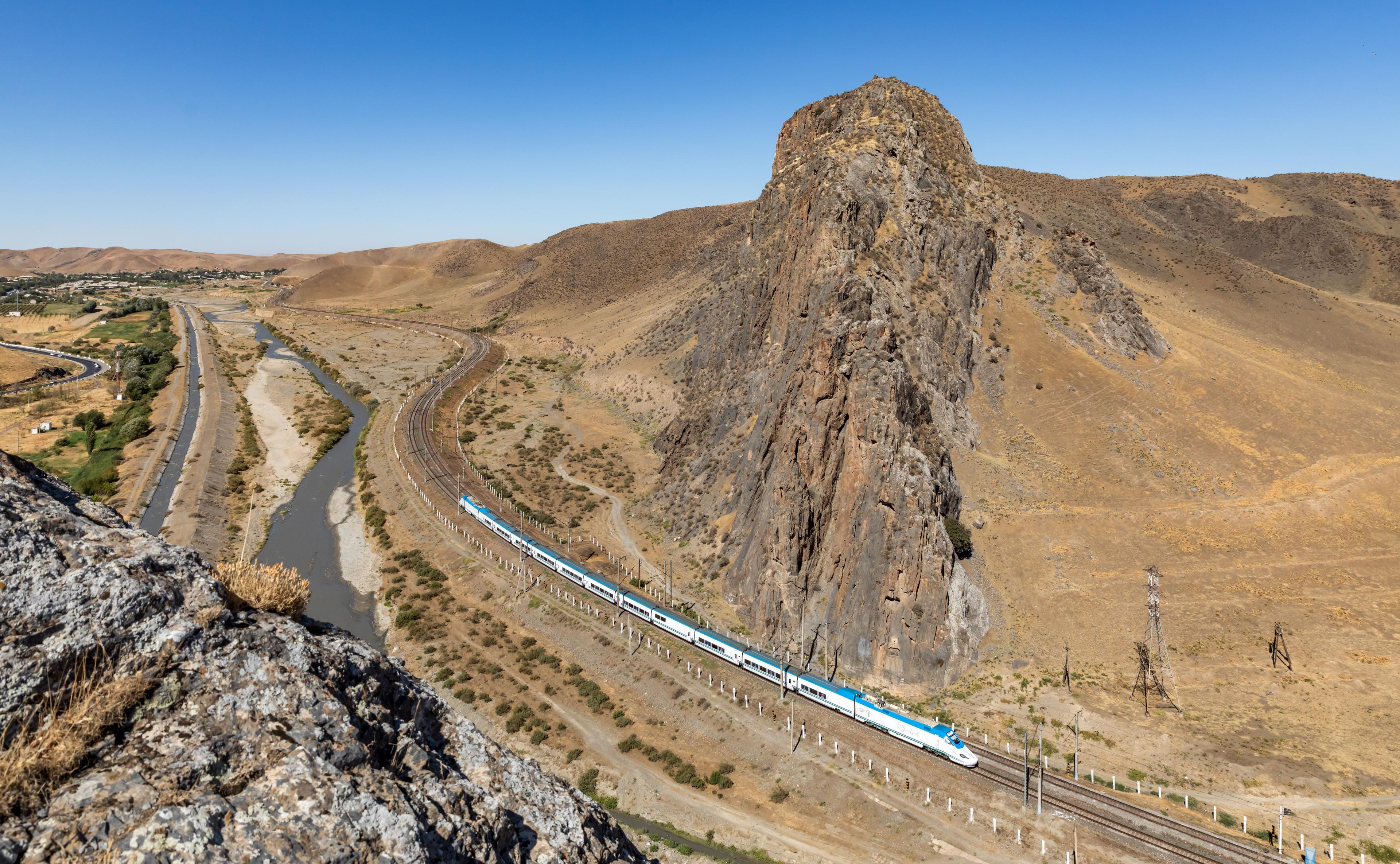
A flight-free Uzbekistan by train itinerary: Afrosiyob high-speed trains from Tashkent to Samarkand and Bukhara, the daytime train across the desert to Khiva, the overnight sleeper back, and a Fergana Valley extension through the Kamchik tunnel. Classes, carriages, booking windows, luggage and food on board.
Facts, prices and schedules checked on November 4, 2026
Uzbekistan is the easiest country in Central Asia to see by train, and since 2026 it is possible to do the entire classic route, Tashkent, Samarkand, Bukhara and Khiva, on rails without a single flight or a long day in a car. High-speed Afrosiyob and Jaloliddin Manguberdi trains link the four cities by day; overnight sleepers bring you back; and a line through the Kamchik tunnel adds the Fergana Valley for anyone with three more days.
This is a nine-day Uzbekistan by train itinerary, written for travellers who choose rail for its own sake: slow-travel enthusiasts, families who dislike airports, and anyone counting the carbon of a long-haul trip and wanting the in-country part to be light. It covers the day-by-day plan, what the carriages are like in each class, how the booking window works, luggage and food on board, and the Fergana extension. Times and fares are as of November 2026; timetables shift with the seasons, so check the live schedule before fixing hotels.
Our route guides for each leg (Tashkent to Samarkand, Samarkand to Bukhara, Bukhara to Khiva) give the full timetables; this article joins them into one journey.
Why do Uzbekistan by train?
Three practical reasons and one less practical.
- Speed where it matters: Tashkent to Samarkand in about 2 hours 10 minutes, Samarkand to Bukhara in under two hours, Bukhara to Khiva in three and a half to four and a half hours on the high-speed sets. The road takes longer on every leg.
- City-centre stations: Samarkand, Bukhara's Kagan station and Khiva's new terminus are all within a short taxi ride of the old towns; Tashkent's station is on the metro. No airport transfers, no two-hour check-ins.
- Reliability: trains run in fog and dust storms that ground the Urgench flights, and the high-speed sets are rarely more than a few minutes late.
- The view: the Hungry Steppe, the Zeravshan oasis, the Kyzylkum desert and the Amu Darya from the window, with tea in a glass holder. A country reveals itself at 160 km/h in a way it never does from 10,000 metres.
The cost of this approach is one long night on a sleeper, or a second daytime train, to return from Khiva. Most travellers find the sleeper the most memorable part of the trip.

The 9-day Uzbekistan by train itinerary
Day 1: Tashkent. Arrive, settle in, ride the metro to Chorsu Bazaar and the Khast-Imam complex. Collect any train tickets you want on paper from the station, or simply keep them on your phone.
Day 2: Tashkent to Samarkand by Afrosiyob. Take an early train, about 07:30, arriving around 09:40. Afternoon at the Registan and Gur-e-Amir; the Registan light show after dark.
Day 3: Samarkand. Shah-i-Zinda, Bibi-Khanym and the Siab Bazaar in the morning, the Ulugh Beg Observatory and the Afrasiyab Museum after lunch, or Konigil paper mill and the wine museum for a lighter day.
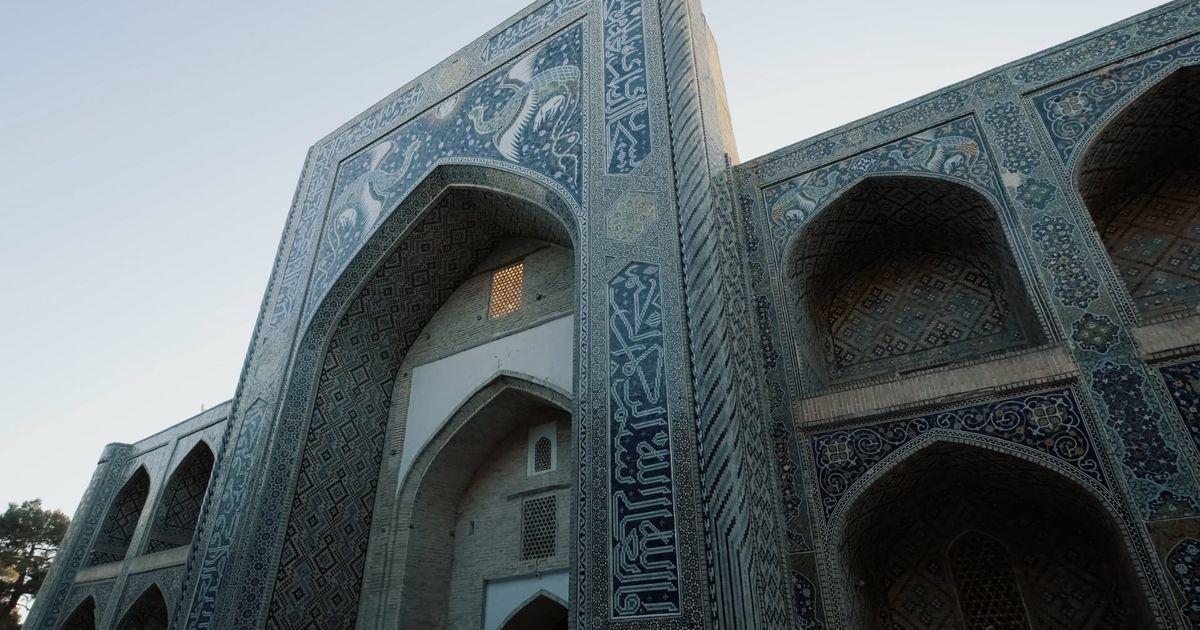
Day 4: Samarkand to Bukhara by Afrosiyob. The 08:23 or 09:43 departures reach Bukhara before lunch. Taxi from Kagan station, 15 minutes to the old town. Afternoon at Po-i-Kalyan and the trading domes.
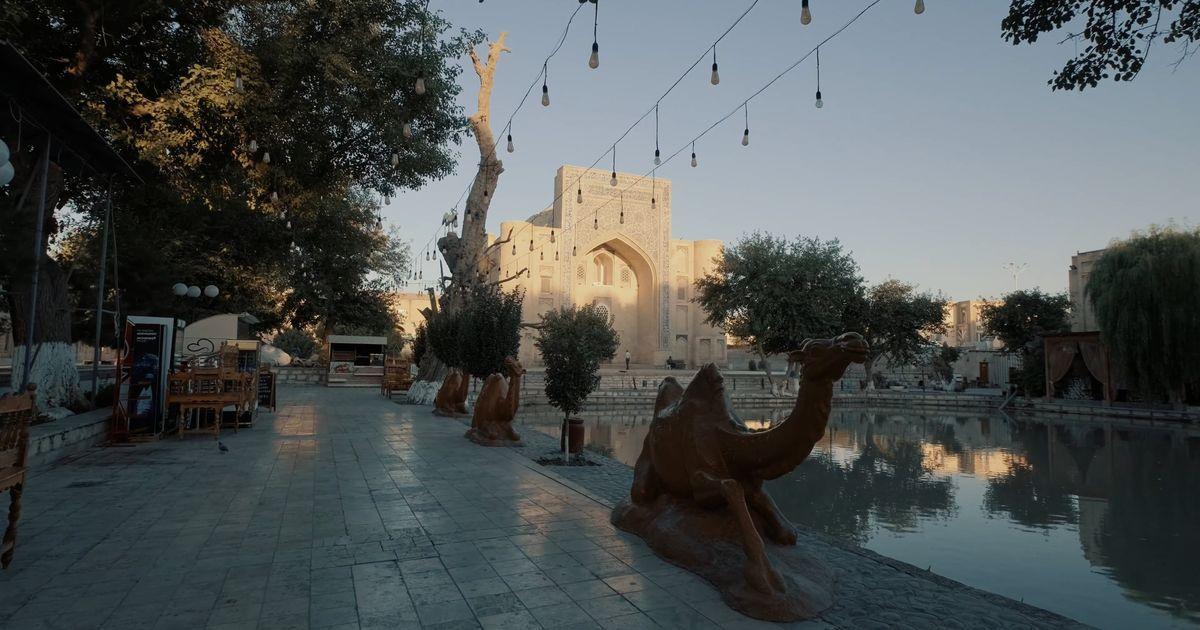
Day 5: Bukhara. The Ark, Bolo-Hauz, the Samanid Mausoleum and Chashma-Ayub in the morning; Sitorai Mohi-Hosa, the emir's summer palace, in the afternoon; Lyabi-Hauz at sunset.
Day 6: Bukhara to Khiva by the daytime train. The late-morning Jaloliddin Manguberdi, departing about 10:55 to 11:15, crosses the Kyzylkum and follows the Amu Darya to Urgench and Khiva, arriving mid-afternoon. Evening on the walls of Ichan-Kala.
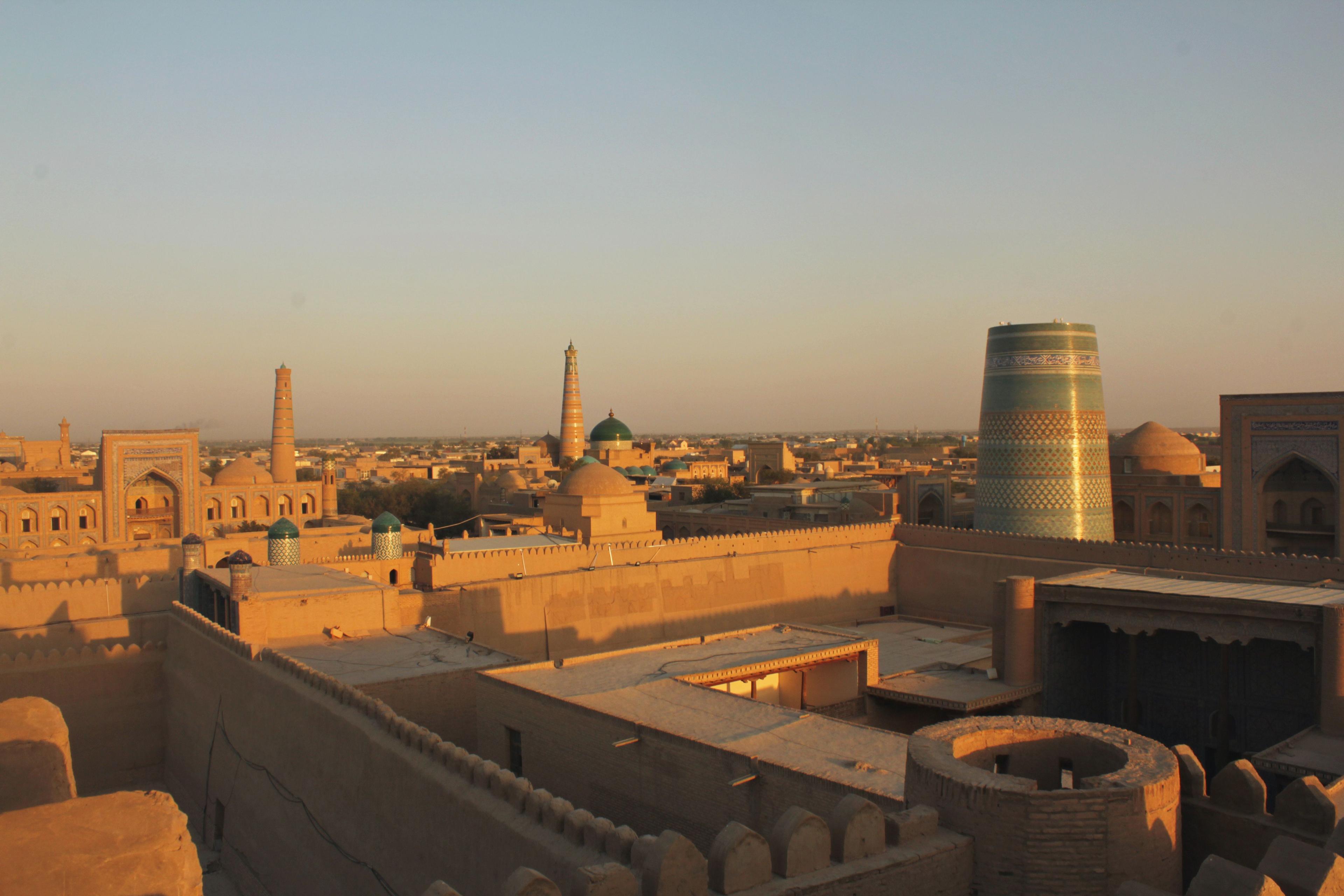
Day 7: Khiva. The Kunya-Ark, Juma Mosque with its 200-odd wooden columns, Tash-Hauli palace and the Islam Khoja minaret; the Khorezm fortresses of Ayaz-Kala and Toprak-Kala by car if you want a second day.
Day 8: Khiva to Tashkent by overnight sleeper. Trains leave Khiva in the late afternoon, around 16:30 to 17:30, and Urgench an hour later, arriving in Tashkent the next morning at about 07:00. Dinner from your own bag or the restaurant car, tea from the samovar, a night in a kupe compartment.
Day 9: Tashkent. Arrive, breakfast at your hotel, a last morning at the Centre for Islamic Civilisation or the modernist buildings, then your flight home in the afternoon or evening.
The only non-rail transport in this plan is the taxi between stations and hotels, and the optional car to the Khorezm fortresses.
Variations: daytime return, the reverse loop and 12 days with Fergana
Daytime return instead of the sleeper: the Jaloliddin Manguberdi runs Khiva to Tashkent by day, about seven hours via Bukhara and Samarkand, leaving Khiva in the morning. Use it if you sleep badly on trains; you lose a day of sightseeing but see the whole line in daylight.
The reverse loop: sleeper Tashkent to Khiva on the first night (departing about 21:30, arriving about 10:30), then work eastwards by day: Khiva, Bukhara, Samarkand, Tashkent. This front-loads the hard night when you are fresh from the flight and leaves the fast Afrosiyob legs for the end. Many of our guests prefer it.
Twelve days with the Fergana Valley: after Day 9, take the 09:20 high-speed train from Tashkent through the Kamchik tunnel to Kokand (12:28) or Margilan (13:00). Spend two nights in the valley for the Khudayar Khan Palace, Rishtan ceramics, Margilan silk and the Kumtepa bazaar on a Thursday or Sunday, and return on the afternoon train from Margilan or Andijan, arriving in Tashkent at about 19:50. Our Fergana Valley itinerary has the day-by-day.
Flight-free from abroad: trains from Almaty (the Talgo sleeper, about 16 hours) and from Russia reach Tashkent; a train from Beyneu in Kazakhstan reaches Nukus. A fully overland trip from Europe is possible via the Caspian ferry and Aktau, which our Nukus to Aktau guide describes.
What the trains and classes are like
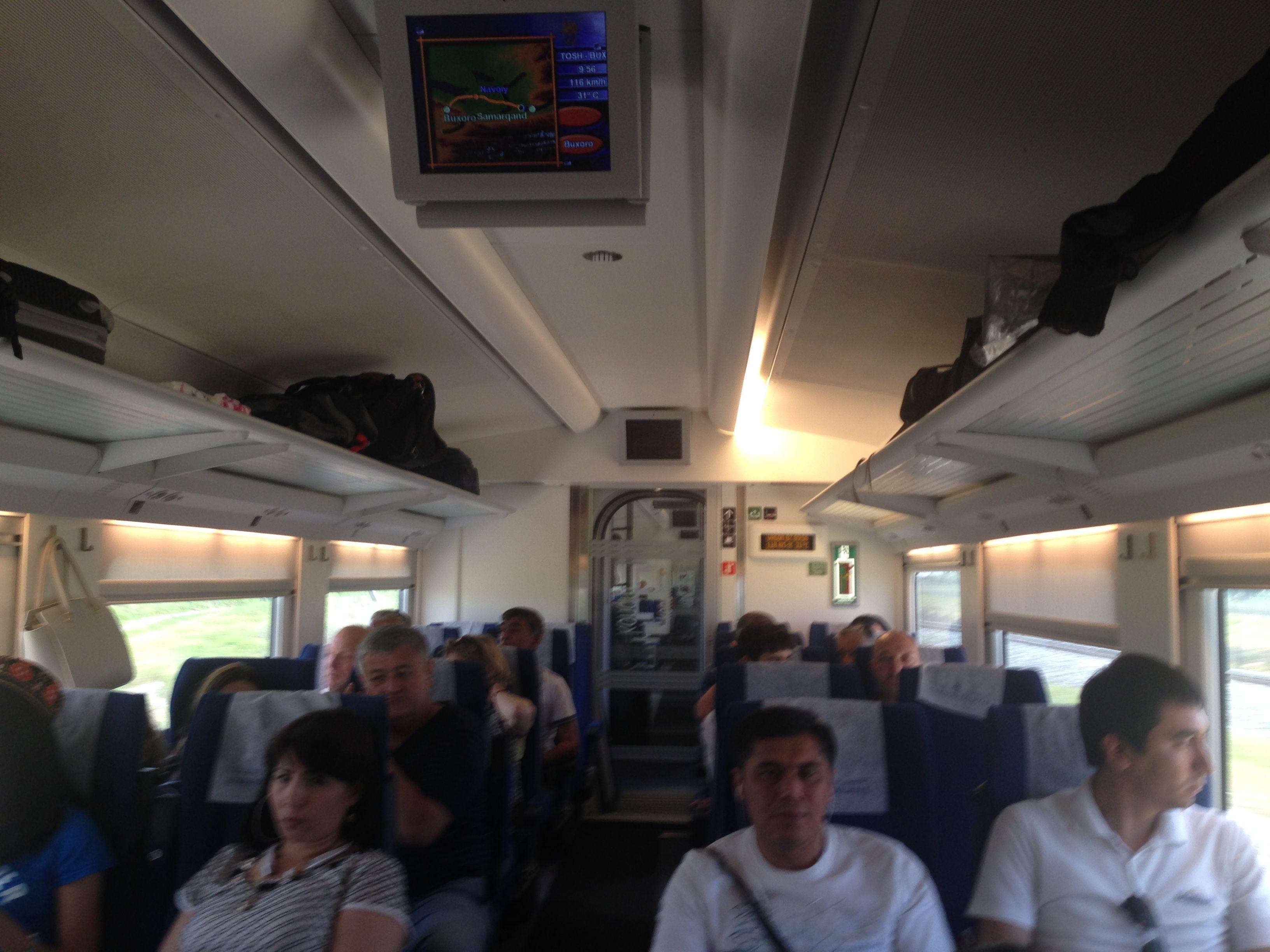
Afrosiyob (Tashkent–Samarkand–Bukhara): Spanish-built Talgo sets with nine cars, running at up to about 210 km/h. Three classes: economy in a 2+2 layout with fabric seats, business in 2+1 leather seats with more legroom and a snack, and VIP in a small saloon of about 11 seats. Economy is perfectly comfortable for a two-hour ride. There is a bistro car selling tea, coffee, sandwiches and plov in foil trays; cards are not always accepted, so carry som.
Jaloliddin Manguberdi (Tashkent–Samarkand–Bukhara–Urgench–Khiva, launched 2026): Korean-built sets with economy and VIP cars, seat-back screens and an accessible toilet, running up to 160 km/h on the newly electrified desert line. Economy seats are 2+2 and recline a little; VIP is 2+1.
Sharq and other daytime expresses: older Soviet-pattern seated carriages, slower and cheaper, with a restaurant car. Fine for a few hours, hot in summer if the air conditioning fails.
Sleepers (Tashkent–Khiva, Tashkent–Nukus, Tashkent–Termez and the Almaty train): three classes.
- SV: two-berth compartments, lockable door, the quietest option.
- Kupe: four-berth compartments, lockable, mixed company; the sensible choice for most travellers.
- Platskart: open-plan dormitory carriages with 54 berths, cheapest and most sociable, with no privacy.
All sleepers have a samovar of boiling water at the end of each carriage, an attendant who sells bedding if it is not included, and toilets that are locked at stations. Lower berths double as seats by day and have luggage space beneath; upper berths are more private at night.
Booking: the window, the app and the busy dates
Tickets for Uzbek trains are sold on the official Uzbekistan Railways site and app and at station ticket offices, with passport details required for every passenger. Sales open up to 60 days before departure for most trains, with some services released closer to 45 days, so the first legs of a trip booked two months ahead may open before the last ones.
What to know:
- Spring (April and May) and autumn (September and October) are peak seasons, and the early Afrosiyob departures and the Khiva high-speed train sell out within days of opening. Book the day sales open, or let us do it.
- Foreign Visa and Mastercard generally work online, with occasional declines on busy days. Station offices take som in cash and local cards.
- E-tickets on your phone are accepted; print one copy as a backup, because the ticket is checked at the station entrance, at the carriage door and on board.
- Refunds: full fare minus small fees if you cancel more than 24 hours ahead, partial between 24 and 6 hours, little or nothing after that.
- Names must match passports exactly, including middle names where printed.
Typical 2026 fares: Afrosiyob economy Tashkent to Samarkand about 200,000 som, Samarkand to Bukhara about 165,000 to 200,000 som, Tashkent to Bukhara about 277,000 som. A kupe berth from Khiva or Urgench to Tashkent about 350,000 som; SV roughly double. At the late-2026 rate of about 11,900 som to the dollar, the whole nine-day route costs around US$70 to 90 per person in economy and kupe, which is less than a single domestic flight. Our guide to booking Uzbekistan train tickets walks through the app screen by screen.
Luggage, food and the small routines of the journey
Luggage: there is an official allowance of 36 kg per passenger on Uzbek trains, but in practice nobody weighs bags. Afrosiyob cars have racks at the ends and overhead shelves; a large suitcase fits at the end of the car. On sleepers, cases go under the lower berths or in the space above the corridor. Station entrances have x-ray scanners, so arrive 30 to 40 minutes before departure, and bring your passport for the check.
Food: the Afrosiyob bistro and trolley cover the short legs. For the Khiva day train and the sleepers, buy a picnic: non bread, cheese, tomatoes, dried apricots and nuts from the bazaar, plus fruit in season. Restaurant cars on the sleepers serve soup, plov, kebabs and beer at low prices but keep irregular hours. Tea is the ritual: bring your own tea bags and a cup, or buy a glass of tea from the attendant.
Water: the samovar water is boiled and safe. Bottled water is sold on board and at stations.
Toilets: clean at departure, less so by morning; carry paper and wipes.
Power: Afrosiyob and the Khiva train have sockets at most seats; sleepers have a few in the corridor. A power bank is essential.
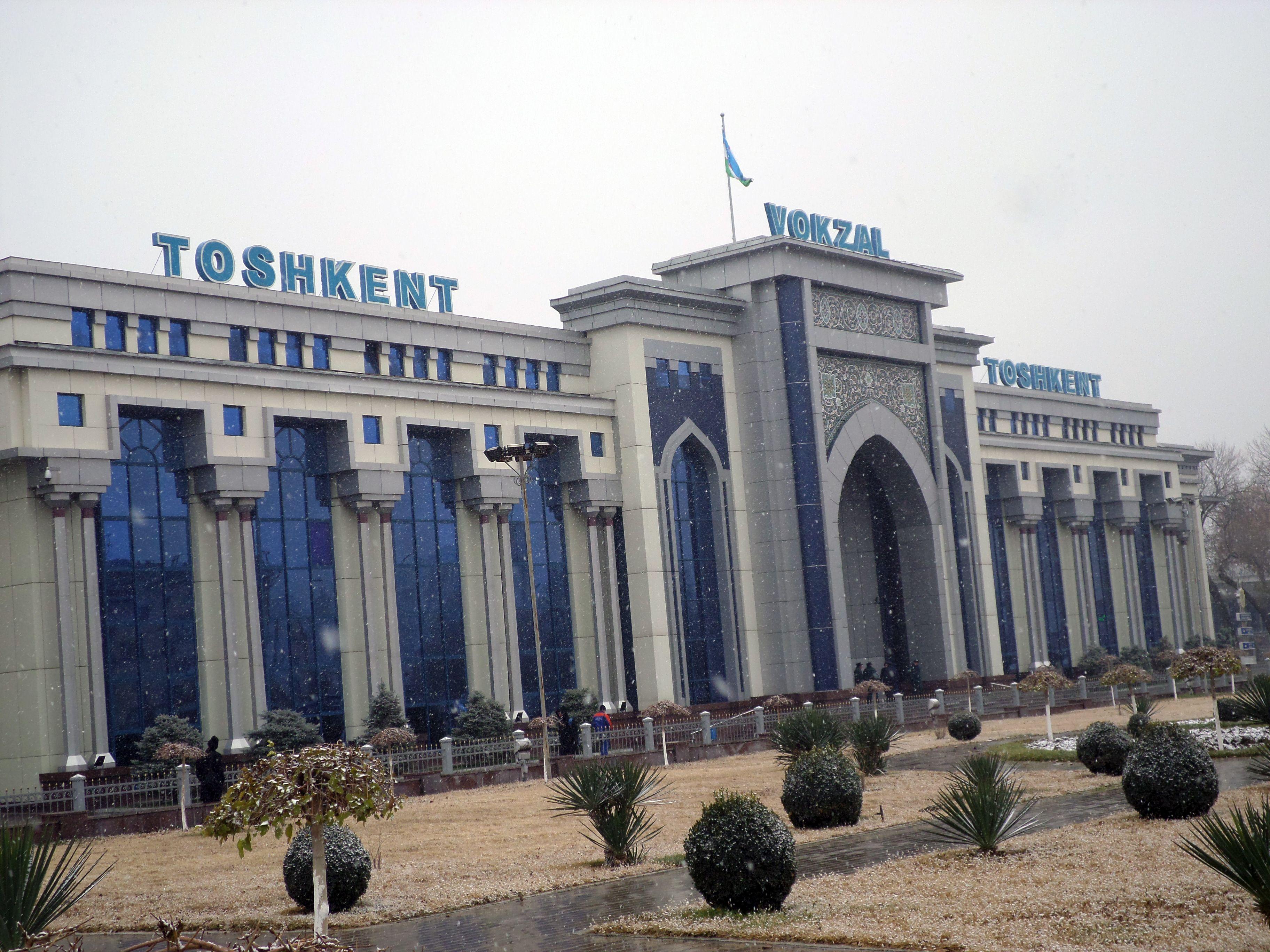
Station routines: Tashkent's main station is on the Tashkent Metro; Samarkand's is a 10-minute taxi from the Registan; Bukhara's trains use Kagan, 15 minutes from the old town; Khiva's station is a short ride from the walls. Yandex Go taxis work at all four.
Etiquette: share your food if you are offered some, take off your shoes in a kupe, and expect conversation. Our Uzbek and Russian phrases guide helps.
Carbon and the case for staying on the ground
The in-country part of an Uzbekistan trip is a small share of its footprint; the long-haul flight dominates. But the choice between flying and rail for the Khiva leg is real. A Tashkent–Urgench return by air is roughly 1,900 km of flying per person; the same distance by electric train on the newly electrified line produces a fraction of the emissions, and the Afrosiyob legs between the three central cities are electric throughout.
More to the point for most travellers, the rail route changes the shape of the trip. You stop flying over the Kyzylkum and start seeing it, you arrive in the centre of each city rather than at its airport, and you meet the people you share a compartment with. For families, the trains are easier than airports; for older travellers, they are gentler on the body than a seven-hour desert drive. The nine-day plan above was designed with all three in mind.
If your dates do not allow the sleeper, a single flight from Urgench back to Tashkent is the standard compromise, and the rest of the itinerary stays on rails.
Best time to travel Uzbekistan by train
Trains run all year, and the choice of season is about the cities, not the railway.
- April to early June: the ideal window, with mild days, blossom in Samarkand and comfortable walking in Khiva. Book trains the day sales open.
- September and October: equally good, with grape and melon season and warm evenings; the same booking pressure.
- July and August: the Afrosiyob and the Khiva train are air-conditioned, but the sleeper can be hot and the cities are above 38°C by noon. Travel early, rest at midday.
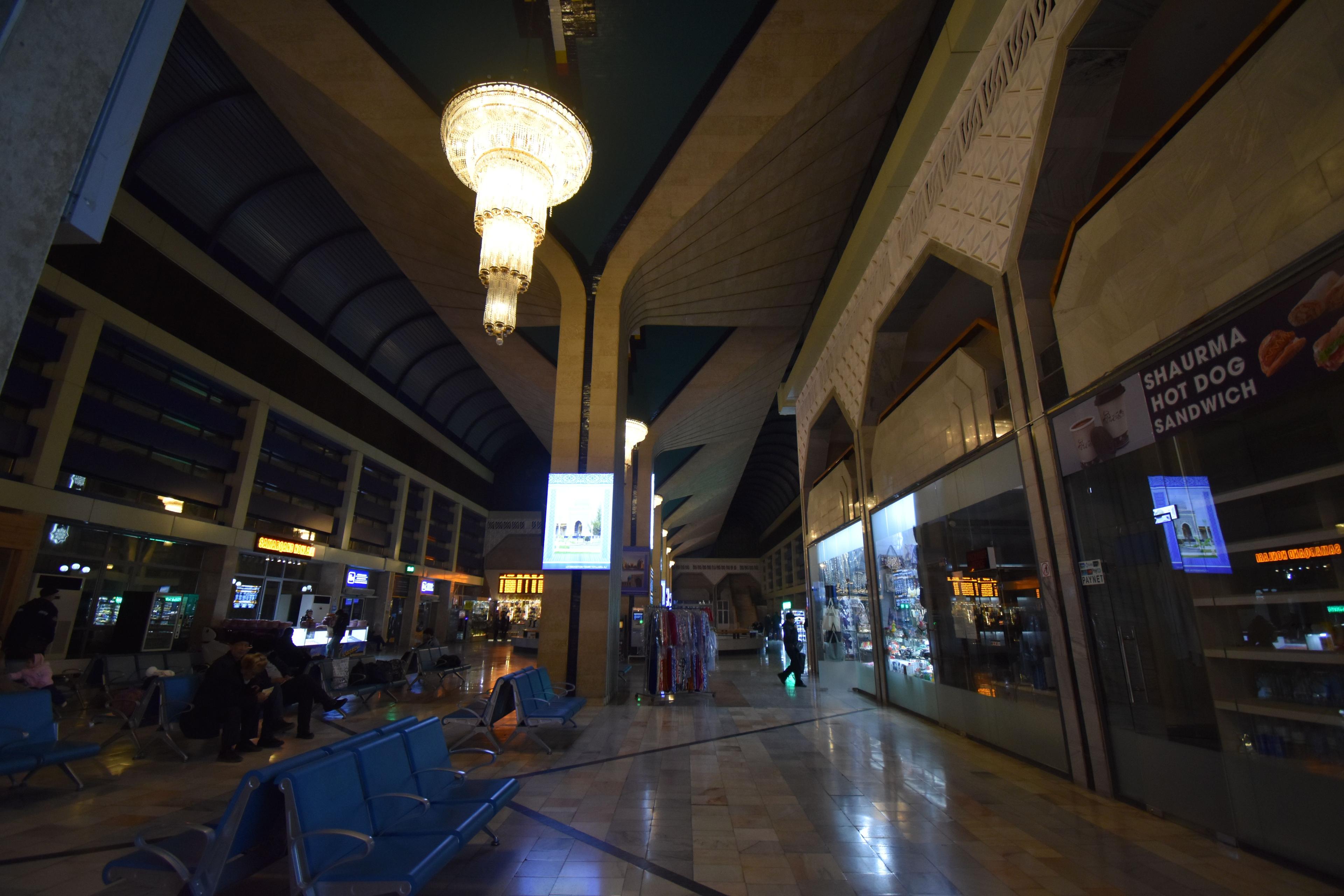
- November to March: quiet trains, low prices and cold, often clear days; snow is possible in Tashkent and Samarkand, and the sleeper is well heated. Our winter guide covers what to expect.
The Navruz holiday in late March and the days around the summer and autumn public holidays bring full trains and higher demand for kupe berths; book early or travel a day either side.
Rail itineraries with TourEast
We book every train in this itinerary as soon as sales open, meet you at each station and arrange hotels within walking distance of the old towns, as a private trip or as part of our small-group tours, which already use the Afrosiyob and the Khiva train for most legs. If you would rather not do the sleeper, we can swap it for a flight; if you want more rail, we add the Fergana Valley or a Tashkent–Almaty leg on the Talgo.